
How Two Teen Founders Built Soothe Note to Help Cancer Patients Navigate Life Between Appointments
Cancer care does not stop when a patient leaves the hospital. High school co-founders Teddy Aaron and Brynn built Soothe Note so patients and caregivers can organize what happens between oncology appointments.
Written by Grant Trahant
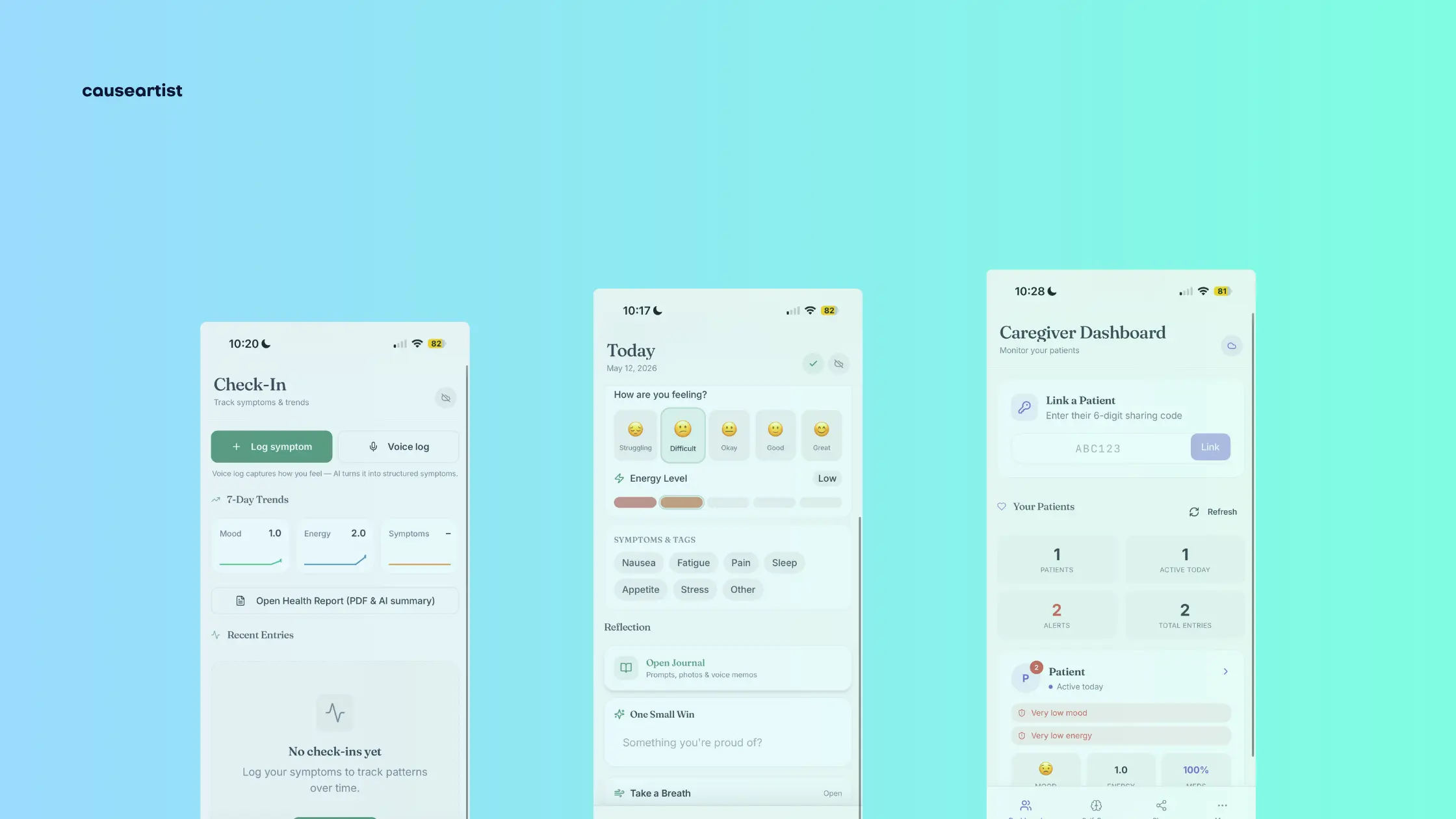
Photo credit: Soothe Note, modified by Causeartist
Key takeaways
- Soothe Note is built around the gap between oncology appointments, not as a replacement for clinical systems or patient portals.
- Daily check-ins, symptom logs, and appointment reports are designed to stay usable on hard treatment days.
- Patients control caregiver sharing, including the ability to revoke access; private journal entries stay private.
- The founders say they will not monetize by selling health information or introducing advertising.
Cancer care does not stop when a patient leaves the hospital.
Between oncology appointments, patients and caregivers are often trying to keep track of symptoms, medications, energy levels, questions for doctors, and the everyday realities of treatment. Much of that information can become scattered, forgotten, or difficult to reconstruct weeks later.
That experience led high school students Teddy Aaron and Brynn to co-found Soothe Note, a free digital tool designed to help cancer patients and caregivers organize what happens between medical appointments.
Brynn experienced that challenge firsthand after being diagnosed with stage 3 germ cell ovarian cancer at 15, undergoing surgeries and chemotherapy, entering remission, and later facing a recurrence. Teddy came to the problem from the caregiver side after a close family member was diagnosed with cancer.
Together, they are building Soothe Note around a simple idea: give patients and caregivers a calmer, more organized way to navigate treatment without trying to replace medical professionals or clinical care.
In this Causeartist Spotlight, Brynn shares how their personal experiences shaped the product, why the time between appointments remains an overlooked part of cancer care, and how the founders are thinking about privacy, accessibility, and building a responsible health technology company while still in high school.
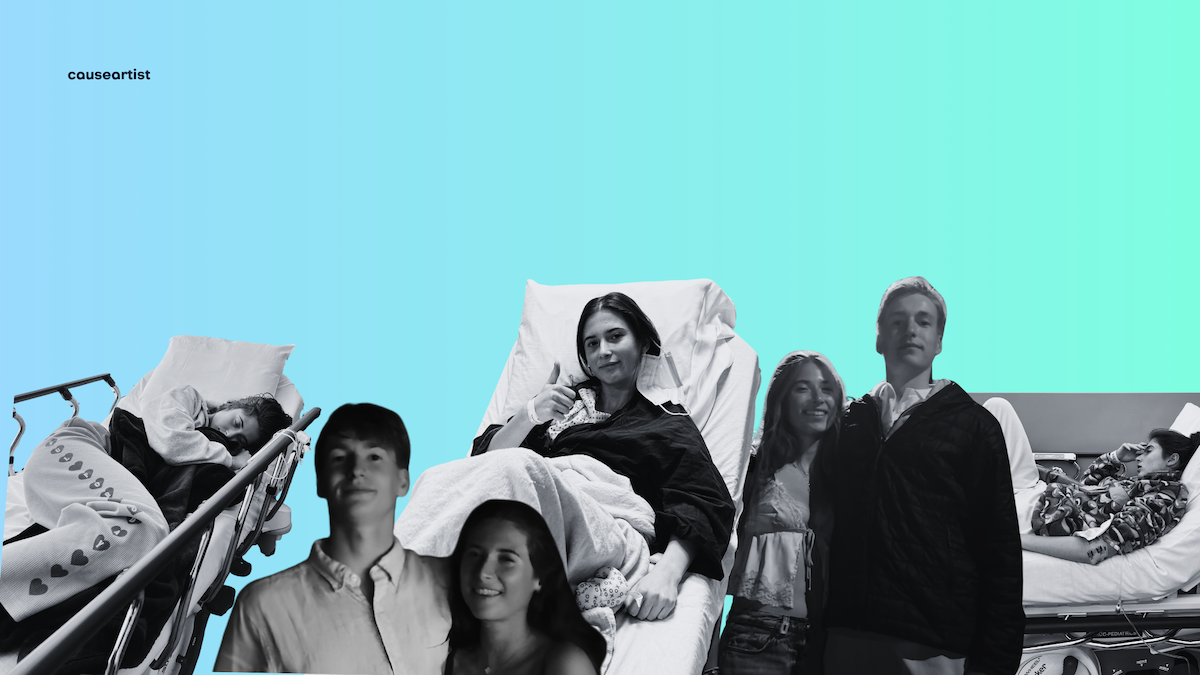
Q: Both of you came to Soothe Note from very different sides of cancer care. What experiences made you realize something like Soothe Note needed to exist?
A: I was diagnosed with stage 3 germ cell ovarian cancer at 15. I went through surgeries and chemotherapy, entered remission, and then faced a recurrence during my junior year.
During treatment, there were so many symptoms, medications, and questions to remember that important details could easily be forgotten before an appointment.
Teddy understood the same problem from the caregiver side after a close family member was diagnosed. When he showed me Soothe Note, it immediately made sense.
We were experiencing the same challenges from different sides and wanted to build something we wished we had.
Q: What was happening between oncology appointments that existing tools were not solving well enough?
A: The hardest parts of treatment often happen at home.
I might wake up feeling nauseous or exhausted, but by the time I saw my oncologist weeks later, I would not always remember exactly when it happened or how often.
Patient portals organize clinical information, but they do not capture everything patients experience between visits. Notes also become scattered across different places.
Soothe Note gives patients and caregivers one calm place to record what changes as it happens.
Q: How does someone use Soothe Note during a typical week of treatment?
A: A patient can complete a short daily check-in covering mood, energy, medications, hydration, meals, rest, movement, and one small win.
They can also log symptoms, body locations, appointments, medications, and questions for their doctor.
Before an appointment, Soothe Note organizes that information into a report the patient can review or share with their care team.
Patients can also connect a trusted caregiver through a sharing code. That caregiver can see selected updates without repeatedly asking the patient how they are feeling.
Q: How did your experiences influence the product's design?
A: Our main design question is, “Would this still feel okay on a hard day?”
During treatment, the last thing I wanted was another complicated task. Soothe Note lets patients complete a quick check-in, skip what does not matter that day, and return whenever they are ready.
Control was also important to me because cancer can take away so much of it.
Patients decide whether to connect a caregiver and can revoke access at any time. Caregivers stay informed without making the patient feel watched or micromanaged, while private journal entries remain private.
Q: What have you learned from cancer programs and support organizations?
Enjoying this? Get the next one.
We send one email each Monday with what just published on Causeartist.
Free. Unsubscribe anytime.
Sources
FAQ
What is Soothe Note?
Soothe Note is a free digital tool that helps cancer patients and caregivers organize symptoms, medications, questions, and daily check-ins between oncology appointments. It is not medical care and does not replace clinicians.
Who founded Soothe Note?
High school students Teddy Aaron and Brynn co-founded Soothe Note. Brynn was diagnosed with stage 3 germ cell ovarian cancer at 15; Teddy came to the problem from the caregiver side.
Does Soothe Note sell health data or show ads?
The founders say the app is ad-free and does not sell personal or health information. Essential patient and caregiver features are intended to stay free.
Related Articles
View all articles
Photo credit: Turnout: Modified by Causeartist
Photo credit: Mars, Incorporated
Photo credit: Triomics
Get the Monday roundup
New companies, funders, stories, podcasts, and case studies. One email a week.
Join 25,000+ Causeartists
Free. Unsubscribe anytime.