

Soothe Note
Free cancer-care tracking for patients and caregivers between appointments.
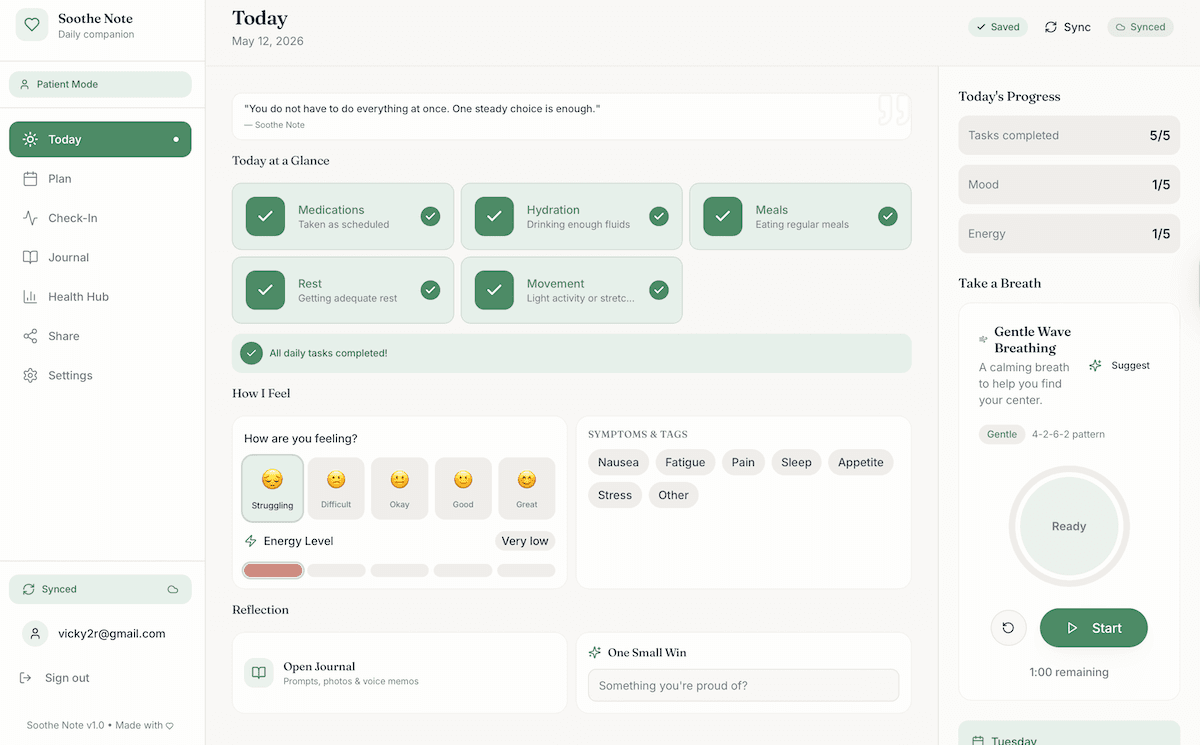
Photo credit: Soothe Note
Browse related lists
Related on Causeartist
- Founder
- Teddy Aaron and Brynn Forlizzi

Soothe Note is a free consumer app for cancer patients and the people who support them. It is meant for the days between oncology visits: daily check-ins (mood, energy, medications, hydration, meals, rest, movement, one small win), symptom logs with intensity and body location, medication schedules, appointment questions, post-visit notes, and a private journal that caregivers cannot see.
Teddy Aaron (caregiver side) and Brynn Forlizzi (two-time teen cancer survivor) founded the product in Connecticut in 2026 while still in high school. Patients can link trusted caregivers with a sharing code and revoke access; linked caregivers get read-only updates, support pings, and their own burnout check-ins. Before a visit, Health Hub can turn those logs into printable reports and AI-assisted drafts that the patient is told to review, because they are not medical advice.
The app is local-first: signed-out data stays on device; an optional account syncs through Supabase. Soothe note has iPhone availability, Android under Google Play review, 15 languages, an advisory group of seven oncology/palliative/advocacy professionals, and coverage in 25+ outlets. Core patient and caregiver features are free; Soothe Note Plus is an optional paid layer. The company does not sell health data or run ads.
Key benefits
Built for the days between visits
Daily check-ins, symptoms, medications, and questions live in one place so patients are not reconstructing weeks of treatment from memory in the exam room.
Patient-controlled caregiver sharing
A sharing code links trusted caregivers to read-only updates. Access can be revoked; private journal entries stay private.
Visit-ready reports, not a diagnosis
Health Hub organizes logs into printable reports and optional AI drafts to review before appointments. The product does not replace clinicians.
Free core experience
The company positions essential patient and caregiver tools as free and says it will not monetize by selling health information or running ads.
Privacy designed for treatment life
Local-first by default, encrypted sync when you sign in, no third-party ad trackers in the stated stack, plus export and deletion controls in settings.
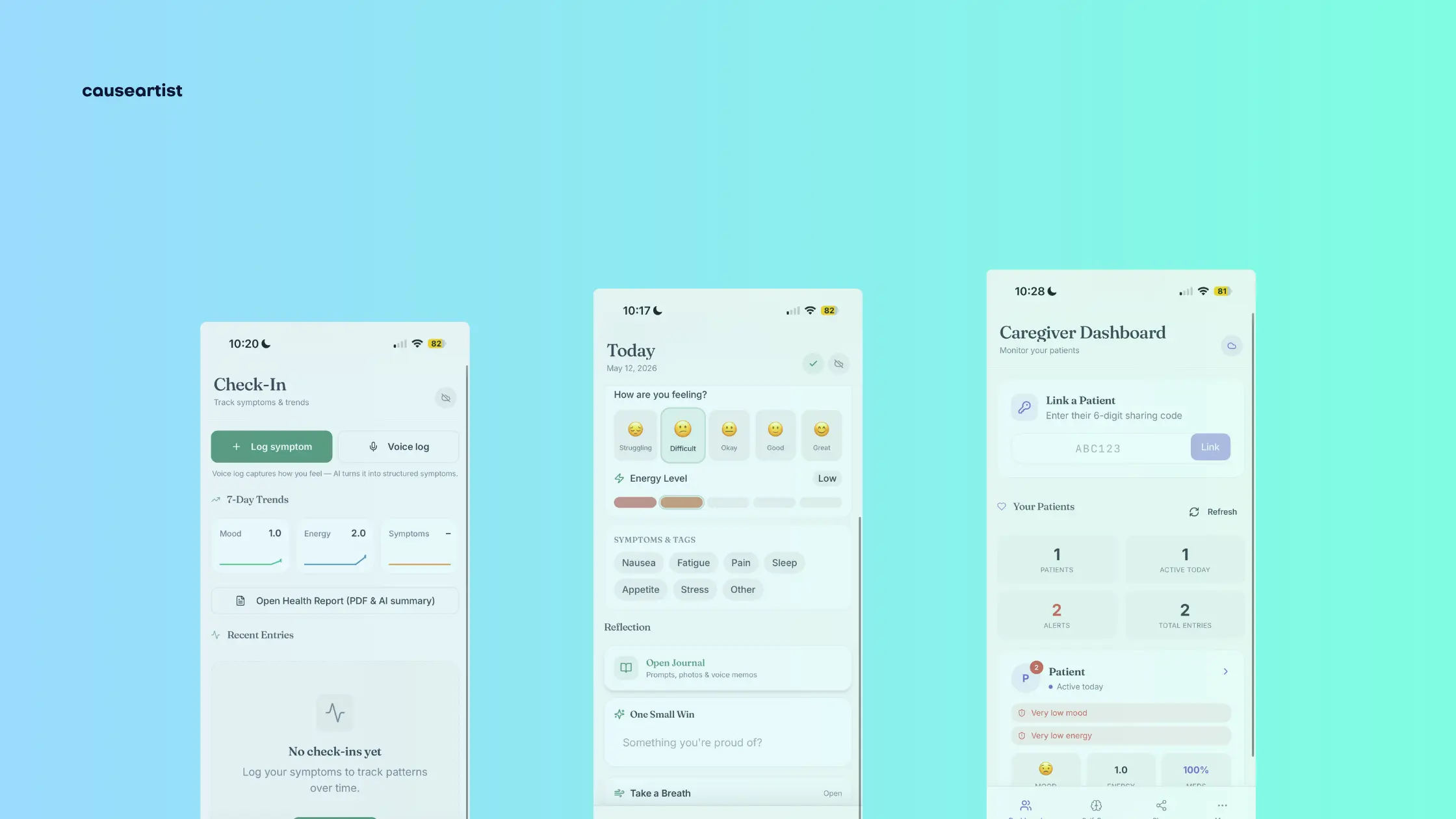
Impact is organizational, not clinical. Soothe Note does not diagnose, treat, pull hospital records, or operate under a HIPAA business associate agreement. It sits in the gap patient portals leave: what happened at home, what the patient wants to ask, and how a caregiver can stay informed without interrogating the patient after every hard day.
The mechanism is capture plus control. Short check-ins and symptom logs reduce reliance on memory weeks later. Patient-controlled sharing (code in, revoke anytime; private journal stays private) is the social-impact layer for caregivers.
Visit-ready reports and optional Groq-powered summaries are conversation aids, with an explicit review-before-use warning. The business constraint the founders have stated publicly is that essential patient/caregiver tools stay free and that health information is not an advertising or resale asset.
Built by a two-time teen cancer survivor and a caregiver, Soothe Note bridges the gap between oncology visits with free symptom logs, caregiver sharing, and visit-ready reports across 15 languages. Core features remain free and health data is never sold or used for ads.
Frequently asked questions
- What does Soothe Note do?
- Soothe Note is a free consumer app for cancer patients and the people who support them. It is meant for the days between oncology visits: daily check-ins (mood, energy, medications, hydration, meals, rest, movement, one small win), symptom logs with intensity and body location, medication schedules, appointment questions, post-visit notes, and a private journal that caregivers cannot see. Tedd…
- Where is Soothe Note based?
- Soothe Note is based in Connecticut, United States.
- What sector does Soothe Note operate in?
- Soothe Note operates in the AI & Technology sector.
- Who founded Soothe Note?
- Teddy Aaron and Brynn Forlizzi


