
12 Carbon Credit Platforms Redefining the Climate Economy
Explore innovative carbon credit platforms transforming how businesses, developers, and consumers take climate action.

Photo credit: causeartist
Key takeaways
- Carbon credit platforms now offer more than simple offset purchasing, including project comparison, quality ratings, procurement, portfolio management, APIs, and carbon removal infrastructure.
- Businesses can compare carbon projects based on factors such as methodology, permanence, location, price, accreditation, and independent ratings.
- Platforms serve different buyers, from individuals and small businesses to enterprise sustainability teams, developers, carbon traders, and Web3 applications.
- Carbon removal approaches available across these platforms include direct air capture, biochar, enhanced weathering, reforestation, biomass-based removal, and other nature-based solutions.
- Buyers should evaluate credit quality, additionality, permanence, verification standards, project transparency, and retirement processes before purchasing carbon credits.
As climate tech startups and carbon marketplaces gain momentum, a new wave of carbon credit platforms is helping businesses, developers, and consumers take measurable climate action.
These platforms go beyond traditional offsetting—they're building transparency, accessibility, and innovation into the world of carbon markets.
Whether you're looking to buy carbon offsets, integrate climate action into your products, or support regenerative environmental projects, these platforms are leading the way.
Carbon Compared
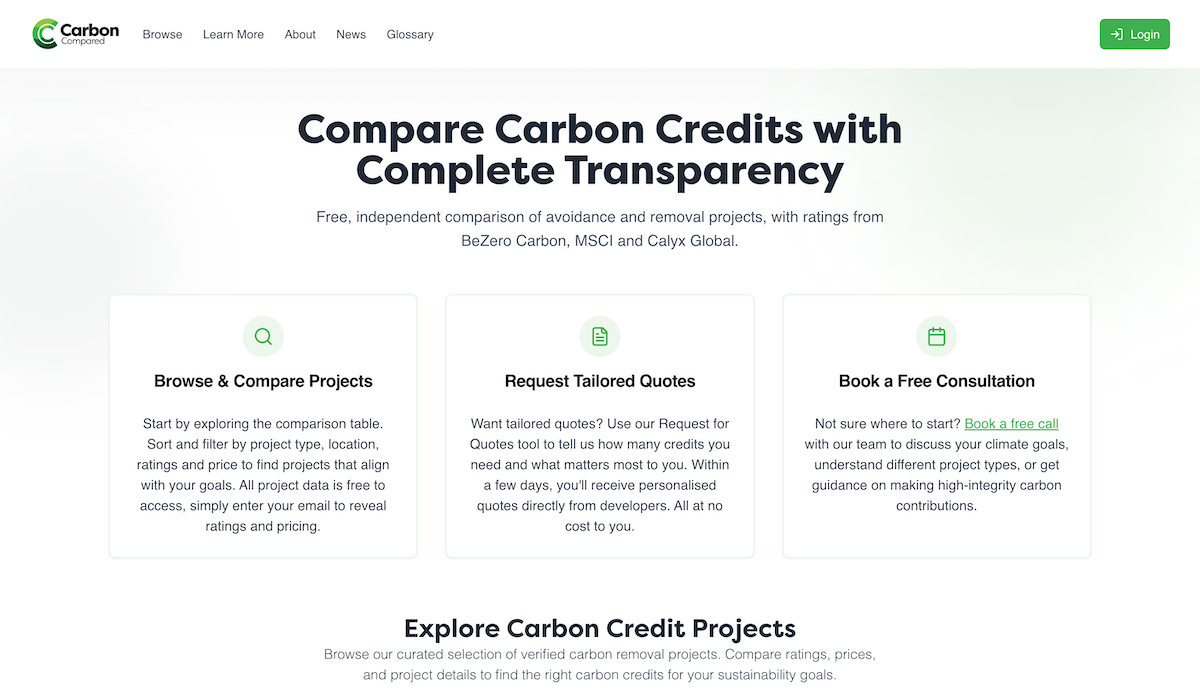
Carbon Compared is a carbon credit comparison platform designed to make the voluntary carbon market easier to navigate. It helps companies and buyers discover and compare carbon removal projects based on factors such as project type, location, price, permanence, accreditation, and third-party ratings.
The platform brings project data into one place, covering approaches such as direct air capture, biochar, enhanced weathering, biomass-based removals, and other carbon removal methods. Buyers can browse projects for free, request tailored quotes from developers, or book a consultation for additional guidance.
Carbon Compared focuses on transparency and informed decision-making rather than promoting a single project or methodology. Its goal is to lower the barriers to purchasing high-integrity carbon credits by making project quality, pricing, certifications, and availability easier to compare.
Key Features
Compare carbon credit projects by price, permanence, methodology, location, and availability
View third-party ratings from providers including BeZero Carbon, Calyx Global, and MSCI
Filter projects by credit type, accreditation, vintage, project sector, and certifications
Request tailored quotes directly from carbon project developers
Access both spot and pre-issuance carbon credits
Impact Focus
High-integrity carbon removal
Direct air capture
Biochar and biomass-based removals
Enhanced weathering
Nature-based and other verified climate solutions
Greater transparency in carbon credit purchasing
Who It's For
Companies purchasing carbon credits
Sustainability and climate teams
Carbon removal buyers
Corporate climate leaders
Organizations comparing carbon projects before purchasing
KlimaDAO
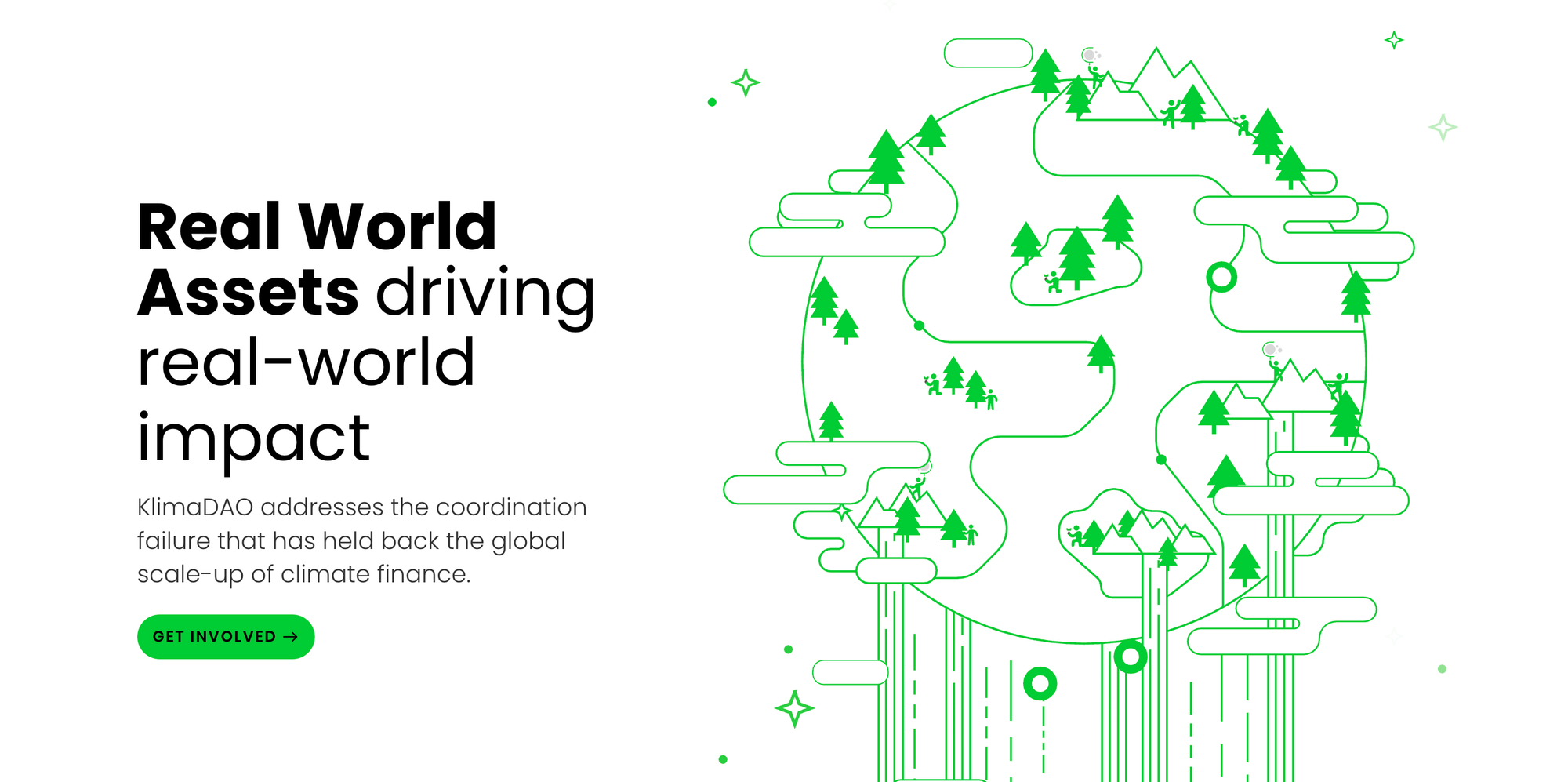
KlimaDAO is a decentralized autonomous organization focused on creating transparent and efficient carbon markets using blockchain technology.
It facilitates the purchase, trading, and retirement of carbon credits through its KLIMA token, encouraging climate-positive behaviors in digital communities. KlimaDAO operates with an open governance structure, allowing its community to shape the evolution of carbon finance infrastructure.
Key Features
Tokenized carbon credits (KLIMA token)
On-chain carbon registry
Protocol-owned liquidity model
Impact Focus
Verified carbon offsets
Regenerative finance (ReFi)
Who It's For
Web3 developers
Climate-conscious crypto users
DAOs & digital communities
Pachama

Pachama combines machine learning and satellite imagery to monitor and verify carbon sequestration in forest ecosystems. The platform empowers businesses to confidently invest in nature-based carbon removal projects by providing reliable data on project effectiveness.
Pachama's commitment to integrity in carbon offsetting is redefining trust in environmental impact at scale.
Key Features
Remote sensing & machine learning
Marketplace for high-integrity forest projects
Monitoring dashboards for businesses
Impact Focus
Reforestation
Forest conservation
Carbon removal
Who It's For
Corporates
ESG teams
Sustainability leaders
Moss
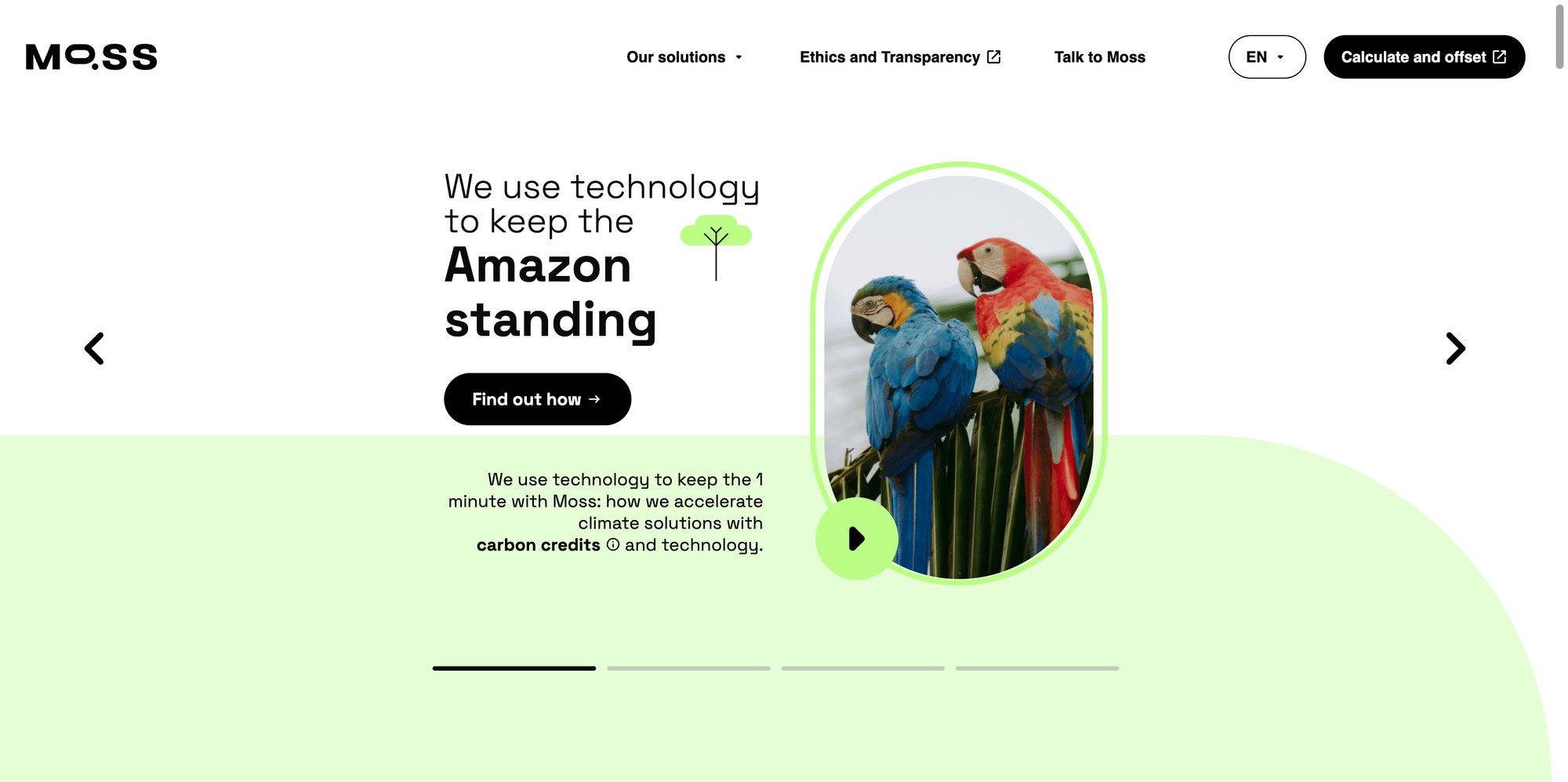
Moss is a Brazilian climate tech company focused on democratizing access to carbon credits across Latin America and globally.
By leveraging blockchain technology, Moss offers tokenized carbon credits (MCO2 tokens) that represent verified carbon offset projects, primarily in the Amazon rainforest.
Moss makes it easy for individuals and companies to offset their emissions while supporting the preservation of one of the planet’s most critical ecosystems.
Meet the MOSS Carbon Credit Marketplace and the World’s First Green Digital Asset - Causeartist

Key Features
Tokenized carbon credits (MCO2)
Blockchain transparency
Marketplace for Amazon rainforest offsets
Impact Focus
Forest conservation
Amazon rainforest protection
Verified carbon offset projects
Who It's For
Individuals
Corporates
Blockchain users
Senken
Enjoying this? Get the next one.
We send one email each Monday with what just published on Causeartist.
Free. Unsubscribe anytime.
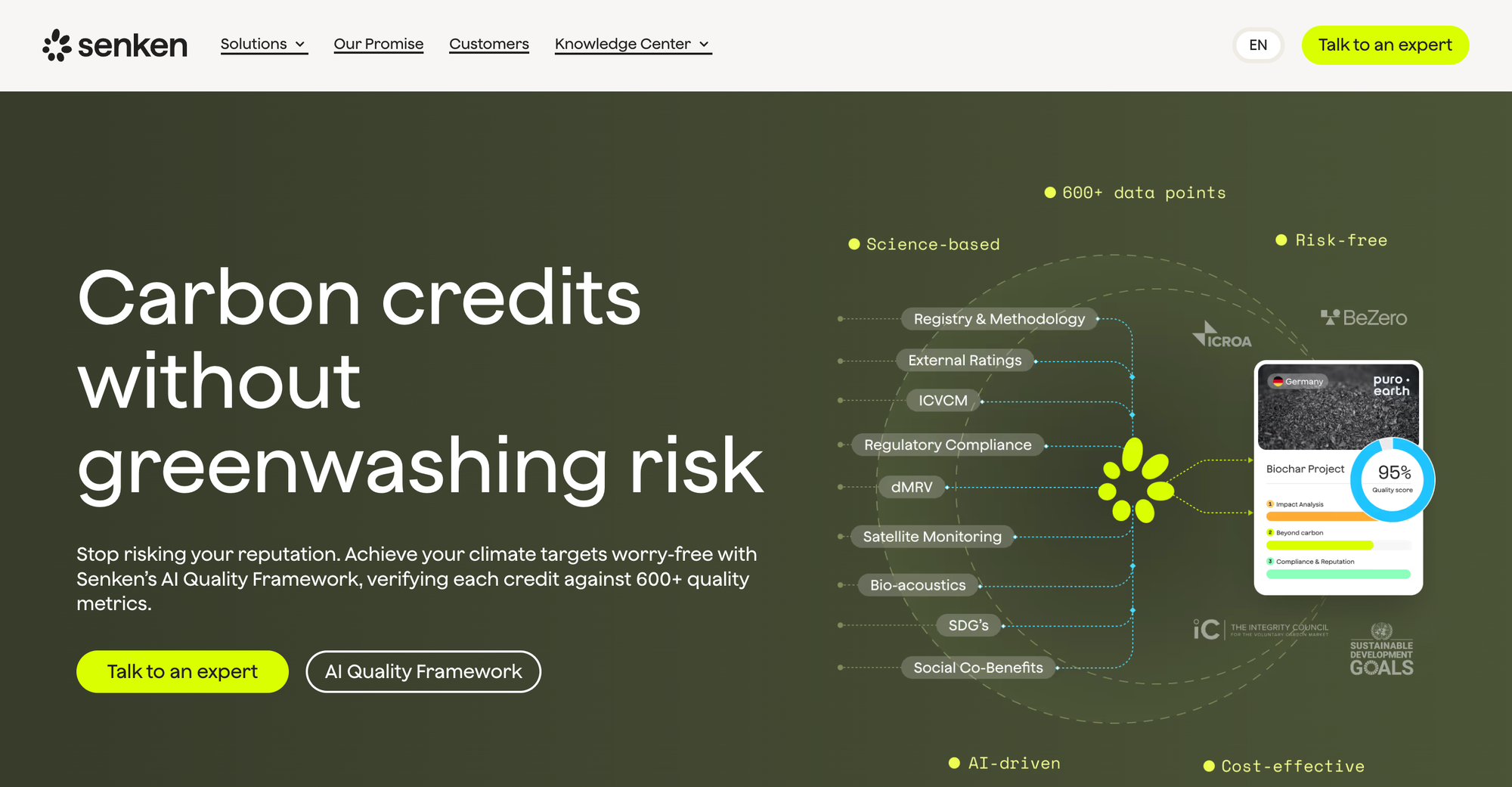
Senken is a carbon credit procurement platform that helps organizations design, source, and report high-integrity carbon credit portfolios. The company focuses on rigorous due diligence, purchase-to-retirement traceability, and documentation aligned with CSRD, CDP, and SBTi requirements.
Buyers can choose between guided enterprise procurement with multi-year offtakes or quick, self-serve purchases through an online checkout flow.
Key Features
• 600+ data-point Quality Framework to screen and verify projects before listing
• Oxford-aligned portfolio design across near-, mid-, and long-term horizons
• Purchase-to-retirement traceability with exportable documentation for audits and disclosures
• Spot purchases or multi-year offtake agreements to secure delivery and pricing
• Two buying options: enterprise procurement or self-serve checkout for smaller volumes
Impact Focus
• Durable removals such as biochar, mineralization, and direct air capture (DAC)
• High-integrity nature-based removals and reductions including afforestation, reforestation, peatland, and blue carbon projects
• Diversified portfolios designed to balance permanence and delivery risk
Who It’s For
• Enterprises seeking audit-ready, low-risk carbon procurement aligned with CSRD and SBTi timelines
• Procurement and sustainability teams prioritizing traceability and defensible climate claims
• SMEs and teams making smaller, immediate purchases through a simple self-serve checkout process
Carbonfuture
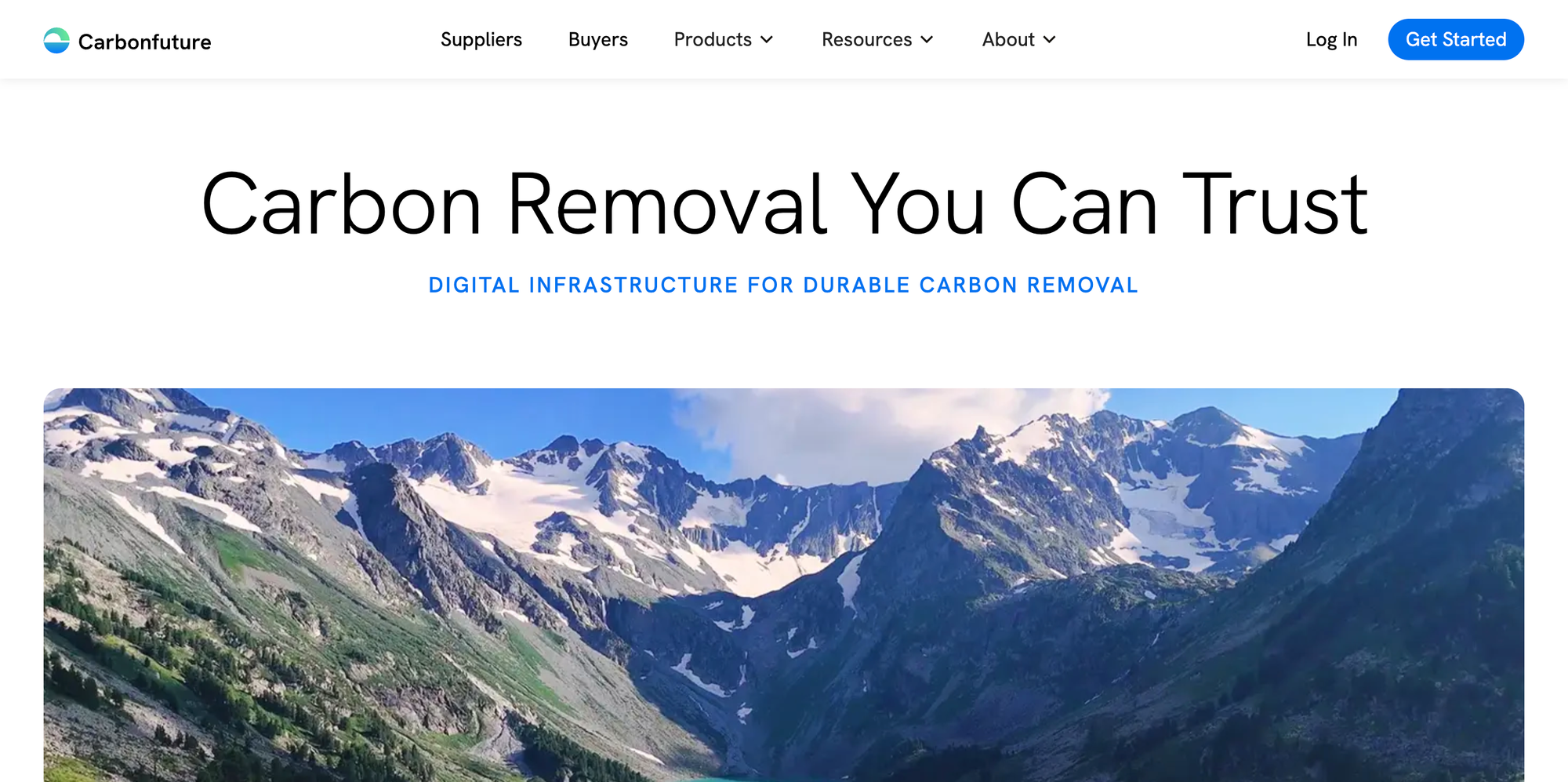
Carbonfuture provides a data-driven platform for managing and verifying carbon removal credits, particularly through biochar and other long-term sequestration methods.
The platform ensures that all projects meet rigorous scientific standards and are continuously monitored for carbon permanence. It acts as a full-service hub for suppliers and buyers of high-integrity carbon removals.
Key Features
MRV (Monitoring, Reporting, Verification) tooling
Transparent marketplace
Science-backed methodology
Impact Focus
Biochar carbon removal
Durable sequestration projects
Who It's For
Carbon buyers
Removal suppliers
Enterprises seeking net-zero goals
Flowcarbon
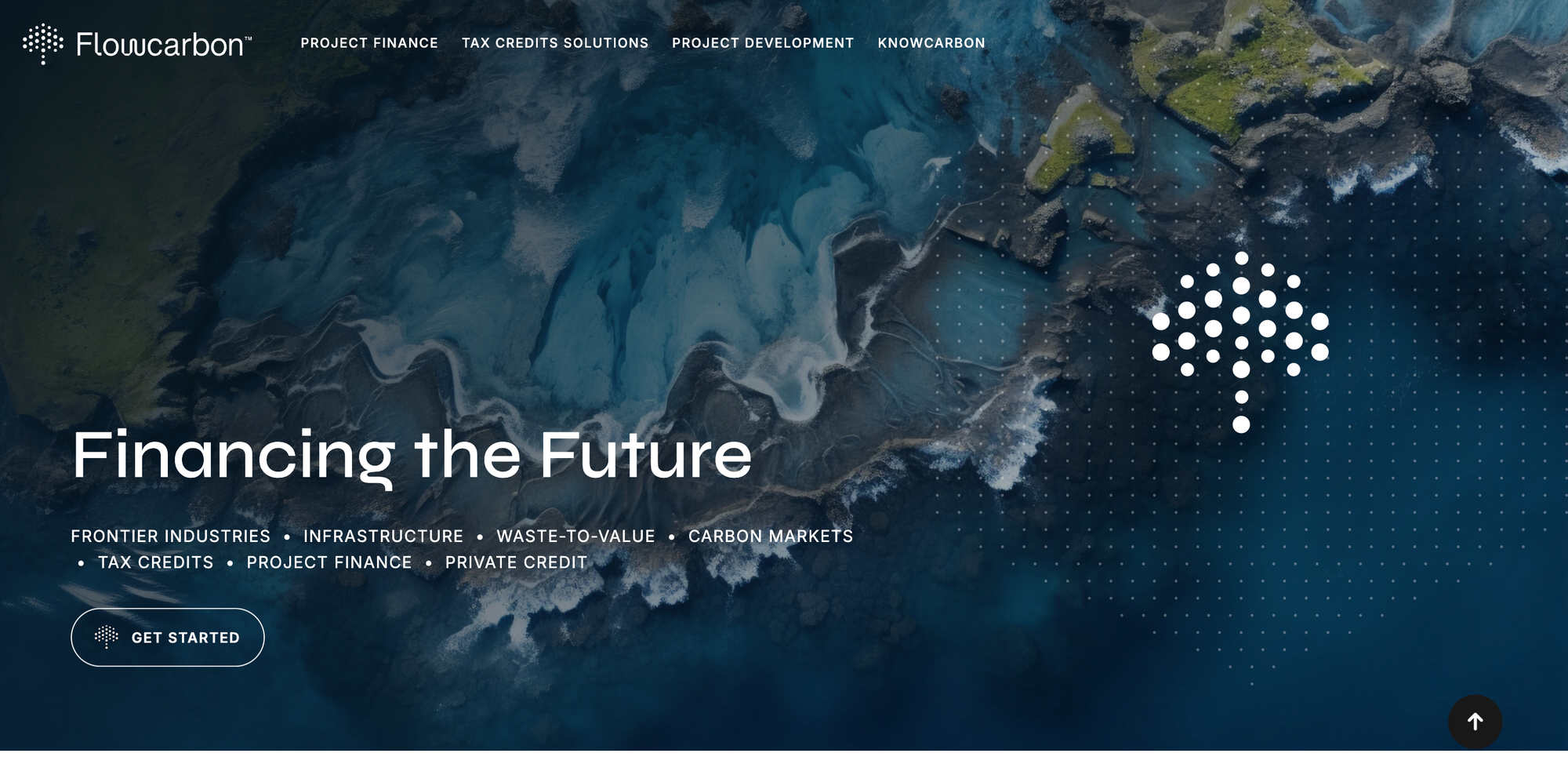
Flowcarbon is building a decentralized marketplace for carbon credits by tokenizing nature-based assets and making them easily tradable on the blockchain.
It bridges traditional carbon standards with modern Web3 tools, aiming to increase access to and efficiency of climate finance. The platform’s core focus is to bring scale and liquidity to the voluntary carbon market.
Key Features
Tokenized credits (Goddess Nature Token)
Smart contract-based trading
Verra-certified offsets
Impact Focus
Forest conservation
Who It's For
Web3 platforms
Exchanges
Carbon traders
Sylvera
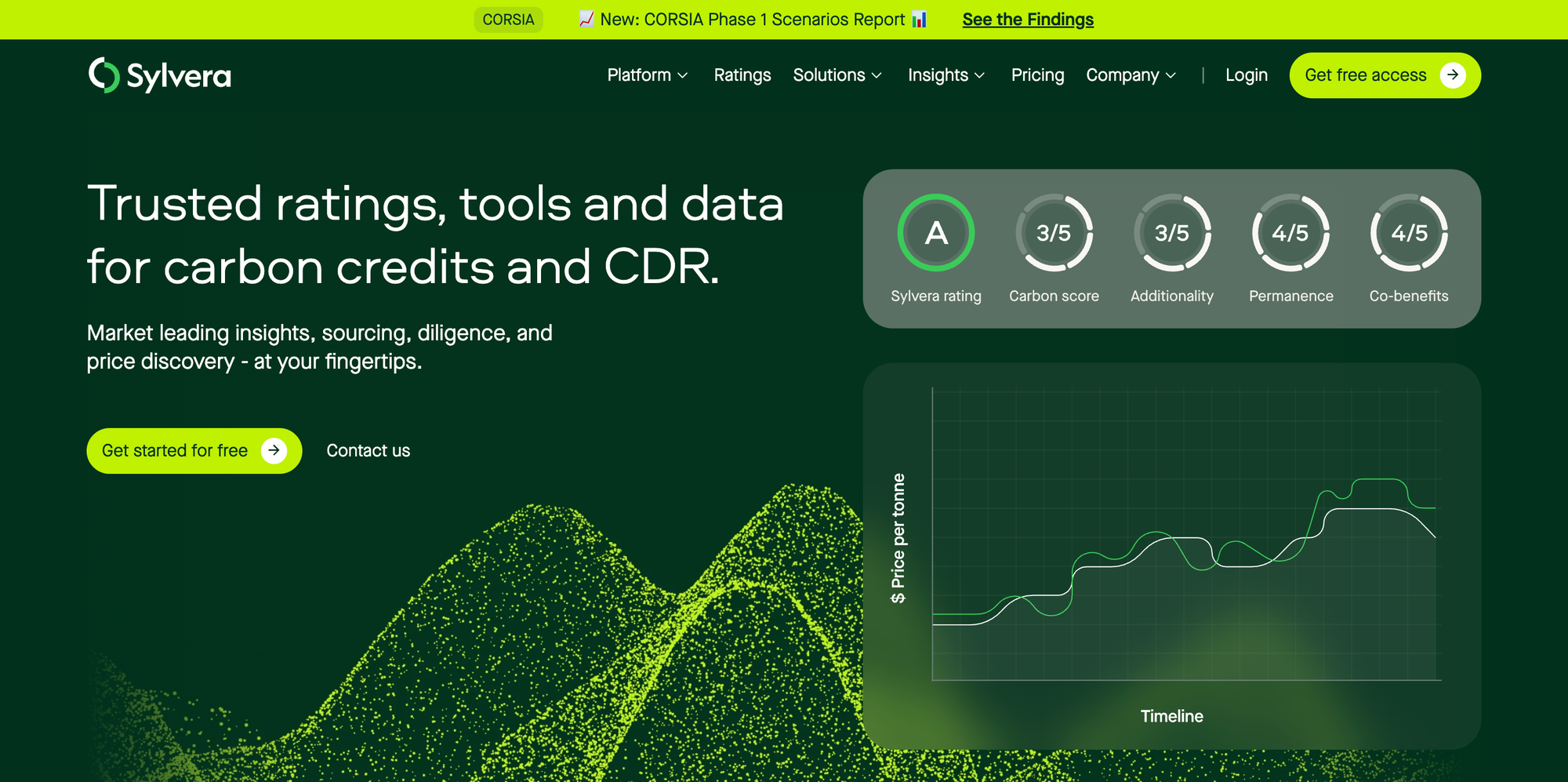
Sylvera provides data and ratings for carbon offset projects, helping companies understand the quality and impact of their climate investments.
Using satellite imagery, academic research, and proprietary algorithms, Sylvera offers independent project evaluations that empower more effective and accountable sustainability strategies.
Key Features
Carbon credit rating system
Project performance tracking
API & portfolio analytics
Impact Focus
Nature-based projects
Verified emission reductions
Who It's For
Investors
Corporates
Carbon traders
Ceezer
Ceezer is a digital platform that helps enterprises design and manage impactful carbon credit portfolios. It offers a curated selection of high-quality offsets and enables automated procurement strategies.
Ceezer stands out for its focus on matching companies with projects that align with their goals and values.
Key Features
Carbon portfolio builder
Supplier matching algorithm
Procurement automation
Impact Focus
High-quality removals
Avoidance & mitigation
Who It's For
Enterprises
Procurement & ESG teams
Toucan Protocol
Toucan Protocol offers open-source infrastructure for bringing carbon credits on-chain, enabling programmable carbon assets and decentralized finance applications.
It allows users to bridge traditional credits to blockchain environments and interact with carbon assets in new, innovative ways. Toucan serves as a foundational tool for the ReFi (Regenerative Finance) ecosystem.
Key Features
Bridging real-world credits to Web3
Programmable carbon assets
Carbon pool liquidity
Impact Focus
Verified carbon standards
Climate-positive dApps
Who It's For
Developers
DAOs & protocols
On-chain marketplaces
Terrapass
Terrapass is one of the longest-running providers of carbon offsets in the U.S., offering a range of offset and renewable energy products tailored to individuals and small businesses.
With accessible tools and a wide selection of verified projects, Terrapass makes carbon neutrality achievable for everyday consumers and organizations.
Key Features
Carbon calculators
Offset subscriptions
Renewable energy credits
Impact Focus
Landfill gas capture
Farm power
Wind & solar projects
Who It's For
Individuals
SMBs
Sustainability consultants
Cloverly
Cloverly is an API-first platform that integrates carbon offsetting directly into business workflows, from e-commerce checkouts to logistics platforms.
It sources high-quality credits from global projects and provides real-time emissions calculations and offset purchases, making climate action seamless and scalable.
Key Features
Real-time offset API
Embeddable checkout tools
Transparent credit sourcing
Impact Focus
Renewable energy
Reforestation
Direct air capture
Who It's For
E-commerce brands
SaaS platforms
Logistics providers
Sources
- Carbon Compared — Carbon Compared
- KlimaDAO — KlimaDAO
- Pachama — Pachama
- Moss — Moss
- Senken — Senken
- Carbonfuture — Carbonfuture
- Flowcarbon — Flowcarbon
- Sylvera — Sylvera
- Ceezer — Ceezer
- Toucan Protocol — Toucan Protocol
- Terrapass — Terrapass
- Cloverly — Cloverly
FAQ
What is a carbon credit platform?
A carbon credit platform helps individuals or organizations discover, evaluate, purchase, manage, or retire carbon credits. Some platforms operate marketplaces, while others specialize in procurement, ratings, portfolio management, carbon removal, or market infrastructure.
What are the best carbon credit platforms?
The right platform depends on the buyer's needs. Options include Carbon Compared for project comparison, Pachama for nature-based projects, Sylvera for carbon credit ratings, Ceezer and Senken for enterprise procurement, Carbonfuture for carbon removal, and Cloverly for API-based climate integrations.
How do companies buy carbon credits?
Companies can purchase carbon credits through marketplaces, project developers, brokers, or procurement platforms. Many platforms allow buyers to compare projects by methodology, location, price, certification, permanence, and expected delivery before purchasing or retiring credits.
What should buyers look for when comparing carbon credits?
Important factors include additionality, permanence, verification methodology, project transparency, delivery risk, vintage, location, third-party ratings, price, and how credits are tracked and retired.
What is the difference between carbon avoidance and carbon removal credits?
Avoidance credits represent activities intended to prevent or reduce emissions that might otherwise occur. Carbon removal credits represent projects that remove carbon dioxide from the atmosphere and store it through biological, geological, or technological processes.
Can individuals buy carbon credits?
Yes. Some carbon credit platforms support individual and small-business purchases, while others are designed primarily for enterprise buyers purchasing larger volumes or building long-term carbon portfolios.
Related Articles
View all articles
Photo credit: NorthX Climate Tech / northx.ca
Photo credit: Green Accelerator / greenax.org
Photo credit: Soothe Note, modified by Causeartist
Get the Monday roundup
New companies, funders, stories, podcasts, and case studies — one email a week.
Join 25,000+ Causeartists
Free. Unsubscribe anytime.