Green Accelerator Launches to Unlock Global Capital for Sustainable Projects in Emerging Markets

The Green Accelerator debuted in Hong Kong on September 7, 2026 as a nonprofit platform using philanthropic capital to turn proven climate technologies into bankable project portfolios for emerging markets.

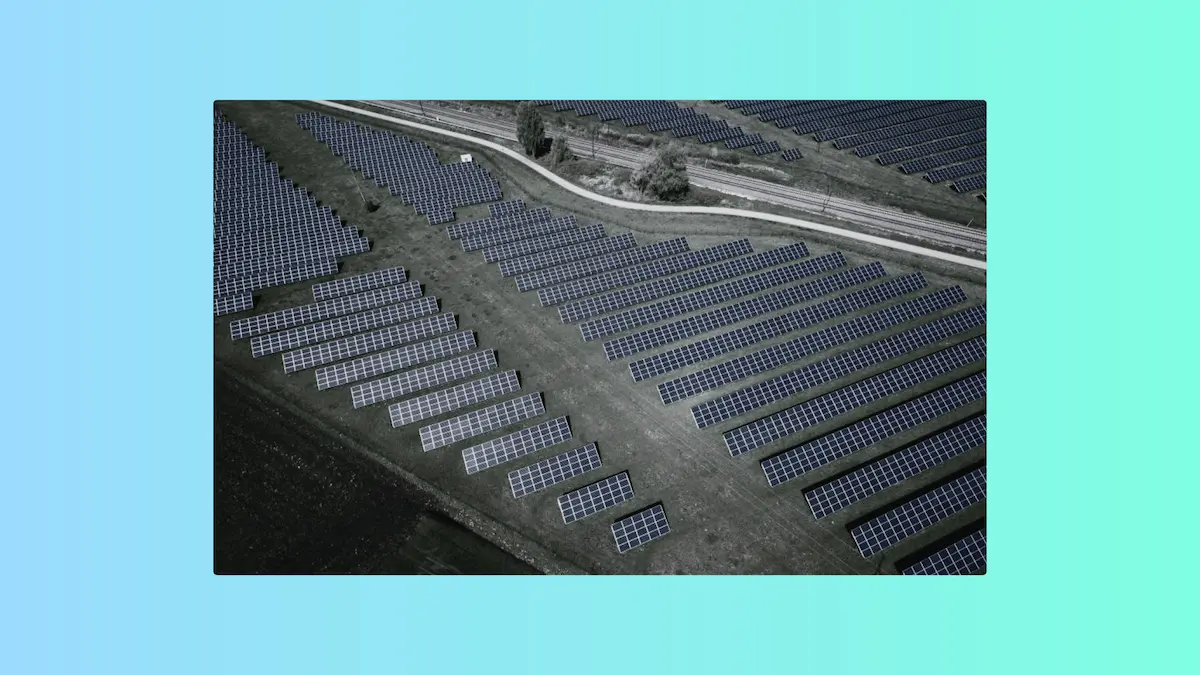
Solar farm illustrating green infrastructure the Green Accelerator aims to make bankable in emerging markets

Photo credit: Green Accelerator / greenax.org

Key takeaways

  • Green Accelerator launched in Hong Kong on 7 September 2026 at the HKGFA Annual Forum as a philanthropy-funded nonprofit project-preparation platform.
  • The stated problem is the EMDE “bankability gap”: many technically viable green projects never reach financial close with MDBs, sovereign funds, or commercial banks.
  • Focus areas are energy transition, sustainable food systems, circular economy, and water and climate resilience, with 14 technology solutions listed at launch.
  • Founding members include AIIB, CISL, HKSAR EPD, GenZero, IFS, Silk Road Fund, and HSBC, with Hong Kong Budget 2026–27 political backing.
  • GA is hosted by Sprinkles (HK) Charity Foundation and lists Hong Kong, London, and Singapore among its office locations.

The Green Accelerator (GA) made its public debut on 7 September 2026 at the 2026 Hong Kong Green Finance Association Annual Forum. The new nonprofit platform is designed to put green technologies and philanthropic funding to work on a problem climate financiers know well: too many viable projects in developing countries never become bankable enough to close.

Hosted in Hong Kong and launched with support referenced in the Hong Kong SAR Government’s 2026–27 Budget, GA says it will use philanthropic capital for project design and preparation, technical assistance, and capacity building. The goal is to turn proven climate solutions into portfolios that can meet the investment criteria of multilateral development banks (MDBs), sovereign wealth funds, and international commercial banks.

Official materials and a PR Newswire release published the same day frame the launch as an attempt to unlock private capital for sustainable projects in emerging markets and developing economies (EMDEs). The organization’s English-language site is greenax.org/en.

The bottleneck: bankable pipelines, not just more pledges

Climate finance still struggles with a pipeline problem. GA’s launch messaging points to a familiar statistic in EMDE markets: only a small fraction of green projects successfully reach financial close. The platform’s own site puts the figure at under 10% in many EMDEs, against an estimated USD 4–6 trillion of annual investment needed by 2050.

That gap is not only a shortage of capital sitting on the sidelines. It is often a shortage of projects that have been prepared to the standard required by large institutions: contracted offtake, proven technology and operators, environmental and social documentation, local delivery capacity, and a capital stack that can absorb early risk.

GA’s answer is to integrate three things that usually sit in different institutions: technology sourcing, project preparation, and blended finance. It describes this as working earlier than typical blended-finance structures that combine concessional and commercial capital once a project is already reasonably formed. Philanthropic and donor capital is meant to cover the stage commercial investors are unwilling to bear, after which projects can be handed on to de-risking facilities and commercial finance.

Where it will work

Operations are organized around four themes where the lack of bankable pipelines is described as a binding constraint:

  • Energy transition and storage

  • Sustainable food systems

  • Circular economy

  • Water and climate resilience

The public technology portfolio at launch lists 14 solutions selected as proven, relatively low-cost, and able to improve project economics. Examples on the site include climate-resilient seeds, vanadium redox flow batteries, high-temperature solar heat, solar-powered modular desalination, rubberwood biomass power, waste-to-fertilizer systems, and plant-based packaging. Potential deployment markets named in those write-ups span parts of South and Southeast Asia, Central Asia, Africa, and Hong Kong itself for demonstration uses.

Dr. Ma Jun, chairman of the preparatory committee and president of the Institute of Finance and Sustainability (IFS), said the accelerator will provide incubation, acceleration, and empowerment services to green-technology projects across developing economies. He said GA also aims to “systematically create new, investable green markets in selected Global South countries by integrating affordable green technologies, developing use cases and building the right ecosystem for green industries.”

Founding members

Enjoying this? Get the next one.

We send one email each Monday with what just published on Causeartist.

Free. Unsubscribe anytime.

GA said it has commitments from the following founding members, listed alphabetically:

  • Asian Infrastructure Investment Bank (AIIB)

  • Cambridge Institute for Sustainability Leadership (CISL)

  • Environmental Protection Department (EPD), the Government of the HKSAR

  • GenZero (Temasek-owned decarbonization investment platform)

  • Institute of Finance and Sustainability (IFS)

  • Silk Road Fund (SRF)

  • The Hongkong and Shanghai Banking Corporation Limited (HSBC)

A steering committee with representatives from all founding members will set strategic direction. The initiative is hosted by Sprinkles (HK) Charity Foundation, described as a Section 88 tax-exempt charity registered in Hong Kong. Contact materials list offices in Hong Kong, London, and Singapore, with general enquiries directed to inquiry@greenax.org.

Hong Kong’s role in the pitch

Paul Chan, Financial Secretary of the HKSAR Government, tied the launch to Hong Kong’s positioning as a green-finance hub: “The Green Accelerator represents another pioneering contribution of Hong Kong to the global green transition. With support from multilateral development banks, think tanks, international financial institutions and innovation flagships, it will bring together projects with the capital and technology to scale them, channelling private capital toward climate solutions in developing countries — while creating new opportunities for Hong Kong’s financial and professional services sector and elevating our position as a global hub for green technology and sustainable finance.”

On the organization’s site, Dr. Ma added that early deployment in the Global South is also expected to include demonstration projects in Hong Kong, using the city’s green-finance and greentech services base.

Additional founding-member comments published on greenax.org emphasize different pieces of the same thesis. AIIB’s Hun Kim pointed to stronger links among technology providers, project sponsors, and investors, including knowledge-sharing through AIIB’s InfraTech Portal. GenZero CEO Frederick Teo framed the shortage as one of bankable, commercially viable solutions that can be implemented at relevant speed. HSBC’s Justin Wu, Head of Sustainability and Climate Change, Asia and Middle East, said the bank is joining as a founding member to help scale climate technologies in emerging markets through capital, expertise, and network.

What this is — and is not

GA is not presenting itself as a new flagship private-equity climate fund. Public copy stresses philanthropy-funded project preparation: experienced operating teams, cost-effective technologies, and an attempt to make Global South projects eligible for institutions that already have climate mandates but thin pipelines.

That distinction matters for founders, project developers, and capital allocators. Applicants and partners are being invited from MDBs, sovereign investors, commercial banks, technology providers, incubators, and professional-services firms, not only from startups raising a priced equity round. Causeartist has added a draft Green Accelerator funder profile in the directory for editorial review.

Whether the model can convert a launch coalition into closed transactions will depend on execution after the forum: which first-country pipelines are chosen, how demonstration projects in Hong Kong connect to EMDE replication, and whether MDB and bank investment committees actually see bankable paper coming out of the preparation work.

Until then, the September 7 announcement is a clear statement of intent from Hong Kong’s green-finance community: treat bankability as a product to be built, not a filter that quietly rejects most of the Global South pipeline.

Sources

  1. Green Accelerator Launches to Unlock Global Capital for Sustainable Projects in Emerging Markets — PR Newswire (2026)
  2. Green Accelerator — Unlocking private capital for bankable green projects — Green Accelerator (2026)

FAQ

What is the Green Accelerator?

It is a Hong Kong–hosted, philanthropy-funded nonprofit platform launched on 7 September 2026 to prepare scalable, bankable green projects in developing countries by combining proven technologies, project preparation, and blended-finance sequencing.

Who are the founding members?

At launch: Asian Infrastructure Investment Bank; Cambridge Institute for Sustainability Leadership; the HKSAR Environmental Protection Department; GenZero; the Institute of Finance and Sustainability; Silk Road Fund; and HSBC.

Does Green Accelerator invest like a venture fund?

Public materials describe philanthropic capital for design, preparation, technical assistance, and capacity building—not a conventional equity fund. The aim is to make projects eligible for later MDB, sovereign, and commercial investment.

Which sectors does it cover?

Energy transition, sustainable food systems, circular economy, and water and climate resilience, with example technologies ranging from long-duration storage and solar heat to desalination, biochar, and packaging.

Where can organizations partner or enquire?

The English site is https://greenax.org/en. General enquiries are listed as inquiry@greenax.org. The platform is seeking philanthropies, development banks, sovereign investors, commercial banks, technology providers, and related partners.

Support
 

Share:

Related Articles

View all articles

Get the Monday roundup

New companies, funders, stories, podcasts, and case studies — one email a week.

Join 25,000+ Causeartists

Free. Unsubscribe anytime.