For more than a decade, the Social Entrepreneurs to Watch list has spotlighted founders and leaders who are using their talents, skills, and lived experience to tackle some of the world’s most pressing challenges through business.
Each year, this annual feature highlights individuals building companies and initiatives that prove impact and entrepreneurship are not opposing forces, but increasingly inseparable.
Over the years, these lists have featured founders working across a wide range of sectors, from ethical fashion and regenerative agriculture to climate technology, education, Web3, food systems, and impact investing.
What connects them is not a single industry, but a shared commitment to solving real problems with durable, scalable solutions.
Over the past ten years, I have had the opportunity to interview nearly 1,000 social entrepreneurs from around the world. Those conversations offer a rare window into the discipline, creativity, and persistence required to build mission driven companies that actually last.
Each year, this list is a moment to pause and reflect on what those stories reveal about where impact is heading next.
Whether reinventing education, addressing climate instability, developing new materials, rebuilding supply chains, or expanding access to essential services, the founders featured in the 2026 list reflect a growing truth: solutions to society’s most complex challenges are not theoretical.
They are being built right now.
The current venture landscape is witnessing a fundamental shift as a new generation of founders demonstrates that high-growth business models can be engineered to systematically address global challenges, including climate volatility, healthcare disparities, financial exclusion, and humanitarian crises.
These entrepreneurs define the contemporary standard of social entrepreneurship.
By integrating measurable impact directly into their core operations, they are building resilient, market-leading brands that prove commercial viability and societal progress are not only compatible but mutually reinforcing.
The impact investing sector has crossed the $1.4 trillion mark in assets under management, with climate tech alone attracting over $80 billion annually.
This shift has unlocked unprecedented capital for founders tackling humanity's toughest challenges.
What distinguishes this cohort from previous generations is their refusal to accept the false dichotomy between profit and purpose.
These entrepreneurs have designed impact into their core business models from day one, not as corporate social responsibility add-ons, but as fundamental competitive advantages.
- A battery recycling company creates circular supply chains that automakers need.
- A geothermal drilling startup could make clean baseload energy available anywhere on Earth.
- A fundraising platform that charges nonprofits nothing processes billions in donations through an innovative tipping model.
The sectors where these founders operate reveal where innovation is most urgently needed: clean energy and climate technology (addressing the infrastructure behind decarbonization), healthcare access and mental health (tackling the global care gap), financial inclusion (serving the 1.4 billion adults without bank accounts), sustainable consumer goods (reimagining supply chains), and accessibility technology (building products for underserved populations).
These aren't niche markets, they represent some of the largest addressable opportunities in the global economy.
What social entrepreneurship looks like in 2026
Social entrepreneurship in 2026 is no longer defined by good intentions or downstream philanthropy.
It is defined by how a company makes money.
The founders featured here have embedded impact directly into their unit economics. Revenue is generated only when a real world problem is solved.
A battery recycler gets paid when critical materials are recovered and reused.
A housing startup earns revenue by building faster, safer, lower waste homes.
A fintech platform grows by eliminating fees or predatory financial practices, not by shifting costs elsewhere.
This generation is not separating mission from margin.
Outcomes are the business model.
Growth reinforces impact instead of diluting it.
The more these companies scale, the more value they create for customers, communities, and systems that are already under strain.
That alignment is the defining feature of impact entrepreneurship today.
Not charity layered on top of business, but business designed so that positive outcomes are unavoidable.
Macro Signals: The End of Optionality
Capital is following conviction, not storytelling
Impact capital has matured. With more than $1.4 trillion now under management, investors are no longer funding experiments based on narrative alone.
Capital is concentrating around founders who show operational discipline, credible pathways to scale, and defensible economics tied to long term demand.
This is shaping founder behavior.
Many of the entrepreneurs on this list are building infrastructure, materials, platforms, and systems rather than consumer apps.
They are raising capital to solve hard problems that take time, not to chase short term growth metrics. The result is companies that look less like experiments and more like institutions in the making.
Regulation as both constraint and catalyst
Regulation plays a complicated role in impact innovation.
In many cases, it slows progress.
Outdated rules, fragmented oversight, and slow moving approval processes can delay deployment, raise costs, and discourage experimentation, particularly in sectors like healthcare, energy, and finance.
Some of the most urgent problems persist not because solutions do not exist, but because navigating compliance is too expensive or too slow for early stage companies.
At the same time, regulation creates markets.
When governments introduce climate disclosure requirements, extended producer responsibility laws, healthcare reimbursement standards, or financial compliance rules, they expose inefficiencies that the private sector is forced to solve.
Entire categories emerge around measurement, reporting, traceability, safety, and compliance. What initially feels like friction becomes demand for new infrastructure.
The founders in this list are operating inside that tension.
They are building companies that can survive regulatory complexity while turning it into a competitive advantage. Instead of fighting the rules, they design products that make compliance easier, cheaper, or unavoidable.
In doing so, they often become the rails on which regulation actually works.
This dynamic is one of the defining forces shaping impact entrepreneurship in 2026. Regulation can slow innovation at the edges, but it also creates the conditions for durable businesses to emerge at the core.
The companies that succeed are the ones that understand both sides and build accordingly.
Consumer and enterprise demand has crossed a threshold
Demand has shifted from preference to expectation. Consumers increasingly expect healthier products, cleaner supply chains, and transparency.
Enterprises and governments are under pressure to prove compliance, resilience, and social responsibility.
Recent research found that millennials and adult Gen Z together account for about 32% of total consumer spending in the U.S., up 8 percentage points since 2020.
With over 70% of this cohort willing to pay a premium for verified sustainable goods, impact has moved from a "niche" value to a core competitive advantage.
High-growth brands like Sunday and KENT aren't winning just because they are "green," but because they offer superior performance in a category where the "legacy" option is now seen as a liability.
Patterns we see across these 50 founders
Looking across all 50 entrepreneurs, several clear patterns emerge.
Many are solving problems they lived through.
Personal experience shows up again and again as the starting point, whether it is navigating broken healthcare systems, growing up in underserved communities, working inside outdated industries, or witnessing environmental damage firsthand.
Lived experience is shaping sharper problem definition and stronger founder conviction.
Infrastructure is winning over surface level solutions.
These founders are building the plumbing, not the paint. Payment rails, data systems, materials, manufacturing processes, energy infrastructure, and public benefit technology appear far more often than consumer facing apps chasing attention.
Distribution matters more than virality.
A large share of these companies sell to enterprises, governments, institutions, or platforms. They prioritize long term contracts, embedded partnerships, and system level adoption over rapid user growth driven by marketing.
Hardware and materials are back.
From batteries and building materials to medical products and sustainable inputs, physical world innovation is surging.
Software alone is not enough to solve climate, housing, or healthcare challenges. These founders are comfortable operating where atoms and bits meet.
Global South innovation is leading, not following.
Several of the most compelling models are emerging from Africa, Latin America, South Asia, and the Middle East.
Financial inclusion and fintech for good
Max Friedman, Liran Cohen, and Ari Krasner built the free fundraising platform
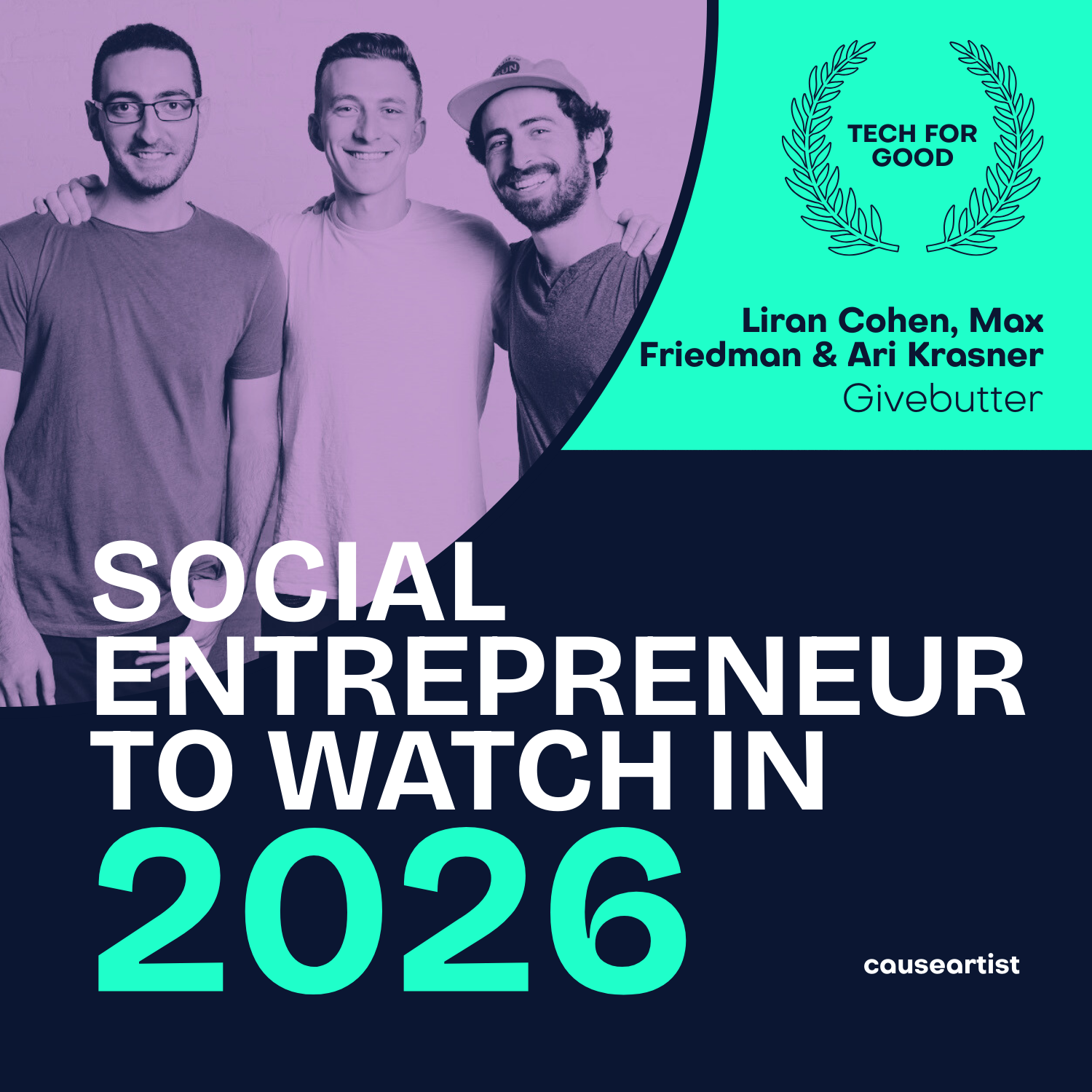
Max Friedman, Liran Cohen, and Ari Krasner met as students at George Washington University and noticed a problem: existing fundraising platforms charged fees of 5-8% plus payment processing, significantly reducing the amount that actually reached charitable causes.
They founded Givebutter to create a truly free fundraising platform. The company offers donation pages, crowdfunding campaigns, peer-to-peer fundraising, event ticketing, and donor management, all without platform fees to nonprofits.
Revenue comes from optional "tips" that donors can add to support Givebutter.
The model proved remarkably successful.
Givebutter has processed over $8 billion in donations and serves tens of thousands of nonprofits.
The company raised a $50 million Series A in 2024 and consistently ranks among the highest-rated fundraising platforms for customer satisfaction. By eliminating the platform fee, Givebutter has enabled millions more dollars to reach charitable causes.
Martin Simms and Aaron Rafferty is building the world’s first impact exchange
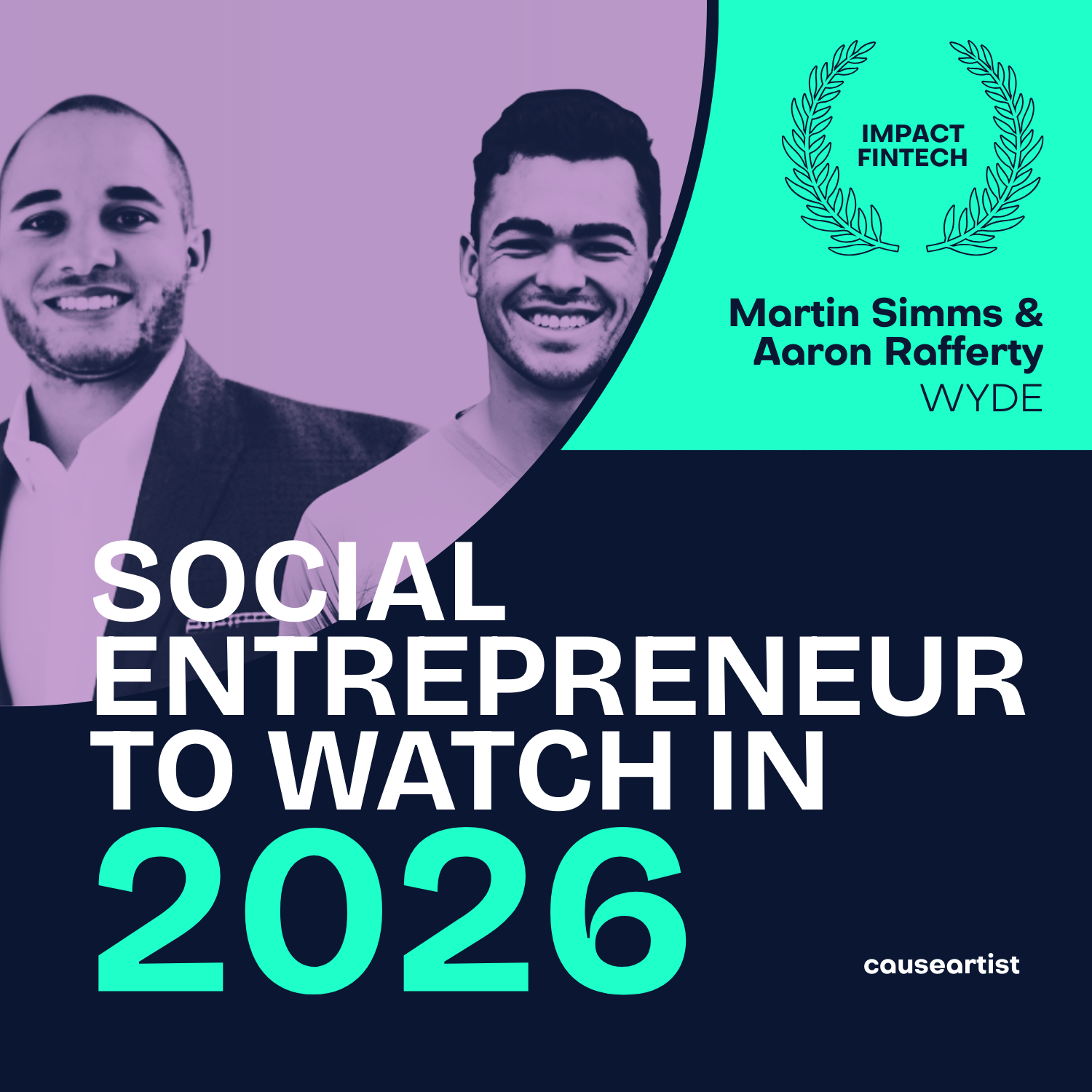
Martin Simms and Aaron Rafferty founded WYDE after questioning a long standing imbalance in how capital moves through the world. Trillions of dollars flow through financial markets every day, yet almost none of that activity is connected to solving real social problems.
Both founders saw an opportunity to redesign markets themselves, not as vehicles for speculation alone, but as infrastructure that could automatically and transparently fund public good.
Their work is rooted in a simple belief that if markets are powerful enough to generate wealth at scale, they can also be engineered to generate impact at scale.
WYDE is the world’s first impact exchange, allowing people to trade cause specific tokens, called Cause Coins, where a portion of every transaction automatically funds verified nonprofit organizations.
Built using Wyoming DUNA law, each Cause Coin functions as its own decentralized nonprofit, governed over time by its token holders.
The platform replaces donation driven fundraising with a continuous funding engine powered by trading activity, on chain transparency, and measurable outcomes.
Starting with $EAT, a token designed to fund hunger relief, WYDE is creating a new category where ownership, accountability, and impact are aligned, turning everyday market behavior into sustained nonprofit funding without relying on traditional donor cycles.
Alex Bradford helps workers access earned wages

Alex Bradford founded Rain to address the financial stress caused by the traditional bi-weekly pay cycle. For many workers living paycheck to paycheck, the two-week wait for wages creates real hardship, and pushes people toward predatory payday loans with triple-digit interest rates and overdraft fees that disproportionately harm lower-income employees.
Rain is an earned wage access platform that allows employees to access wages they've already earned before their scheduled payday.
Employers integrate Rain into their payroll systems, and employees can draw on earned wages when needed rather than waiting for pay day.
The service helps workers avoid the $15+ billion Americans spend annually on overdraft fees and the even larger amounts lost to payday lending.
Rain represents a growing category of fintech focused on improving financial wellness for hourly workers rather than extracting fees from financially stressed consumers.
Sinclair Toffa founded MuralPay

Sinclair Toffa founded MuralPay to address financial technology needs, focusing on payment infrastructure or financial inclusion.
Growing up between Colorado and France, Sinclair experienced the challenges of cross-border payments firsthand, often relying on slow and expensive services like Western Union. A formative trip to Togo further highlighted how limited access to dollars restricts economic growth for families and small businesses.
After shipping large-scale data systems as a forward-deployed engineer at Palantir, Sinclair founded Mural Pay in 2022 to rebuild the global financial stack using stablecoins, digital currencies designed to maintain a stable value pegged to traditional currencies like the U.S. dollar.
By combining the reliability of fiat money with the speed and flexibility of blockchain technology, Mural Pay enables instant, low-cost, and transparent cross-border transactions.
Check out our interview we did with Sinclair on the Disruptors for GOOD podcast.
Desmond Koney connects African farmers to markets
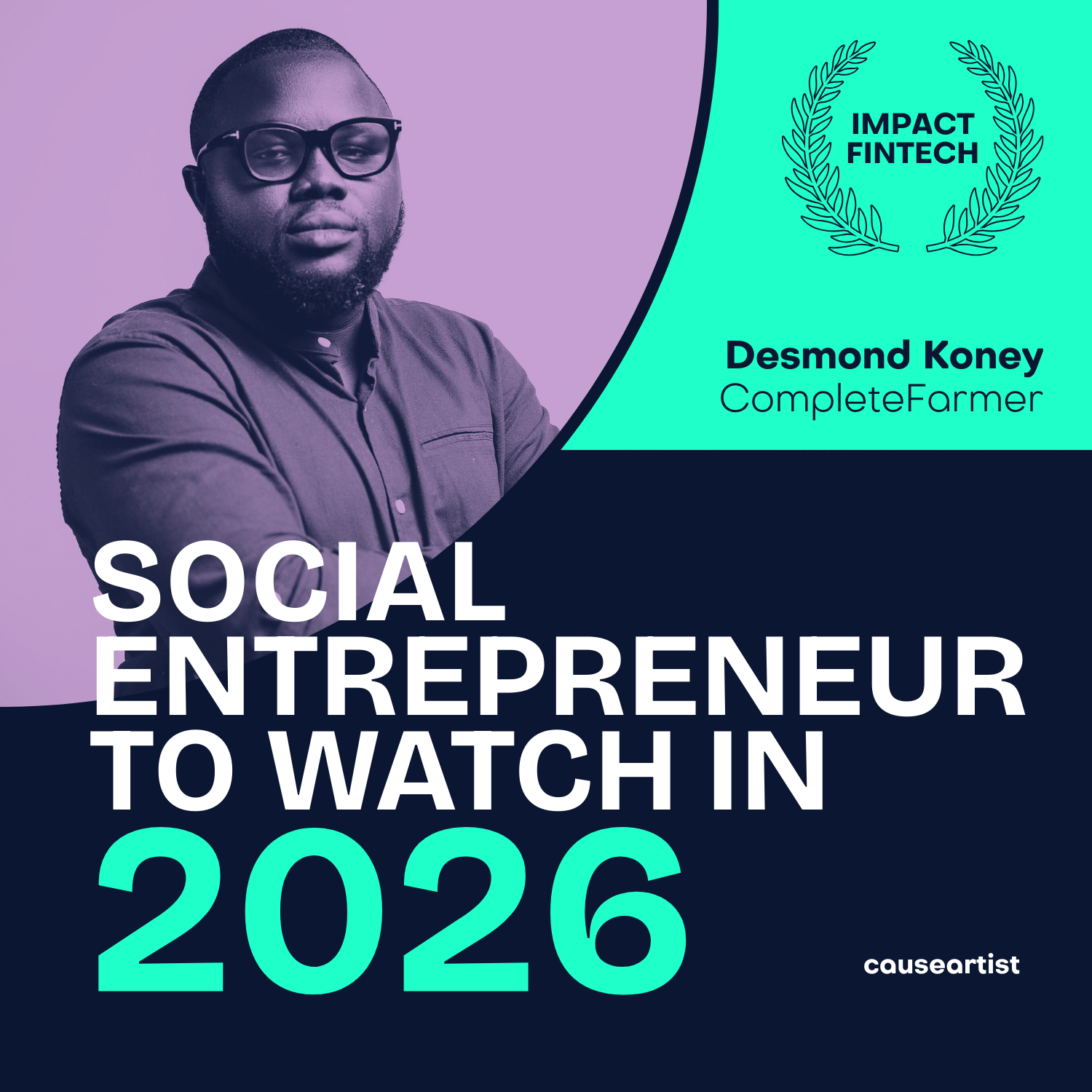
Desmond Koney is the Co-founder and CEO of Complete Farmer, where he is focused on transforming Africa’s agricultural landscape through innovative technology and precision agriculture.
Under his leadership, the company has pursued operational excellence and the strategic digitization of the agricultural value chain, streamlining processes and improving efficiency to strengthen food production at scale.
With a background in mechanical engineering, Desmond brings an engineering driven perspective to product development, emphasizing the use of IoT and artificial intelligence to support sustainable growth.
At Complete Farmer, he has helped build a culture that challenges conventional problem solving in agriculture, enabling the company to deliver tailored, competitive solutions designed to help feed the next billion people.
Complete Farmer is an agtech platform that links farmers directly to buyers. It also provides financing, farm inputs, and hands on agronomic support. The platform allows individuals to invest in farming operations while giving farmers guaranteed demand for their crops.
Today, Complete Farmer operates in Ghana and is expanding across West Africa. It has supported thousands of farmers and raised venture capital funding. The company reflects a growing push to serve the missing middle in African agriculture, farmers who are beyond subsistence but still locked out of traditional commercial services.
Lulo Is Building Tech That Makes the Safety Net Work for Families

Dani Lopez is the Co Founder and Chief Strategy Officer of Lulo, a technology company focused on making the social safety net actually usable for families.
Having personally experienced WIC as a child and later worked inside public benefits systems, Dani saw firsthand how confusing rules and poor design prevent families from accessing support they are already entitled to.
She helped launch Lulo alongside a multidisciplinary team at Blue Ridge Labs at the Robin Hood Foundation, grounded in lived experience, human centered design, and close collaboration with families.
Lulo is a family focused technology platform designed to help people fully use their WIC benefits with clarity and dignity. By showing exactly which items are eligible in real time, Lulo removes guesswork at the grocery store and reduces stress, time lost, and abandoned purchases.
Since launching in New York, the platform has helped families redeem more benefits, save time, and improve confidence using WIC. Lulo reflects a growing movement to rebuild public benefit systems around the real needs of the people they are meant to serve.
Maha Shahzad is transforming public transit in Pakistan

Maha Shahzad is the Founder and CEO of BusCaro, bringing over 15 years of experience building and scaling startups across Pakistan.
With deep operational expertise and a clear view of the challenges organizations face around daily transportation, Maha set out to fix a problem that affects productivity, safety, and quality of life.
Under her leadership, BusCaro has scaled across three major cities and facilitated more than 20 million rides nationwide, establishing itself as a trusted mobility partner for leading companies and institutions.
BusCaro is a technology driven mobility company focused on simplifying employee and student commute across Pakistan.
 Causeartist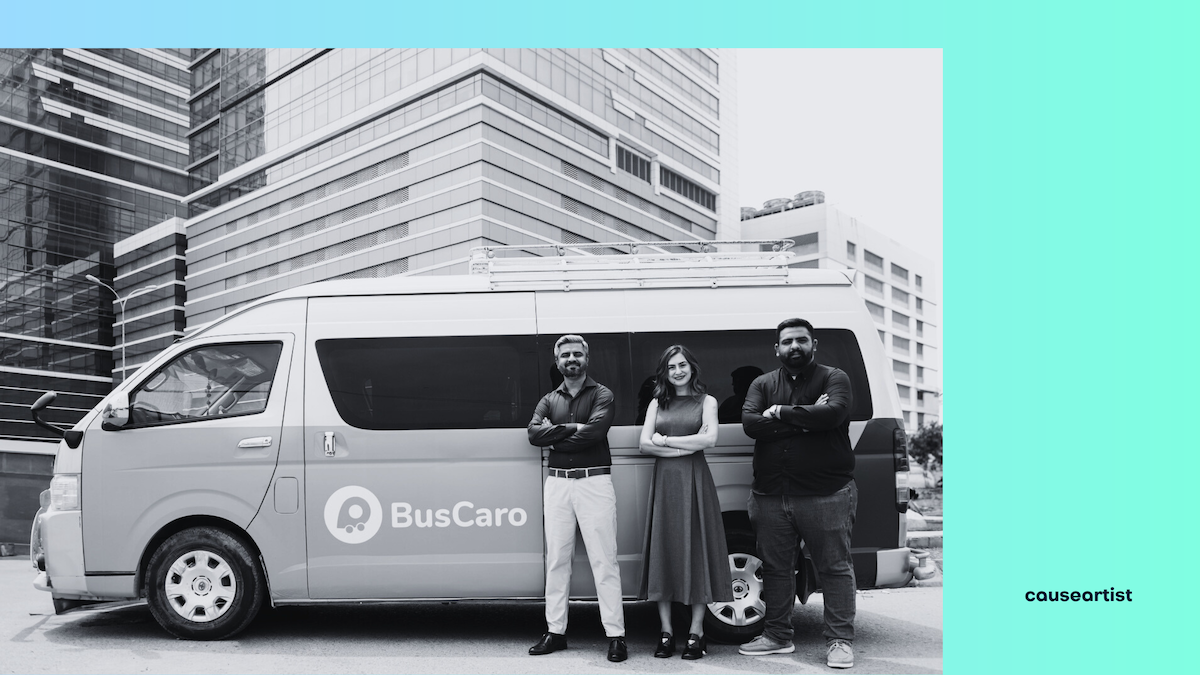
Built around reliability, safety, and transparency, the platform provides end to end pick and drop solutions for organizations through dedicated fleets and seat based models.
With real time dashboards, verified drivers, insured rides, and dedicated support, BusCaro removes the friction from daily transportation.
At its core, the company is working toward a future where dependable commutes unlock opportunity, reduce congestion, and support more sustainable urban movement.
Climate technology and clean energy entrepreneurs
Shannen-Kaylia Henry is transforming cocoa husk waste into high performance, regenerative textile fibers
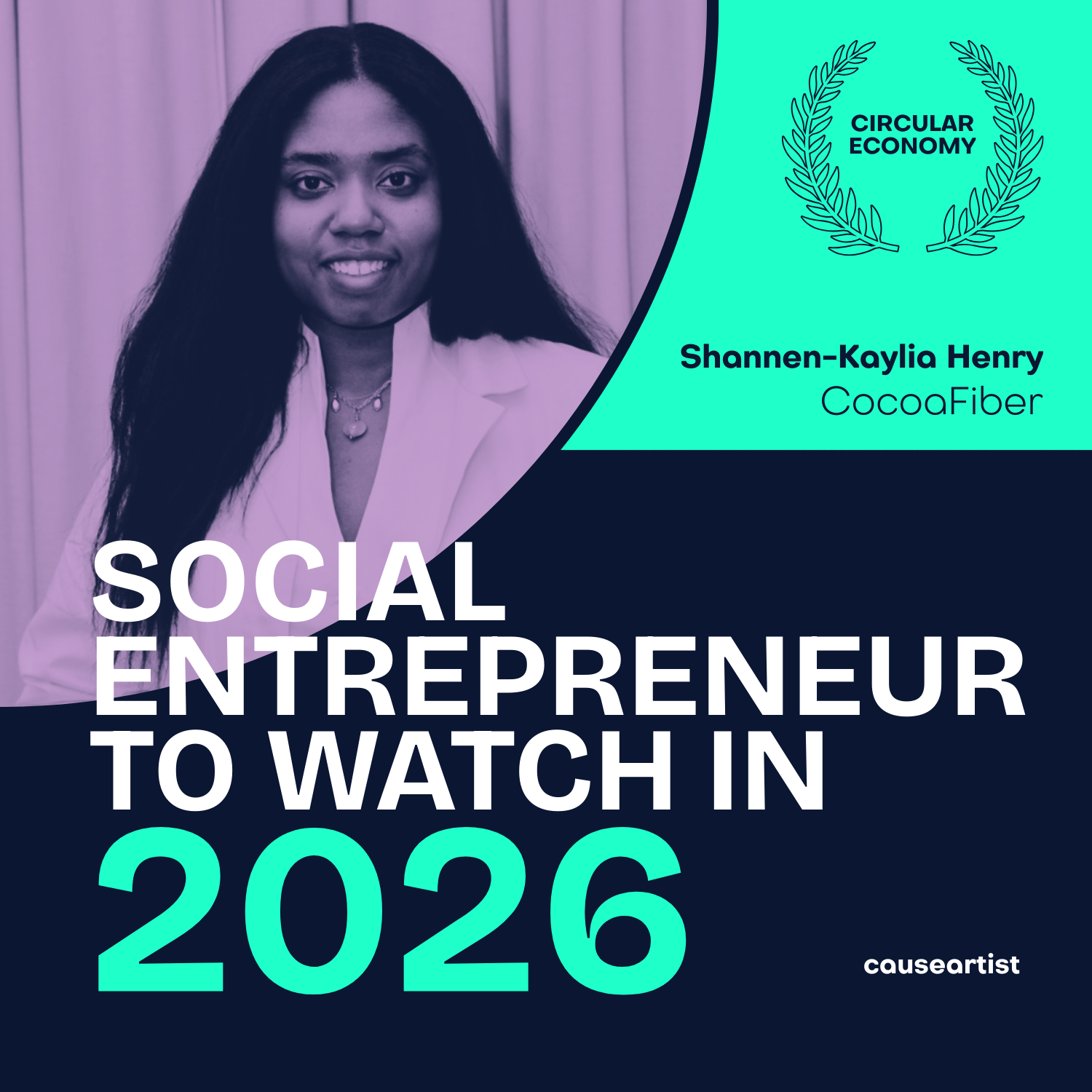
Shannen-Kaylia Henry is the founder of CocoaFiber, a biotech venture rethinking how agricultural waste moves through global supply chains. Trained in biology and international business management, Shannen’s path into sustainable materials was shaped by lived experience.
While working in sustainability communications for a textile company in India, she saw firsthand the environmental damage caused by synthetic fibers.
Years later, a visit to her grandfather’s cocoa farm revealed a different problem hiding in plain sight. Cocoa husks, a massive byproduct of chocolate production, were being discarded at scale despite their untapped material potential. That realization became the foundation for CocoaFiber.
CocoaFiber transforms cocoa husk waste into high performance, regenerative textile fibers, directly addressing agricultural waste, deforestation pressure, and the need for sustainable material alternatives.
Built on a circular model, the company converts waste into value while restoring ecosystems and supporting farming communities.
Today, Shannen is based in Biella, Italy, a historic textile hub, where she is building the supply chain and partnerships needed to bring CocoaFiber to market.
Her work sits at the intersection of sustainable materials, circular economy design, and climate resilience, advancing nature based alternatives that prove performance, equity, and regeneration can scale together across global industries.
JB Straubel and Redwood Materials are closing the battery loop
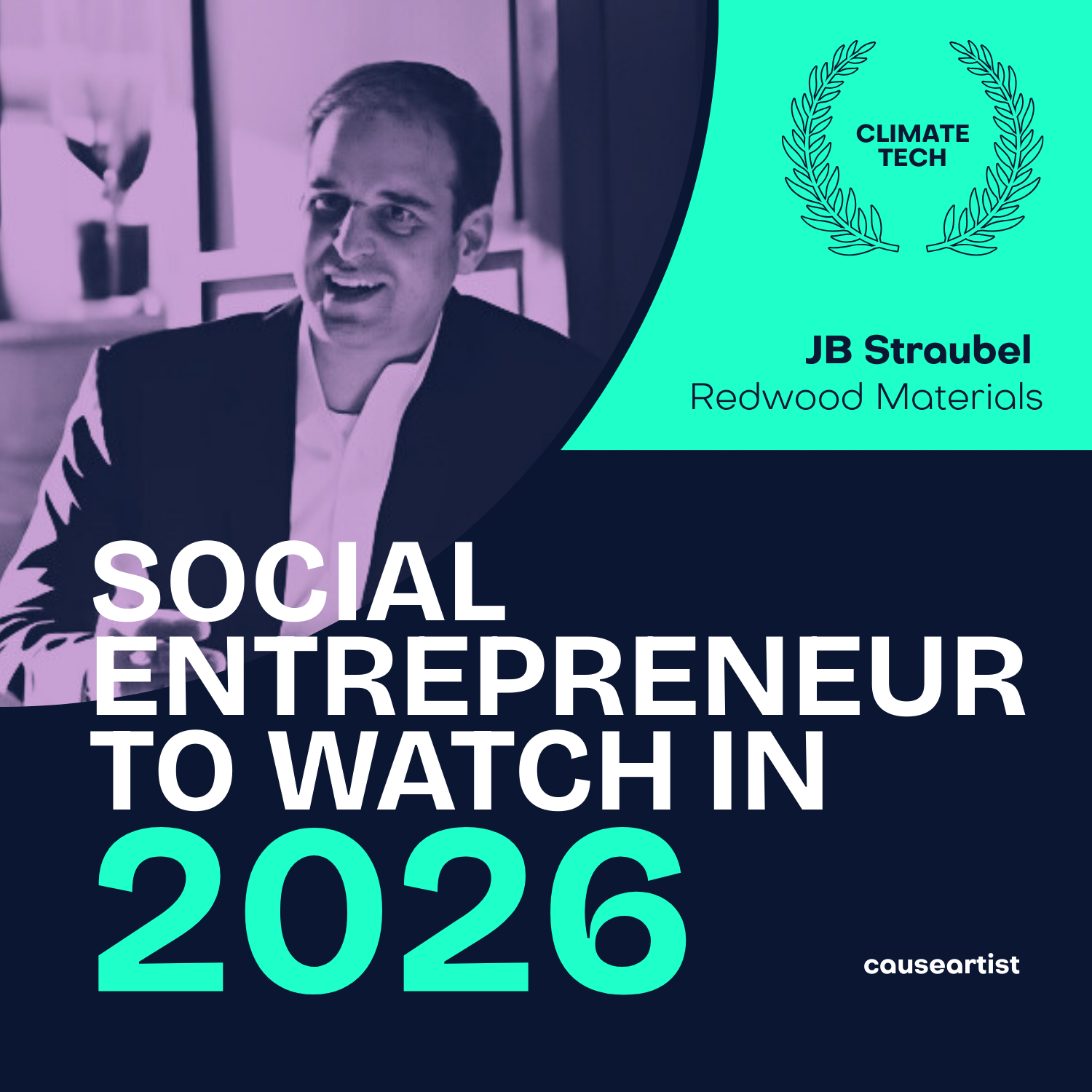
JB Straubel spent 15 years as Tesla's co-founder and Chief Technical Officer, where he led the development of the company's battery technology and conceived the Gigafactory concept.
In 2017, he founded Redwood Materials to solve a problem he saw coming: the wave of electric vehicles his work helped create would eventually generate millions of tons of battery waste.
Redwood Materials recovers lithium, cobalt, nickel, and copper from end-of-life batteries and manufacturing scrap, then refines these materials to battery-grade purity for new battery production.
The company's hydrometallurgical recycling processes achieve 95%+ recovery rates of critical materials, creating a closed-loop supply chain that reduces dependence on mining virgin materials.
The company has raised over $2 billion in funding and reached a valuation exceeding $3.7 billion. Redwood has secured partnerships with Toyota, Ford, Volkswagen, Volvo, Panasonic, and Amazon, positioning itself as the recycling backbone for the EV industry.
The company has announced plans for over $3.5 billion in facility investments across Nevada and South Carolina, processing batteries from consumer electronics, EV manufacturing scrap, and end-of-life vehicle batteries.
Carlos Araque is drilling toward unlimited geothermal energy

Carlos Araque left Schlumberger, one of the world's largest oilfield services companies, to co-found Quaise Energy in 2018. The company spun out of MIT with a radical proposition: using millimeter-wave drilling technology originally developed for fusion research to access geothermal energy anywhere on Earth.
Conventional geothermal energy is limited to volcanic regions covering less than 1% of Earth's surface. Quaise's gyrotron technology uses directed energy to vaporize rock, enabling drilling to depths of 10-20 kilometers where temperatures exceed 500°C—depths impossible to reach with conventional mechanical drilling.
At these temperatures, water becomes supercritical and can generate up to ten times the power output of conventional geothermal wells.
Quaise has raised approximately $75 million from Breakthrough Energy Ventures, Prelude Ventures, and other investors.
The company is working toward demonstration drilling operations that could prove the viability of accessing supercritical geothermal resources globally.
If successful, Quaise's technology could retrofit existing fossil fuel power plants to run on geothermal energy, dramatically accelerating the clean energy transition.
Three Stanford PhDs are reinventing fertilizer production
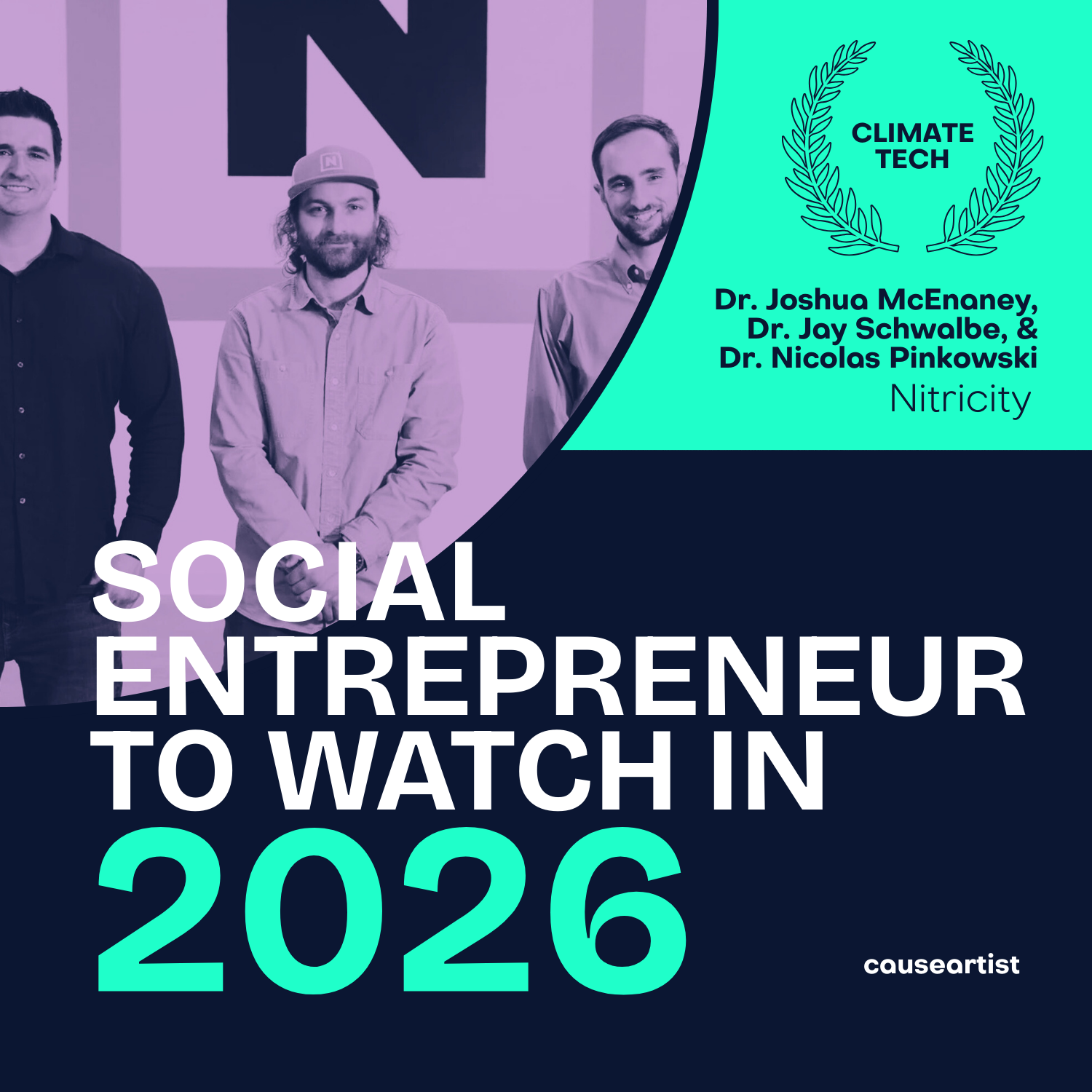
Nicolas Pinkowski, Joshua McEnaney, and Jay Schwalbe met in Stanford's chemistry and chemical engineering doctoral programs, where they developed expertise in plasma physics, electrochemistry, and sustainable chemistry.
They founded Nitricity after recognizing that the century-old Haber-Bosch process for producing nitrogen fertilizer accounts for 1-2% of global CO2 emissions and consumes 1-2% of global energy.
Nitricity's technology mimics how lightning naturally creates nitrogen fixation, using plasma to convert air, water, and renewable electricity into fertilizer on-site at farms.
This decentralized approach eliminates the natural gas inputs and transportation emissions associated with conventional fertilizer production.
The company has raised over $50 million, and won Stanford's E-Challenge entrepreneurship competition.
Nitricity is conducting pilot programs with farms to demonstrate commercial viability of carbon-neutral fertilizer production, potentially transforming one of agriculture's most emissions-intensive inputs.
Matt Campbell is automating solar construction
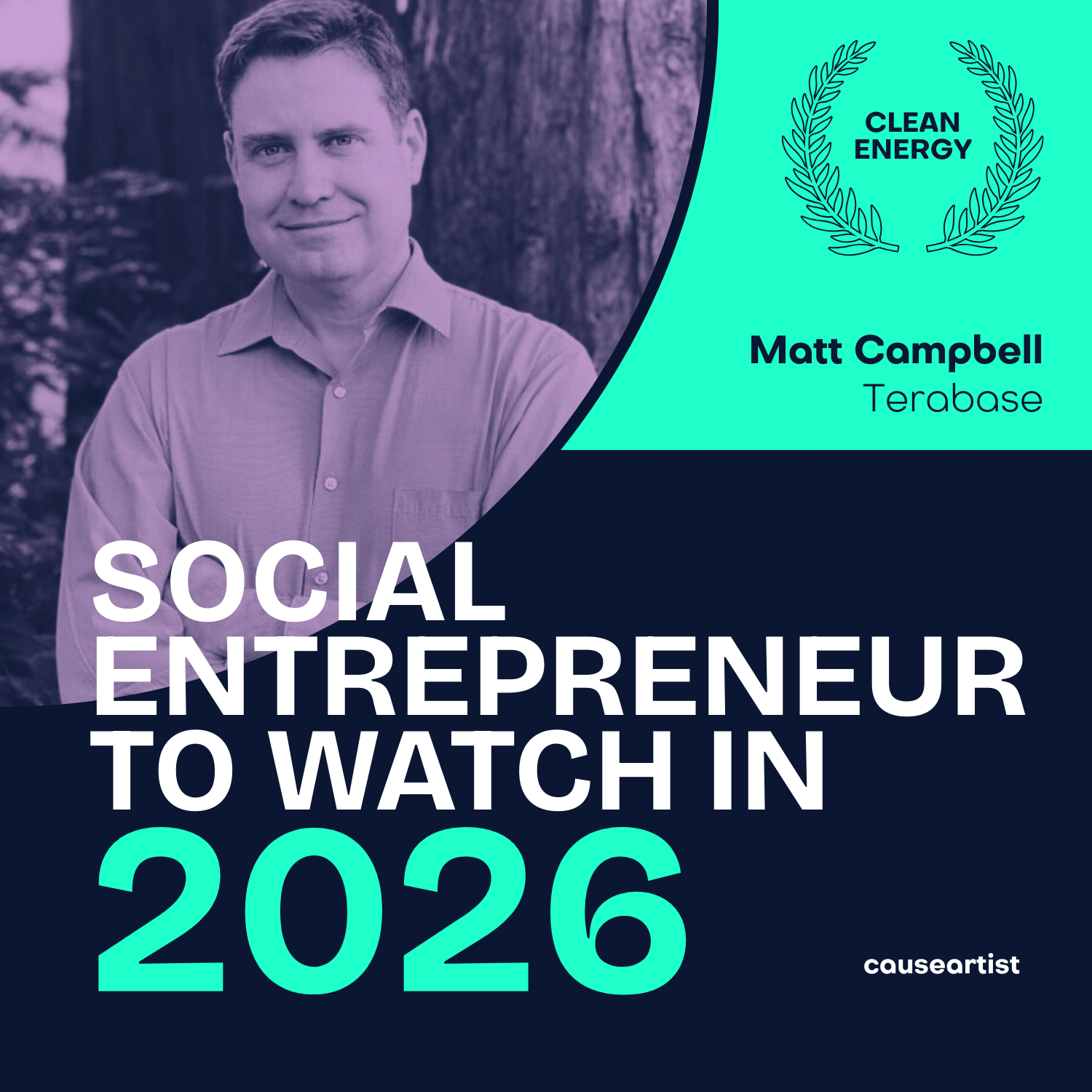
Matt Campbell held leadership positions at First Solar before co-founding Terabase Energy to address a persistent problem: while solar panel costs have plummeted, "soft costs" including installation, labor, and project management have remained stubbornly high.
Terabase develops software and automation technology spanning the entire utility-scale solar project lifecycle.
The company's platform includes digital tools for solar plant design and engineering, robotic construction solutions, and Terafab factory-produced components.
The goal is reducing solar construction costs by 20-30% while accelerating deployment timelines.
The company raised approximately $44 million in funding and has partnered with major utility-scale solar developers on projects representing multiple gigawatts of capacity across domestic and international markets.
Coulter Lewis makes lawn care safe for families
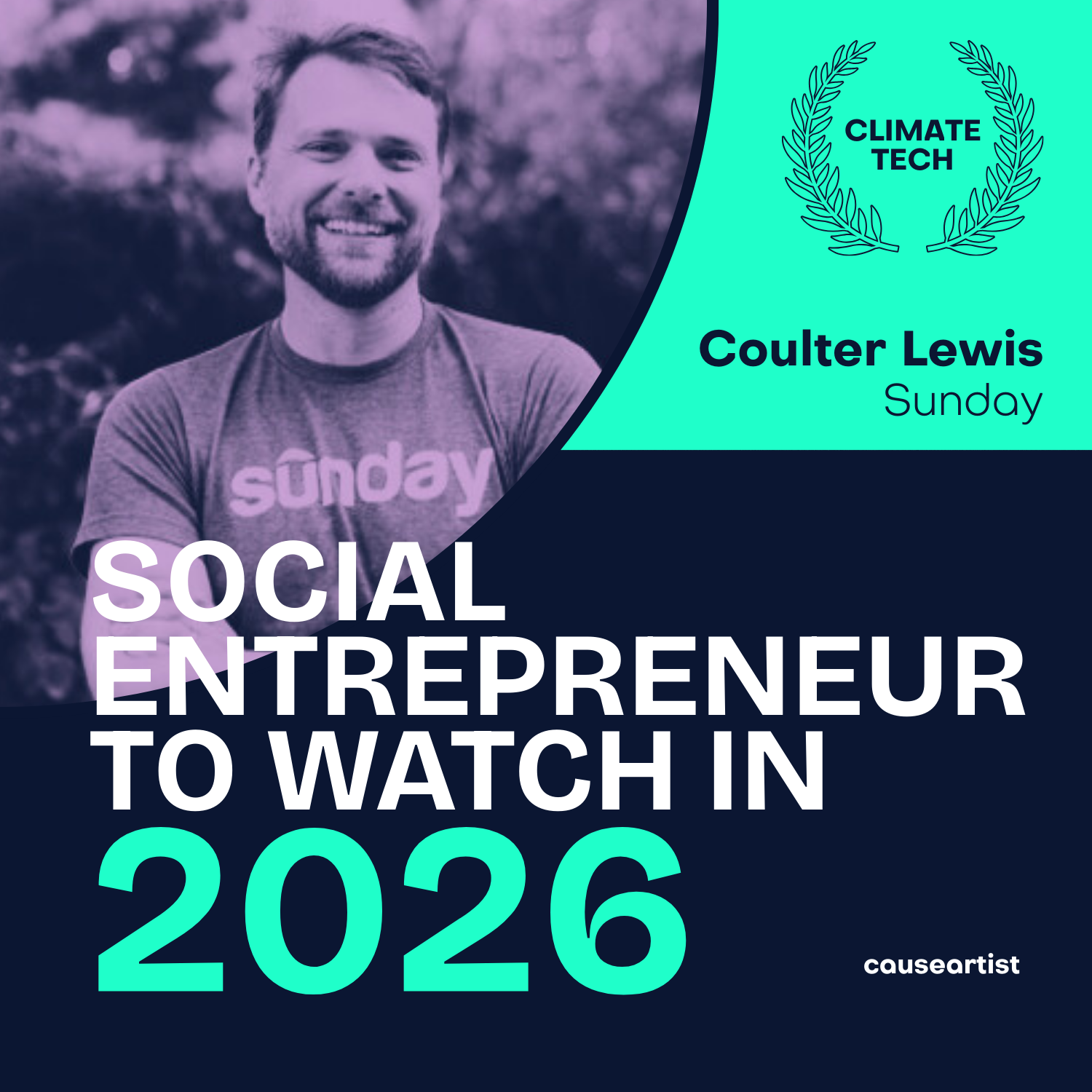
Coulter Lewis earned his MBA at Stanford after working as a brand marketer at Procter & Gamble, where he gained deep experience in consumer goods.
After becoming a father, he became concerned about the toxic chemicals in traditional lawn care products that his children and pets were exposed to, and recognized that the $40+ billion lawn care industry remained dominated by synthetic chemicals linked to water pollution, harm to pollinators, and health risks.
He founded Sunday in 2019 as a direct-to-consumer subscription service.
Customers enter their address, and Sunday uses satellite imagery and soil data to create customized, eco-friendly lawn care plans delivered to their homes.
The products use plant-based ingredients including seaweed, molasses, and iron instead of synthetic fertilizers and pesticides.
Sunday has raised over $35 million from investors including General Catalyst and grown to serve hundreds of thousands of customers across the United States. The company has been named one of the fastest-growing DTC brands in the lawn care space.
Mari Granström turns Baltic Sea algae into valuable products
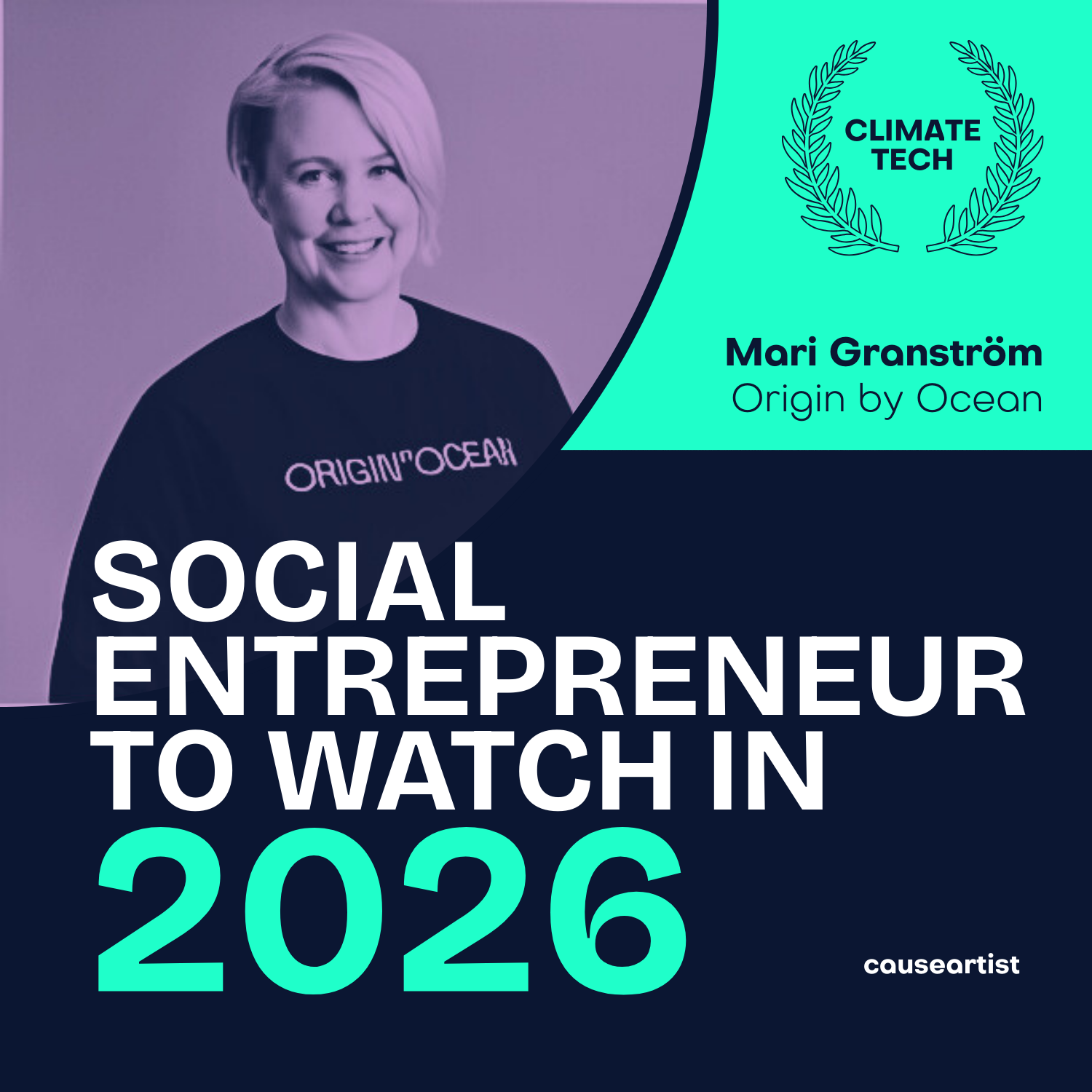
Mari Granström founded Origin by Ocean in Finland to address a crisis hiding in plain sight: the Baltic Sea suffers from severe eutrophication, where excess nutrients cause harmful algae blooms that devastate marine ecosystems.
Rather than viewing this biomass as a problem to be disposed of, she recognized it as an untapped resource.
Origin by Ocean harvests invasive algae and seaweed that would otherwise damage Baltic ecosystems, then processes this biomass into valuable products including bioplastics, fertilizers, food ingredients, and cosmetic raw materials.
The model creates economic value from environmental remediation, getting paid twice by solving a problem and creating products.
The company has received EU funding and operates a circular economy model that could scale to other bodies of water suffering from similar eutrophication problems.
Origin by Ocean represents a growing category of "blue economy" startups finding commercial applications for marine resources while addressing environmental challenges.
Sustainable consumer products and supply chains
Aditya Siroya is building world’s first plastic credit platform built to turn corporate responsibility into measurable action

Aditya Siroya is the Co-Founder and Chief Impact Officer of rePurpose Global, the world’s first plastic credit platform built to turn corporate responsibility into measurable action.
Raised in Bangalore and educated at The Wharton School, Aditya’s work sits at the intersection of sustainability, systems design, and execution.
Before rePurpose, he built and supported multiple social ventures across education, healthcare, and environmental impact, with on-the-ground experience spanning regions from India to Ethiopia and China.
His approach reflects a clear belief: environmental progress only scales when incentives, data, and accountability are aligned.
The company was created to solve a growing problem for modern brands. Packaging regulations are multiplying, sustainability claims are under scrutiny, and plastic pollution continues to rise despite good intentions.
rePurpose helps consumer companies navigate this complexity through a single platform that combines packaging compliance, verified plastic recovery, and credible on-pack sustainability claims.
By linking Extended Producer Responsibility reporting with a global network of recovery projects, the company enables brands to meet regulatory requirements while funding real waste recovery and formal employment for waste workers.
The result is a market-based system where plastic responsibility is transparent, auditable, and scalable, shifting sustainability from a marketing promise into an operational standard.
Alex Schulze and Andrew Cooper have removed over 30 million pounds from the ocean
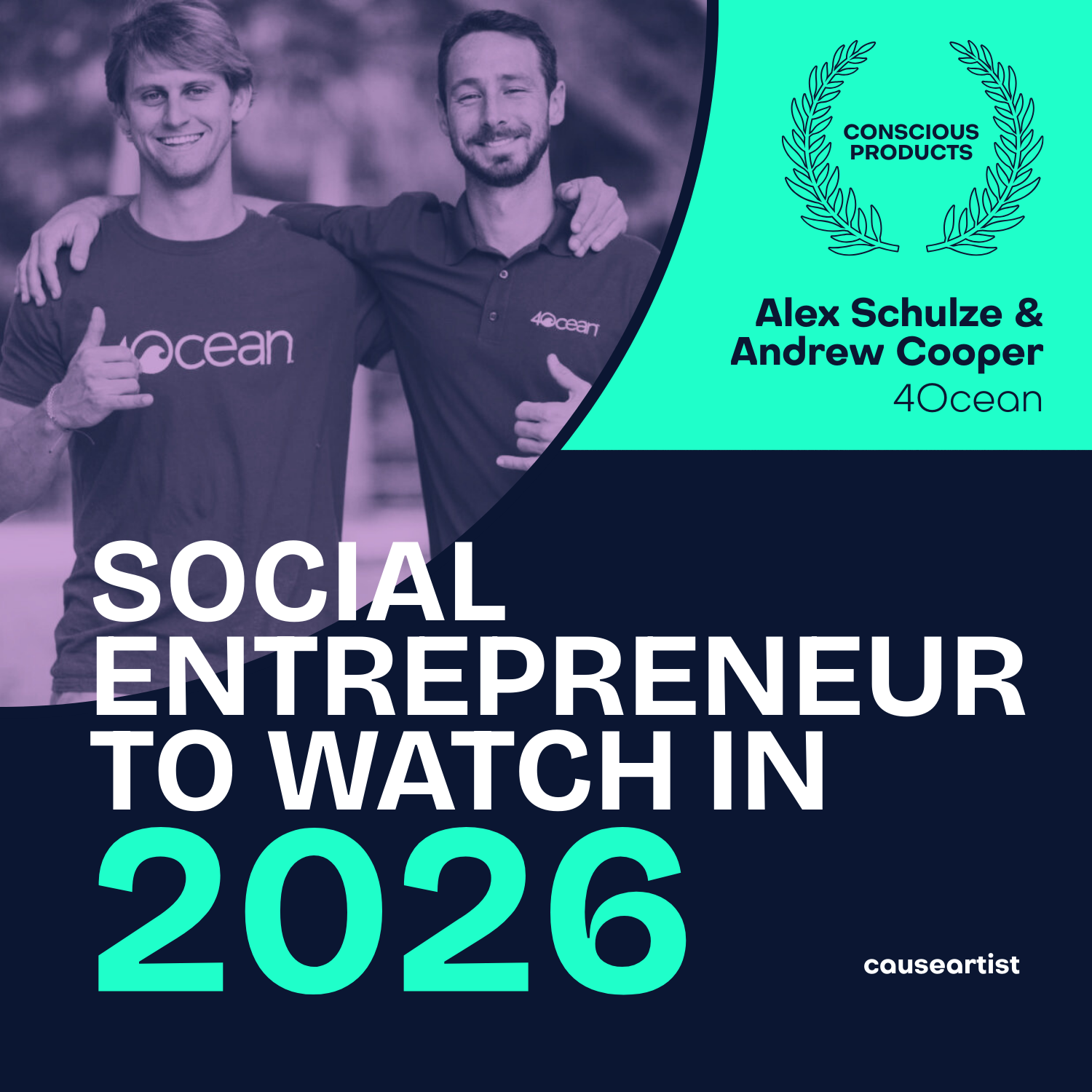
Alex Schulze and Andrew Cooper met while surfing in Bali, Indonesia in 2015 and were struck by the massive amounts of plastic pollution washing onto beaches and floating in the water. They noticed local fishermen collecting plastic to earn money and realized that ocean cleanup could be sustainable if tied to an economic model.
They founded 4ocean in 2017 with a simple proposition: every bracelet sold funds the removal of one pound of trash from oceans and coastlines. The bracelets themselves are made from recycled materials including recovered ocean plastic and glass.
4ocean now operates cleanup crews in multiple countries including the United States, Indonesia, Guatemala, and Haiti.
As of late 2023, the company reported removing over 30 million pounds of trash from oceans and coastlines.
The company bootstrapped to profitability through bracelet sales without major external venture funding, demonstrating that product-funded conservation can scale.
Laure Betsch and Camille Le Gal bring transparency to fashion supply chains

Laure Betsch and Camille Le Gal co-founded Fairly Made to address the fashion industry's transparency problem.
Most fashion brands cannot tell consumers where their products were made, under what conditions, or with what environmental impact, because they themselves often don't know.
Fairly Made provides a platform that helps fashion brands track and communicate the environmental and social impact of their products throughout the supply chain.
The platform enables traceability from raw materials through finished products, allowing brands to verify claims about sustainability and working conditions.
The business model charges fashion brands for access to the traceability platform and certification services.
As consumers increasingly demand transparency and regulators in Europe move toward mandatory supply chain disclosure, Fairly Made's infrastructure becomes more valuable.
Vladimir Vukicevic is rethinking oral care by turning routine habits into wellness rituals

Vladimir Vukicevic is the Co founder and CEO of Better & Better, a wellness company built from personal experience and long term perspective.
After surviving childhood cancer and living with the lasting effects of chemotherapy, Vladimir was forced to manage his health through daily supplements that were expensive, uncomfortable, and easy to forget.
Rather than accept that burden, he questioned why wellness required constant effort and began looking for ways to embed health into habits people already keep every day.
Better & Better was created to make wellness simple, consistent, and sustainable. The company’s flagship vitamin infused toothpaste delivers essential nutrients through daily brushing, turning oral care into a reliable health ritual without pills or added steps.
Beyond functionality, Better & Better is committed to responsible manufacturing, using clean ingredients, recyclable sugarcane based packaging, and bamboo oral care products.
The brand reflects a disciplined approach to health and sustainability, proving that small daily habits, done well and done consistently, can lead to lasting impact for both people and the planet.
Angela O'Brien built Cleobella with artisan communities
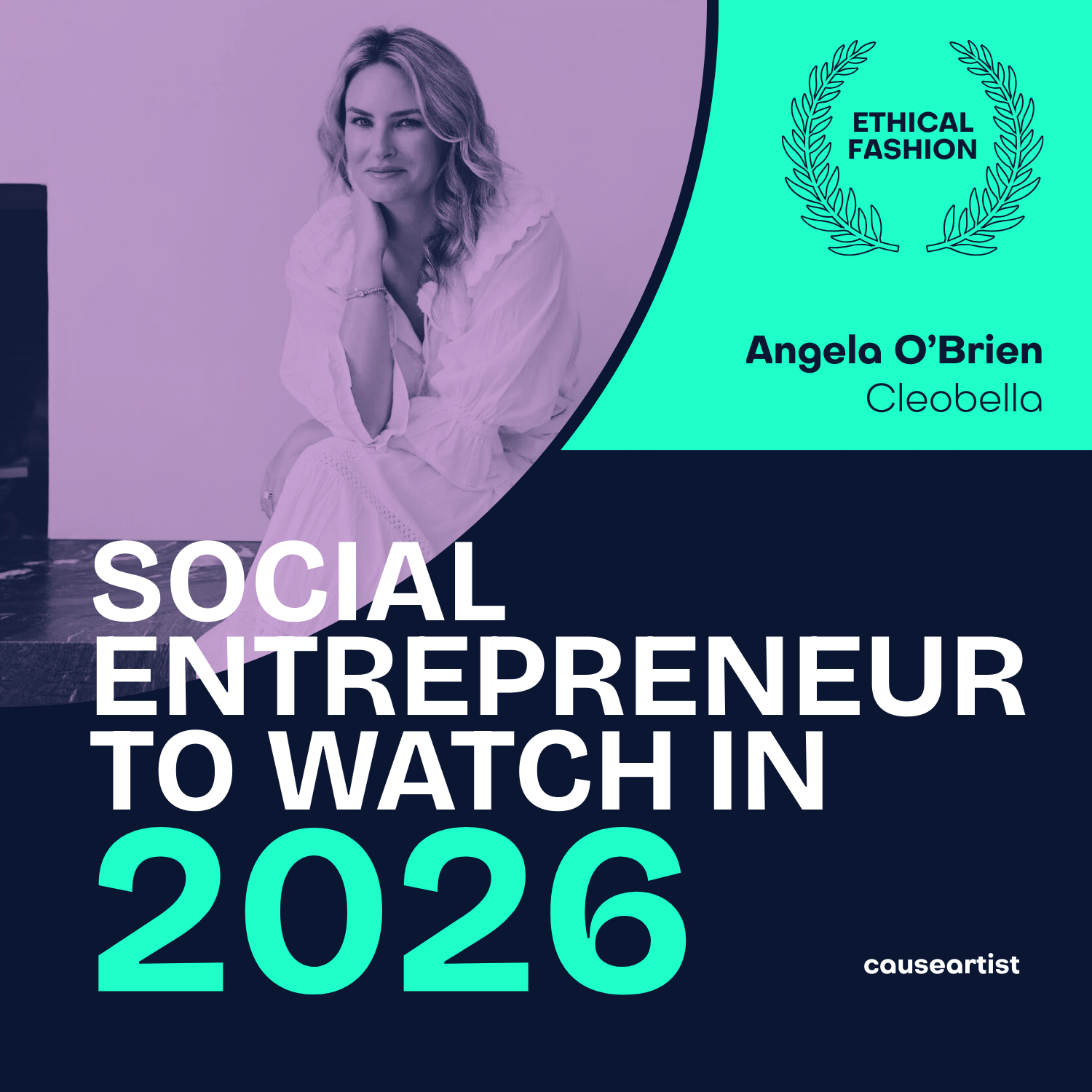
Angela O’Brien is the Founder and Creative Director of Cleobella, an ethical fashion brand shaped by travel, craftsmanship, and long standing human relationships. After an early career in modeling, Angela chose to step behind the scenes and build something of her own.
A year long journey through Southeast Asia in the mid 2000s exposed her to artisan communities in India and Indonesia, where traditional techniques and family run workshops became the foundation of her life’s work.
What began with hand made wrap skirts and leather goods sold at local markets grew slowly and deliberately into a global brand rooted in respect for people and place.
Cleobella is a women led, family owned fashion company committed to ethical production, sustainable materials, and economic empowerment.
The brand works with artisan partners it has supported for more than a decade, creating consistent income while preserving heritage techniques such as hand block printing, batik dyeing, and leather tooling.
Every collection reflects a belief that fashion should honor the hands that make it, the women who wear it, and the communities it sustains for the long term.
Mehmet Gürbüzer disrupted the wine industry without alcohol

Mehmet Gürbüzer is the CEO of Oddbird, a Sweden based wine company built on a deeply personal mission. Oddbird was founded in 2013 by Mehmet’s mother, Moa Gürbüzer, a longtime social worker who spent decades supporting families affected by alcoholism.
Witnessing the same harms repeat across generations, she set out to challenge the role alcohol plays in how society celebrates. Mehmet later joined the company to help scale that vision, turning a conviction driven idea into a globally respected brand.
Oddbird produces premium, alcohol free wines made from high quality grapes sourced from renowned vineyards in France, Italy, and Spain. Each wine is naturally fermented, aged for up to three years, and gently dealcoholized using a patented vacuum distillation process that preserves flavor, structure, and complexity.
Today, Oddbird is served in Michelin starred restaurants, luxury hotels, and households around the world. The company stands for a clear belief: celebration, connection, and great taste do not require alcohol, and a healthier culture is built by offering better choices, not compromises.
Rose Correa sources skincare from Amazon communities

Rose Correa is the founder of AmaSKN, a skincare company built around conservation, traceability, and community led economic development.
Rose started AmaSKN to challenge extractive beauty supply chains and to prove that the Amazon rainforest can generate long term value without being destroyed.
Her work centers on building direct, respectful partnerships with Indigenous and local communities who have stewarded these ecosystems for generations.
AmaSKN creates skincare products using ingredients responsibly sourced from Amazon rainforest communities, with an emphasis on sustainable harvesting and fair compensation.
 Causeartist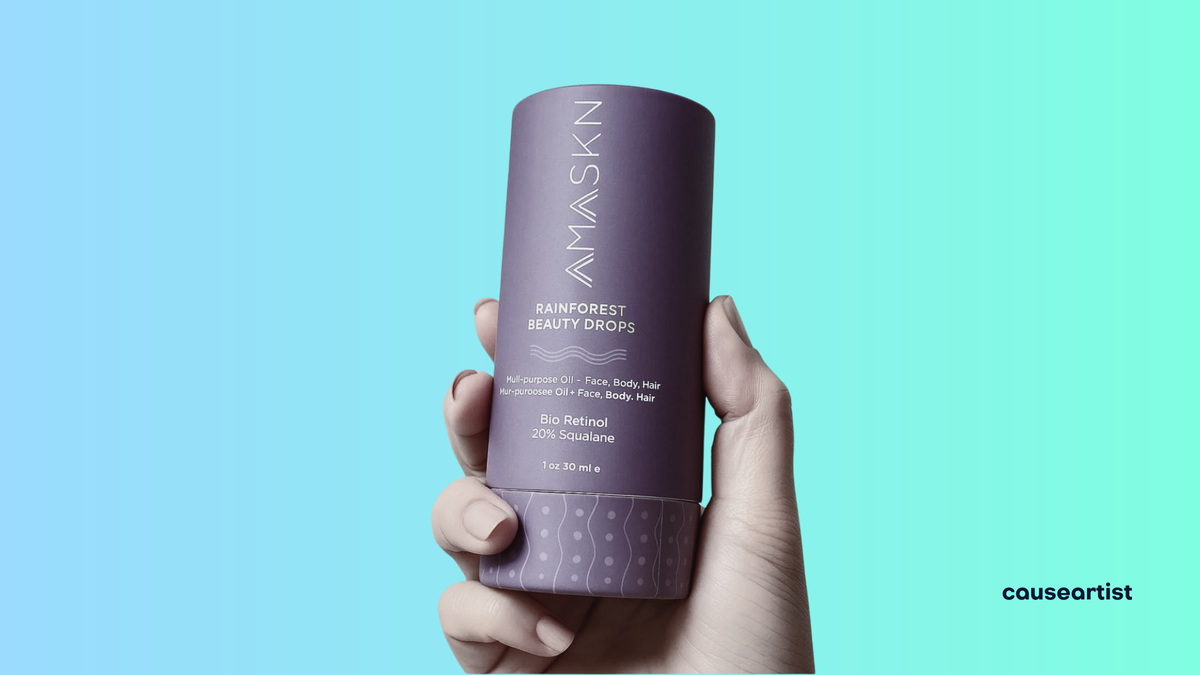
By creating income opportunities tied to preservation rather than deforestation, the company aligns environmental protection with economic stability.
Each product reflects a transparent supply chain, natural formulations, and a belief that beauty should support both human livelihoods and the ecosystems they depend on.
Julian Silva offers plastic alternatives that actually decompose
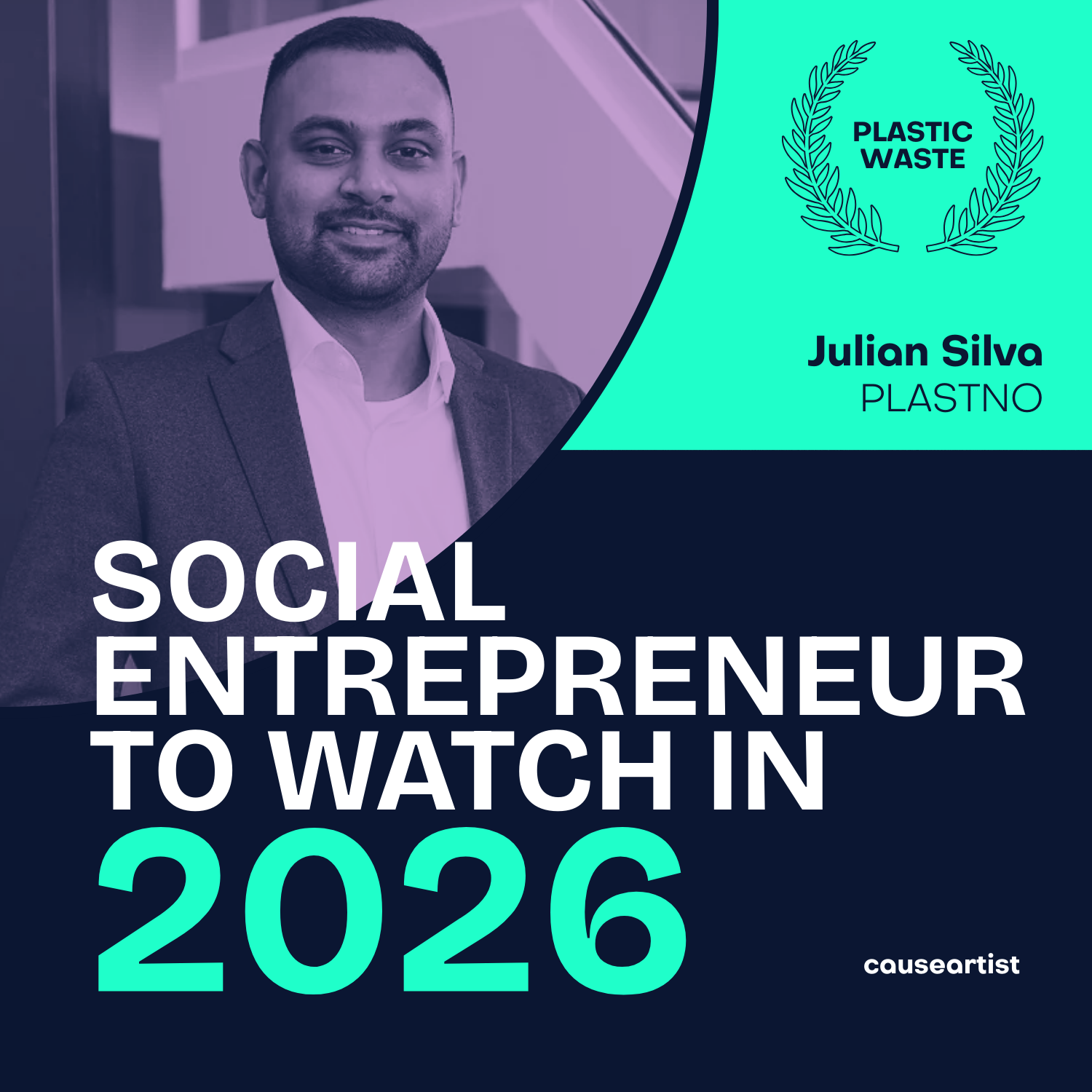
Julian Silva is the founder of Plastno, a materials company focused on solving one of the most persistent environmental problems of our time, plastic pollution. Julian started Plastno after recognizing that many so called sustainable plastics still leave behind microplastics and long term waste.
His goal was straightforward, create alternatives that truly decompose and return safely to the environment.
Plastno develops compostable and biodegradable products including bags and packaging materials designed to break down naturally without harmful residues. The company serves businesses looking to meet rising sustainability standards as well as consumers seeking real alternatives to conventional plastic.
As plastic bans and environmental regulations expand across Canada and North America, Plastno is gaining traction by offering practical, scalable solutions that reduce waste and support a transition away from single use plastics.
Flavia Pereira is building Anduba with Artisans in Brazil

Flavia Pereira is the founder of Anduba, a Brazil based social enterprise built to address local challenges through business led solutions. Flavia launched Anduba with a clear understanding that meaningful impact in Latin America must be grounded in regional context, culture, and lived experience.
Her work reflects a new generation of founders who are designing companies not as replicas of global models, but as responses to the realities on the ground.
 Grant Trahant
Anduba operates within Brazil’s fast growing social enterprise ecosystem, where entrepreneurs are tackling issues ranging from financial inclusion and healthcare access to environmental protection and economic opportunity.
The company contributes to this movement by applying a focused, mission driven approach tailored to local needs. Through Anduba, Flavia is helping demonstrate how purpose built businesses can create durable social value while strengthening the broader impact economy across Brazil and Latin America.
Healthcare access and innovation
Jake Sussman and Dan Ross are solving the teen mental health crisis
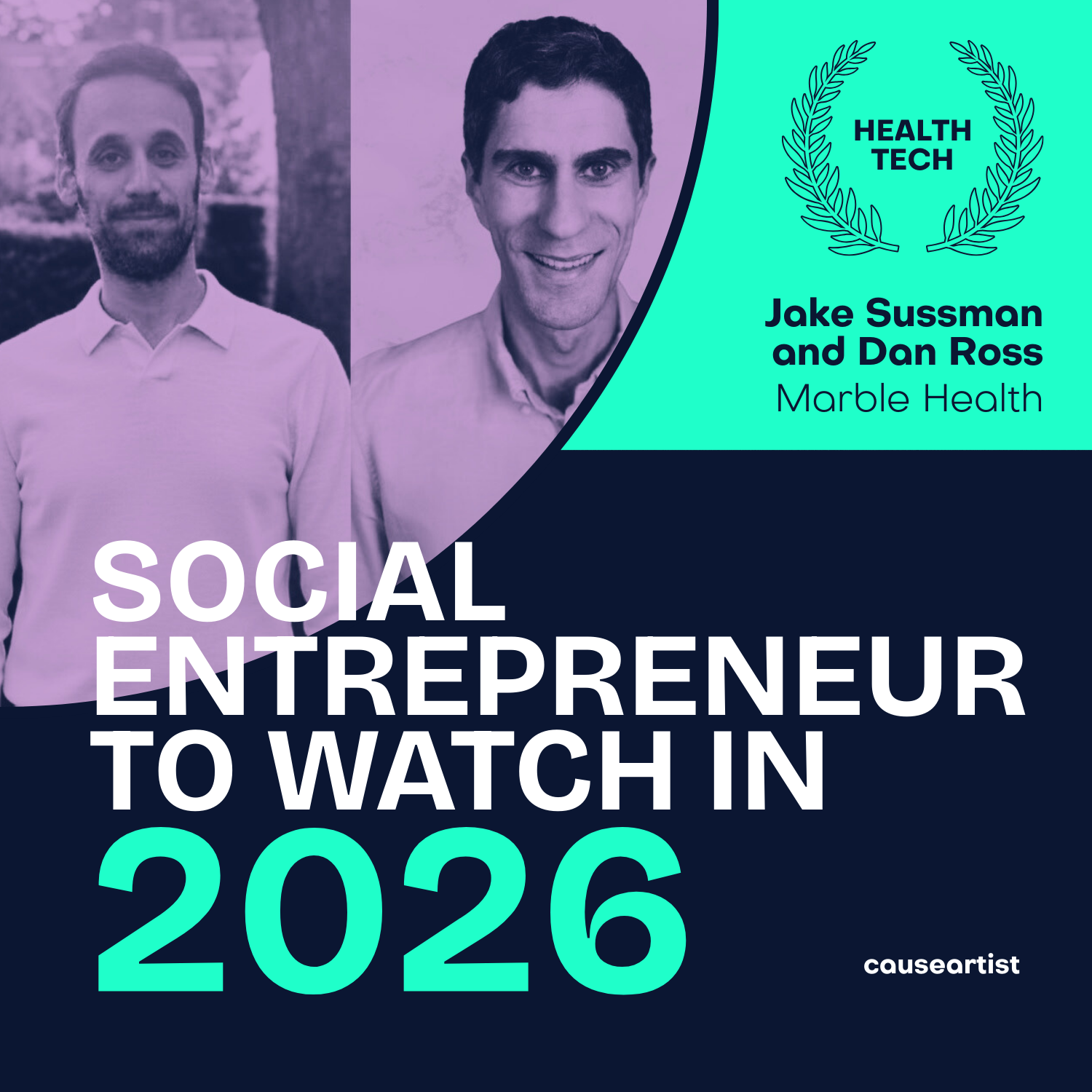
Jake Sussman and Dan Ross co-founded Marble Health to address a crisis that has reached epidemic proportions: rising rates of anxiety, depression, and suicide among adolescents combined with a severe shortage of mental health providers and wait times stretching months for care.
Marble Health is a mental health platform specifically designed for teenagers, connecting young people with appropriate psychiatric care through virtual services.
The company partners with schools and healthcare systems to identify teens who need support and match them with providers who specialize in adolescent mental health.
The platform addresses both the supply problem (not enough providers) and the access problem (teens can't easily get to appointments) through telehealth delivery.
Marble Health represents a broader trend of digital health companies targeting specific populations with specialized care models rather than trying to be everything to everyone.
Kaitlin and Sydney Wiseman are making health education accessible and engaging for children and families

Kaitlin Wiseman and Sydney Wiseman are sisters and the co founders of Playhouse MD, a company rethinking how children experience health education and care.
Drawing from their complementary backgrounds, the Wiseman sisters recognized that traditional clinical environments often feel intimidating, ineffective, or disconnected from how children actually learn.
They set out to build a model that prioritizes engagement, trust, and developmental understanding.
Check our interview with the founders.
Playhouse MD combines play based learning with health education and early interventions, meeting children where they are emotionally and cognitively.
By using interactive experiences rather than top down instruction, the company helps families better understand health while improving outcomes for young patients.
At its core, Playhouse MD reflects a belief that when health education is accessible, relatable, and designed with children in mind, it becomes a powerful tool for lifelong wellbeing.
Amos Miller is giving blind and low-vision individuals new independence

Amos Miller worked at Microsoft on accessibility technology initiatives before founding Glidance to address the mobility and navigation challenges faced by people who are blind or have low vision.
His personal experience with visual impairment drove his passion for creating better assistive technology.
Glidance developed Glide, an AI-powered robotic mobility assistant that helps blind and low-vision individuals navigate independently.
The device uses sensors, cameras, and artificial intelligence to detect obstacles, read signage, and provide turn-by-turn navigation guidance through subtle physical cues and audio feedback.
Unlike traditional mobility aids such as white canes and guide dogs, Glide provides real-time environmental awareness and wayfinding capabilities. The company has piloted the device with users in multiple cities and received recognition at accessibility technology competitions.
Demetra Mallios is building a platform that turns topics like puberty, mental health, and wellbeing into experiences that feel safe, engaging, and empowering

Demetra Mallios is the founder and CEO of Puberry, a digital health education platform built from deeply personal experience. Demetra’s relationship with health education began with what she did not receive.
Like millions of young people, she entered puberty feeling unprepared, embarrassed, and unsure where to turn for answers. Years later, reflecting on her own experiences and researching health education outcomes in the United States, she saw a systemic failure.
Health was treated as uncomfortable, optional, or taboo, rather than foundational. Puberry emerged from that realization, grounded in the belief that young people deserve clear, accurate, and judgment free health education from the start.
Puberry helps schools, families, and students build health literacy for grades K–12 through gamified learning, MD verified content, and culturally inclusive design.
Available in multiple languages and compliant with strict privacy and education standards, the platform turns topics like puberty, mental health, and wellbeing into experiences that feel safe, engaging, and empowering.
By combining play based learning with real clinical accuracy, Puberry helps students retain information, build confidence, and feel comfortable reaching out for support.
At its core, the company is redefining health education as a life skill, not a one time lesson, proving that when health feels approachable, young people are far more likely to carry it with them into adulthood.
Shawn Gibbs is bringing dignity and confidence to patients
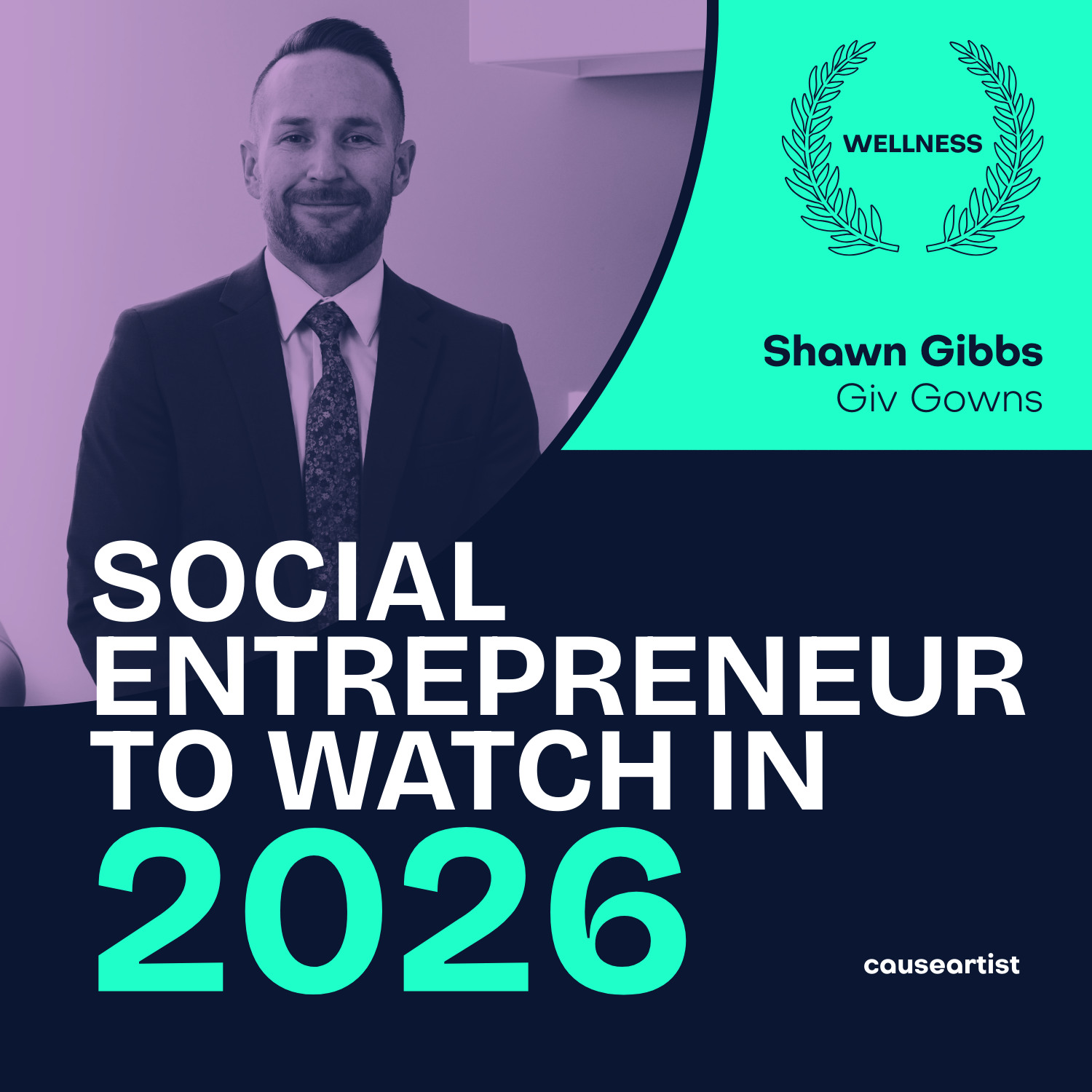
Shawn Gibbs is the Co founder and CEO of GIV Gowns, a healthcare apparel company built from firsthand clinical experience. After more than 15 years in practice, Shawn repeatedly saw patients delay or avoid care because traditional medical gowns made them feel exposed, embarrassed, or powerless.
What began as individual patient conversations revealed a deeper, systemic issue. Healthcare had advanced in nearly every area except one, what patients are asked to wear during some of their most vulnerable moments.
GIV Gowns was created to establish a new standard for patient attire, one rooted in dignity, confidence, and trust.
The company designs premium medical gowns that improve comfort and functionality for patients while supporting providers in delivering better care.
Beyond the exam room, GIV extends its mission through the GIV Back Initiative, dedicating a portion of every purchase to supporting underserved communities.
Built with intention and bootstrapped to protect its values, GIV exists to prove that when patients feel respected and empowered, healthcare outcomes improve for everyone involved.
Housing and construction innovation
Kidus Asfaw is turning plastic waste into low carbon building materials
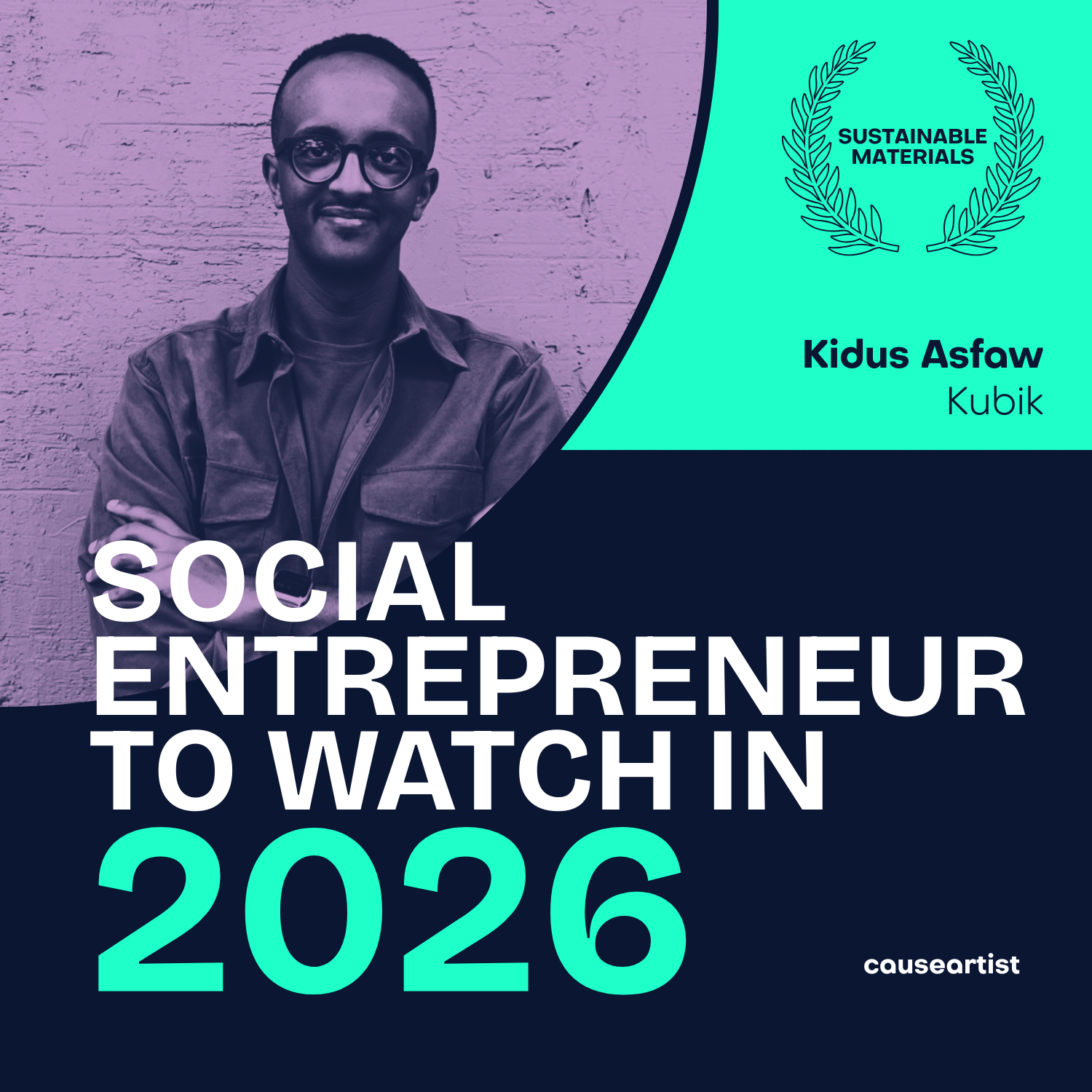
Kubik was founded by Kidus Asfaw, a climate focused systems builder with a deep background in global innovation, public sector transformation, and emerging markets.
Before launching Kubik, Kidus led large scale digital and infrastructure initiatives across more than 40 countries, including work at UNICEF, Google, Accenture, and the World Bank.
That experience revealed a shared root problem behind housing shortages, plastic pollution, and climate risk, waste is treated as a liability rather than a resource. Kubik was created to challenge that assumption and redesign how cities are built.
Kubik is a climate tech construction platform that turns plastic waste into low carbon building materials and affordable housing solutions.
By reintegrating waste into the supply chain, the company reduces emissions, lowers construction costs, and delivers durable, dignified housing for underserved communities.
Kubik’s trademarked building systems are designed to be affordable, scalable, and visually compelling, proving that sustainable construction does not require compromise. At its core, Kubik exists to eliminate waste as a human problem and build cleaner, more inclusive cities for the next generation.
Ross Maguire and Gene Eidelman are making durable homes from plastic waste

Ross Maguire and Gene Eidelman are the co founders of Azure Printed Homes, bringing practical experience from real estate development and construction into a sector that desperately needs new thinking.
After years of watching projects drag on, budgets balloon, and waste pile up, they asked a simple question that became the company’s foundation, why not turn plastic waste into durable housing. Instead of accepting the slow, high waste status quo, they chose to rebuild the process from the ground up using automation and better materials.
Azure Printed Homes is a sustainable construction company using 3D printing to manufacture structures from recycled polymers, giving plastic a second life while reducing time, cost, and construction waste.
The company builds a range of solutions including ADUs, small homes, glamping units, and emergency housing designed for fast deployment and lower environmental impact.
With a mission to make housing smarter, faster, and greener, Azure is proving that affordability and sustainability can move together when the building method itself is redesigned.
Check out our interview with co-founder, Gene Eidelman, on the origins of Azure, their vision for the future, and how they are redefining the possibilities of home construction.
Workforce development and economic opportunity
Emmanuel Trinity empowers Ugandan youth
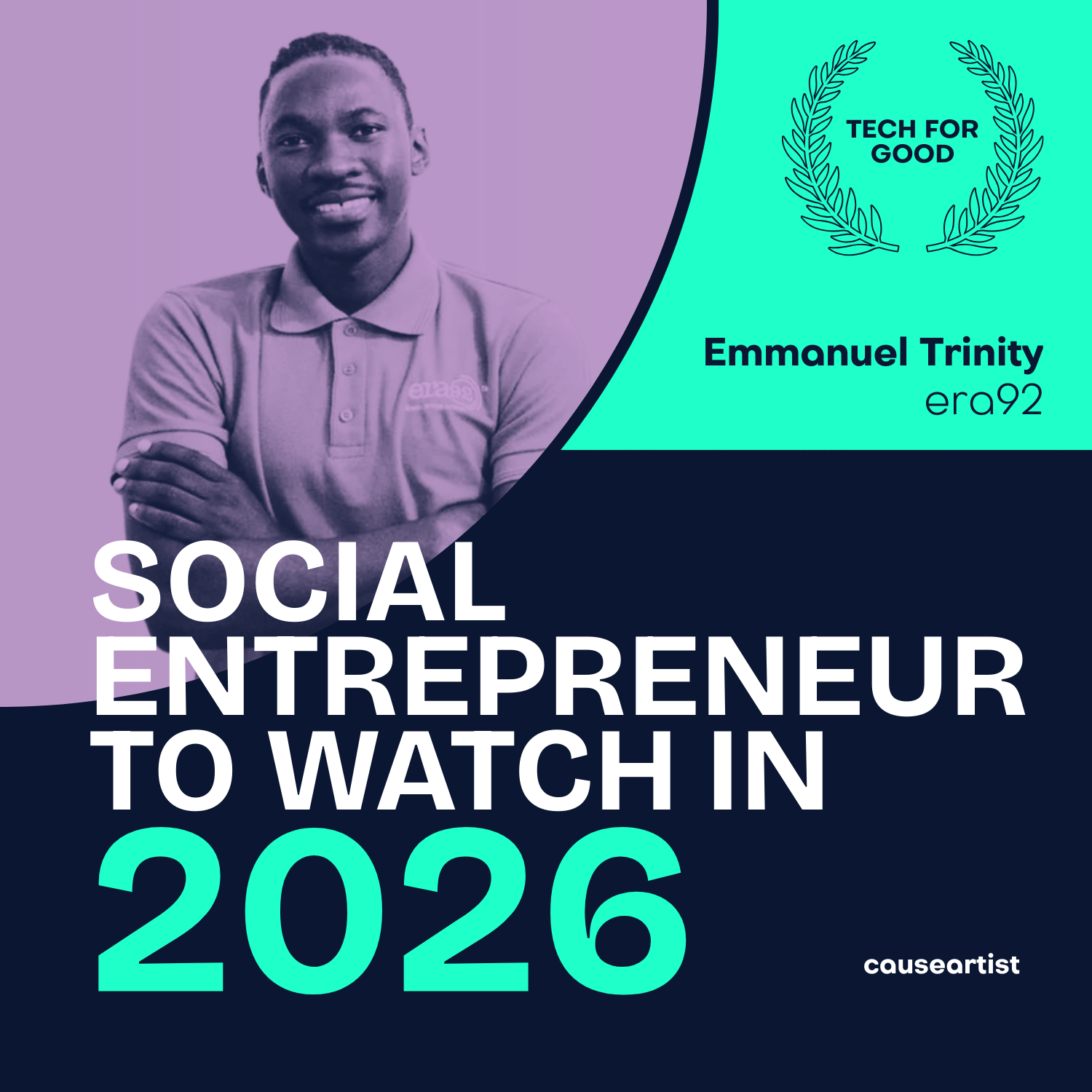
Emmanuel Trinity founded era92 in Uganda to address youth unemployment and the lack of opportunities facing young people in East Africa. The region has one of the youngest populations in the world, but economic opportunities have not kept pace with demographic growth.
era 92 operates as a social enterprise focused on youth empowerment and development, including technology education and skills training. The organization creates pathways for young Ugandans to develop marketable skills and access economic opportunities.
Trinity's work has been recognized by international social entrepreneurship organizations, and era 92 represents the growing ecosystem of African social enterprises led by founders who understand local contexts and needs firsthand.
Erik Olson is confronting generational poverty and exploitation in the global coconut industry

Erik Olson is the CEO of Dignity Made, a social enterprise built to confront generational poverty and exploitation in the global coconut industry. Erik founded the company after spending time in rural farming communities in the Philippines and hearing firsthand how predatory debt traps families for generations.
What began as a single conversation with a farmer became a clear realization that charity alone could not fix an economic problem. Lasting change would require a business model that returned power, access, and fair value to the people producing the raw materials.
Check out our interview with Erik, founder and CEO of Dignity Made.
Dignity Made creates organic coconut products while paying fair trade prices to farming families and providing safe, dignified jobs within local communities. By building manufacturing close to farms, the company helps farmers break cycles of debt, keep children in school, and avoid forced labor migration.
Beyond wages, Dignity Made supports access to clean water, healthcare, financial literacy, and community development. Each product reflects a simple belief that ethical business can restore dignity, protect vulnerable communities, and give families the chance to build a better future on their own terms.
KC McCreery is creating modern building materials through waste
KC McCreery founded Fiber Global to solve a problem hiding in plain sight, the construction industry’s reliance on resource intensive materials and the waste they leave behind.
KC set out to prove that the next generation of building materials could be stronger, cleaner, and more sustainable without cutting down a single tree.
Fiber Global was built on the idea that waste streams, when engineered correctly, can outperform traditional materials while dramatically reducing environmental impact.
Fiber Global manufactures next generation MDF and HDF panels made from upcycled fiber with near zero emissions. Produced locally in Indiana, the company’s Forged Fiber Board delivers industry leading strength, machinability, and moisture resistance while remaining formaldehyde free and non toxic.
By combining advanced material science with scalable manufacturing, Fiber Global enables builders, manufacturers, and designers to adopt high performance materials that meet strict sustainability standards without economic compromise.
The company is redefining what modern building materials can be, clean, certified, and built for the future.
Robotics, AI, and technology for impact
Arjun Sharda started TLEEM as a teenager to impact the next generation

Arjun Sharda founded TLEEM in October 2023 while still a student, driven by a firsthand understanding of what traditional education systems often miss.
Arjun saw that many K–12 students and young adults were not lacking talent or ambition, but access to social capital, mentorship, and real professional networks. Rather than waiting for credentials or permission, he built TLEEM early, reflecting a new generation of social entrepreneurs who turn lived experience into action.
TLEEM, which stands for Technology, Leadership, Entrepreneurship, Engineering, and Mathematics, is a 501(c)(3) nonprofit focused on expanding educational equity through community driven clubs and global chapters.
Operating across dozens of chapters in multiple countries, TLEEM helps young people build networks, confidence, and exposure to opportunities that extend beyond the classroom.
By prioritizing connection alongside learning, the organization is unlocking human potential and proving that meaningful impact can be led by founders at any age.
Ivan Zou is redefining food waste reduction on University campuses

Ivan Zou is the CTO and co-founder of Raccoon Eyes AI, a sustainability technology company born out of a Georgia Tech senior capstone project. Trained as an engineer, Ivan approached food waste with a builder’s mindset and a researcher’s curiosity.
What began as an experiment to measure how much food was being thrown away on campus quickly evolved into a deeper insight: food waste is not a moral failure, but a data and design problem.
By combining technical rigor with behavioral science, Ivan and his co-founders set out to change how universities understand and address waste at scale.
Raccoon Eyes AI helps university dining halls measure, analyze, and reduce food waste using AI-powered scanners, analytics dashboards, and student feedback kiosks. The platform gives kitchens clear visibility into what is being wasted and why, enabling better menu decisions, portioning, and production planning.
At the same time, the company engages students through playful, non-judgmental nudges that encourage mindful eating. Operating on a B2B subscription model, Raccoon Eyes AI works with campuses across the country to reduce costs, improve sustainability metrics, and reshape dining culture, proving that small behavioral shifts, guided by the right data, can create meaningful environmental impact.
Oscar Pedroso is Disrupting STEM Education

Oscar Pedroso is the Founder and CEO of Thimble.io. As the son of two Honduran immigrants and a first generation college graduate, Oscar experienced firsthand how traditional education systems often fail English language learners and students from low income communities.
Those gaps shaped his conviction that access to high quality STEM education must start earlier and be designed for the realities students and teachers face in real classrooms.
Oscar studied Mathematics and Economics at the University of Rochester, where his interest in education deepened beyond academics. After graduating, he worked as a college admissions officer and provided pro bono advising to inner city high school students navigating the college process.
He also became a mentor for multiple FIRST Robotics teams across Rochester, New York, gaining hands on experience teaching STEM concepts through applied, project based learning.
Over the past decade, Oscar has worked closely with schools, community organizations, and makerspaces, leading professional development workshops in both English and Spanish and building expertise in child development, English language learning, and executive functioning.
Thimble.io was created to turn that experience into a scalable solution for schools.
The platform combines hands on STEM kits with live and on demand online instruction, enabling schools to offer robotics, coding, and engineering programs even without dedicated STEM staff.
Designed to be approachable for educators and engaging for students in grades 4 through 12, Thimble.io helps schools build future ready skills early while expanding access to STEM pathways for students who are too often left behind.
Barnabas Nomo is building and manufacturing affordable, tailor-made wheelchairs

Barnabas Nomo founded Goliath Robotics to address a problem hiding in plain sight across Sub-Saharan Africa: mobility impairment compounded by systems that were never designed for local realities.
In regions where millions rely on wheelchairs to participate in daily life, nearly all available options are imported, poorly fitted, difficult to repair, and priced far beyond what most families can afford.
Barnabas saw that accessibility was not just a health issue, but an infrastructure and dignity issue, one that demanded local manufacturing, better design, and long term economic inclusion.
Goliath Robotics is the first company in Sub-Saharan Africa to locally manufacture affordable, tailor made wheelchairs in Ghana. Built for local terrain, bodies, and use cases, Goliath’s wheelchairs prioritize durability, mobility, and repairability, addressing the failures of mass donation models and one size fits all imports.
The company also partners with financial institutions to make its products accessible through financing, removing upfront cost barriers for users.
By combining local production, inclusive design, and financial access, Goliath Robotics is redefining mobility and independence for people with disabilities across Ghana and beyond, proving that assistive technology works best when it is built with and for the communities it serves.
Steven Stavrou and Burak Doluay believe that peace is created through opportunity, collaboration, and tech
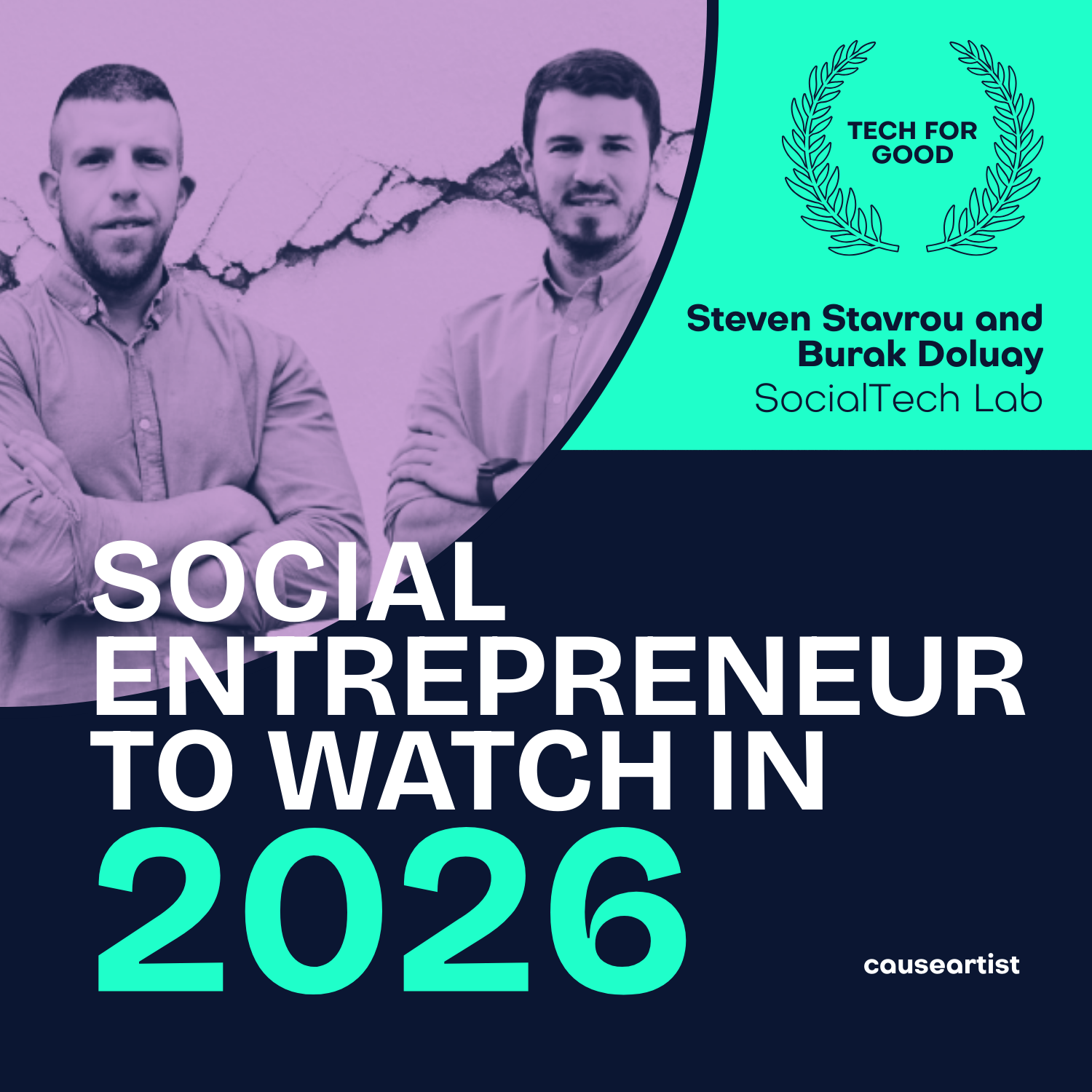
Steven Stavrou and Burak Doluay lead SocialTech Lab, a platform built from lived experience in one of Europe’s longest-standing divided contexts. As a Greek Cypriot and Turkish Cypriot founding team, Steven and Burak did not approach peace as an abstract ideal.
They built SocialTech Lab around a grounded belief that peace is created through opportunity, collaboration, and shared economic progress. Their work is shaped by a simple insight: when people build together, trust follows.
SocialTech Lab operates at the intersection of entrepreneurship, technology, and positive peace. The organization designs and delivers innovation programmes, digital platforms, and physical spaces that empower young changemakers, social entrepreneurs, and communities to address real challenges in fragile and conflict-affected regions.
From its early roots as CyprusInno to its regional expansion across Europe, the Western Balkans, and the Middle East, SocialTech Lab has supported hundreds of startups and thousands of innovators.
Its focus goes beyond launching ventures, strengthening entire ecosystems where inclusive growth, resilience, and collaboration become the foundation for lasting peace.
John Jaeger built an early warning system that saves lives in conflict zones

John Jaeger served as a U.S. diplomat and State Department official working on conflict zones and humanitarian issues. His experience in Syria during the early civil war years showed him the devastating impact of aerial bombardment on civilians who had no warning before strikes hit their neighborhoods.
He founded Hala Systems to use technology to save civilian lives. The company's Sentry system uses a network of sensors, machine learning, and data analysis to detect incoming aerial attacks and provide warnings to civilians, giving them crucial minutes to seek shelter.
Hala Systems deployed Sentry across Northwestern Syria, working with the White Helmets civil defense organization and local communities. The system has been credited with helping save thousands of civilian lives through advance warnings of airstrikes. The company has received humanitarian tech awards and funding from foundations and government grants, with potential applications in other conflict zones globally.
Looking ahead: what this cohort tells us about the next decade
The founders featured here offer a clear preview of what the next ten years will reward and what they will leave behind.
What will not work anymore is shallow impact.
Businesses that rely on offsets without operational change, marketing led sustainability claims, or growth detached from real outcomes will struggle.
So will companies built on extractive economics, fragile supply chains, or regulatory arbitrage.
What will dominate by 2030 are companies that make essential systems work better.
Energy that is cleaner and more reliable.
Housing that is faster to build and more resilient.
Healthcare that is accessible and dignified.
Financial tools that reduce friction instead of extracting fees.
Products and materials designed for reuse, traceability, and durability.
The defining companies of the next decade will look less like lifestyle brands and more like infrastructure. They will be harder to build, slower to start, and far more valuable once established.
This cohort of founders is not betting on trends.
They are building for inevitabilities.
And that is why they matter.