Preserving Handcraft in the Age of AI and Automation

As AI and automation reshape how products are designed and made, the meaning of “handcrafted” is becoming harder to define. Nest founder Rebecca van Bergen explores why clearer standards are needed to protect artisans, preserve consumer trust, and ensure human skill remains at the center of the global craft economy.

Preserving Handcraft in the Age of AI and Automation

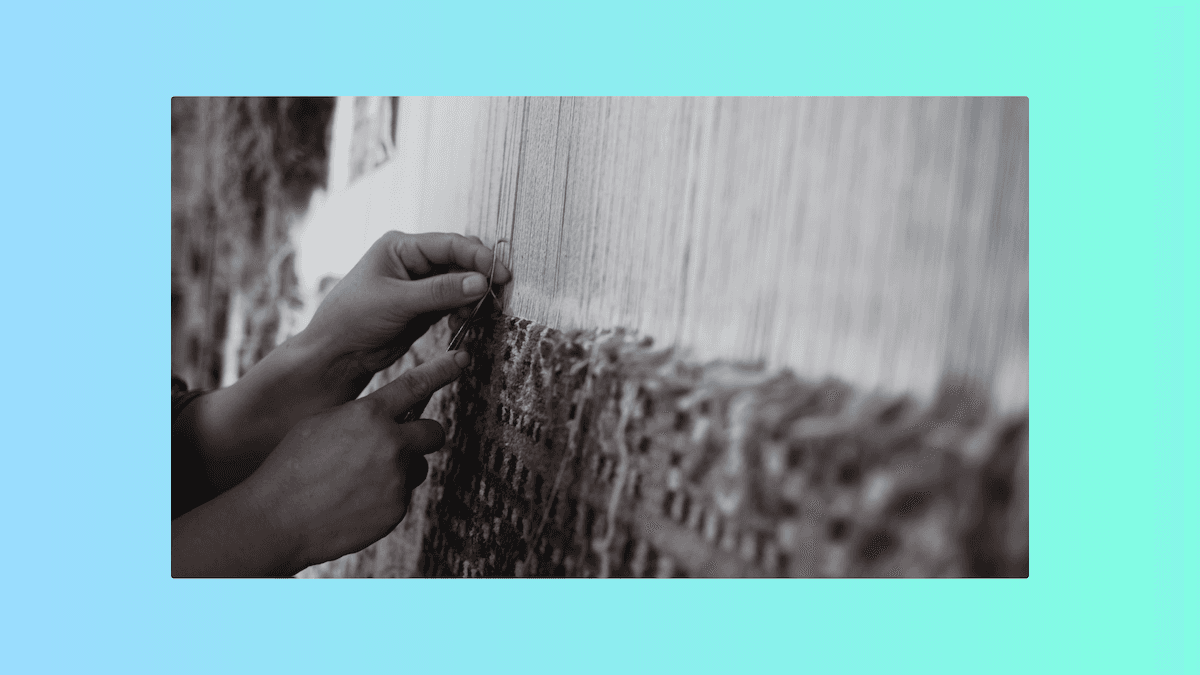
Photo credit: buildanest.org, modified by Causeartist

Key takeaways

  • Terms such as handcrafted, handmade, artisan, and artisanal need clearer standards as automation and technology become more common in product manufacturing.
  • The global handicrafts market was valued at $740 billion in 2024 and is projected to reach $983.1 billion by 2030.
  • Technology does not necessarily make a product inauthentic, the key question is whether human skill and decision making remain essential to its creation.
  • Clear handcrafted standards can help protect artisans, preserve consumer trust, and distinguish authentic craft from primarily industrial production.
  • Nest Verified Handcrafted provides independent standards and verification designed to help brands and retailers make more credible handcrafted product claims.

Handcrafted. Handmade. Artisan. Artisanal. These are all buzzwords, each with slightly different meanings. How are consumers meant to distinguish what is truly authentic?

When I founded Nest, a nonprofit dedicated to the business of craft, in 2006, these words were not nearly as widely used. Twenty years later, we recognize the urgent need to align the industry’s use of terms like “handcrafted” with the techniques and production processes they imply.

This alignment is critical to reducing the misuse of this terminology, which can devalue these skills and ultimately harm individual craftspeople, global craft communities, brands, and retailers.

The Growing Value of the Global Handcraft Economy

We know we are not the only ones noticing artisans and craftsmanship. According to Grand View Research, the global handicrafts market was valued at approximately $740 billion in 2024 and is projected to approach $983 billion by 2030.

This growing market confirms that consumer interest in handcraft can translate into meaningful economic activity.

Yet, with growth comes a critical question: Who actually benefits?

This surge in popularity can be confusing for consumers, particularly when companies use terms like “artisan” and “handcrafted” loosely and without consistency. When everything is deemed handcrafted, often based on appearance alone, the term risks becoming meaningless.

What Does It Mean to Be an Artisan?

To examine the term “artisan” is to encounter a complex concept that lacks a universally accepted definition across fields ranging from art history to contemporary retail.

Add to this the maker movement, which grew from DIY culture and expanded alongside digital fabrication tools, open-source platforms, and collaborative communities, and these terms lose even more meaning.

UNESCO defines craft or artisanal products as products made by artisans, either entirely by hand or with the help of hand tools or mechanical means, provided that the artisan’s direct manual contribution remains the most substantial component of the finished product.

Even that definition leaves room for interpretation.

How much technology or mechanization is allowed?

As a handweaver, can punch-card patterns be rendered by machine so long as the looming is done by hand? What about mechanical looms? Where do 3D printing and computer-aided design fit in?

Beyond these questions related to technical production, we also struggle to define the level of skill required to be considered an artisan.

At Nest, we aim to shine a light on an often overlooked class of artisans: those who sew soles onto shoes or stitch pompoms onto the tops of winter hats. Their work may involve a narrower or more specialized skill than that of a master craftsperson, but is it any less essential to the handcrafted process? How much does the skill of the practitioner, or the final output, matter?

Why Clear Standards Matter

It has become increasingly imperative that, in an era of greenwashing and corporate overstatement, we as consumers and purchasers clearly understand what “handcrafted” truly means.

Regulators are already examining how companies use broad and potentially misleading product claims. The Federal Trade Commission’s Green Guides, for example, are designed to help marketers avoid environmental claims that could mislead consumers.

Similar clarity is needed for claims about how products are made.

Without clear standards, we risk undermining the very people and traditions these terms are meant to honor.

Misuse of the term is not simply a marketing problem. When industrially produced goods are presented as artisan made, they can negatively disrupt the consumer trust and price premium associated with craft without supporting the labor, knowledge, or communities behind it.

Authentic makers may then be forced to compete with products created at an entirely different scale and cost structure.

Creating a Verifiable Definition of Handcrafted

Enjoying this? Get the next one.

We send one email a week with the best impact reads, interviews, and tools.

Free. Unsubscribe anytime.

At Nest, we have developed a more detailed and verifiable definition for handcrafted items.

The process has been painstaking. It requires analyzing each product category, conducting a thorough review of its creation and production processes, and identifying measurable, definable characteristics that allow a company to accurately label an item as handcrafted.

Take pottery, for example. Is the use of molds acceptable? What about hand painting on machine-made pottery?

A handcrafted product does not necessarily need to be made entirely without machines. The more important question is whether human skill and decision-making are essential to the product’s creation, character, and final quality.

Technology itself is not the enemy of craft. Digital design tools, improved equipment, and new production methods can expand creativity, improve safety, and help artisan businesses grow. The question is not whether technology is involved, but whether human skill remains materially responsible for the product and whether that role is communicated honestly.

Building Industry Standards Through Research

When defining each technique, Nest conducted extensive desk research, consulted craft organizations and artisan businesses, and interviewed leading artisans and makers.

The goal was to clearly identify authentically handcrafted items through standardized definitions and a comprehensive technique guide.

Brands such as Williams-Sonoma Inc., Tory Burch, and DÔEN have joined us on this journey.

This is not about limiting creativity or innovation. It is about protecting integrity.

Introducing Nest Verified Handcrafted™

The Nest Verified Handcrafted™ program will be used by retailers large and small to help ensure that their product labeling is accurate and aligned with these standards.

The program uses independent review and ongoing oversight to help ensure that handcrafted claims are credible, consistent, and aligned with industry expectations.

We have created definitions for 14 craft techniques to date, including ceramics, embroidery, glass blowing, knitting and crochet, metalwork, quilting, textile weaving, and woodwork, with more to come.

Brands and retailers that license the Nest Verified Handcrafted™ designation may display the program’s mark on approved consumer-facing materials, giving shoppers a clearer way to distinguish handcrafted products from those made primarily through industrial or mass-production processes.

We look forward to convening the industry around these definitions and providing consumers with greater confidence in the handcrafted products they purchase.

Preserving the Human Value of Craft

As we face a world increasingly shaped by automation and AI, we collectively need to remember and celebrate the use of human hands to create the products we consume, use, and love.

Brands and retailers have a responsibility to examine how they use terms such as handmade, artisan, and handcrafted, and to ensure those claims are supported by transparent production standards.

Consumers should be able to trust that these words reflect meaningful human involvement.

In the end, “handcrafted” should represent not just how something is made, but whose livelihoods, heritage, and humanity are embedded within it.

Sources

  1. Handicrafts Market Size, Share & Trends Analysis Report, 2025-2030 — Grand View Research (2024)
  2. Craft or Artisanal Products — UNESCO Institute for Statistics
  3. Green Guides — Federal Trade Commission
  4. Nest Verified Handcrafted — Nest

FAQ

What does handcrafted mean?

Handcrafted generally refers to products in which human skill, manual work, and decision making play a substantial role in the creation of the finished product, even when some tools or machinery are used.

What is the difference between handmade and handcrafted?

The terms handmade and handcrafted are often used interchangeably, but neither is applied consistently across every product category. Clearer standards can help determine how much direct human involvement is required for a product to legitimately carry these labels.

Can handcrafted products be made using machines?

Yes. A handcrafted product does not necessarily need to be produced entirely without machines. The more important consideration is whether human skill and decision making remain materially responsible for the product's creation, character, and final quality.

How is AI and automation affecting traditional craftsmanship?

AI, digital design tools, automation, and new manufacturing technologies are changing how products are designed and produced. These technologies can support artisans, but they also make clear standards increasingly important for distinguishing meaningful human craftsmanship from primarily automated production.

What is Nest Verified Handcrafted?

Nest Verified Handcrafted is a verification program developed by Nest to help brands and retailers substantiate handcrafted product claims using defined craft techniques, independent review, and ongoing oversight.

How large is the global handicrafts market?

Grand View Research estimates that the global handicrafts market was valued at $740 billion in 2024 and projects it will reach approximately $983.1 billion by 2030.

Support
 

Share:

Related Articles

View all articles

Get weekly impact insights

Founder stories, funding news, and tools — curated for impact builders.

Join 25,000+ Causeartists

Free. Unsubscribe anytime.