
A Simple Way to Fight Malnutrition: Healthier Flour, Same Price

Sanku fortifies flour at the small mills that feed rural Eastern Africa, and earned revenue now covers about a third of its operating costs. CEO and cofounder Felix Brooks-Church explains the system built around the Dosifier, how the economics work for millers, and what it will take to reach one billion people.
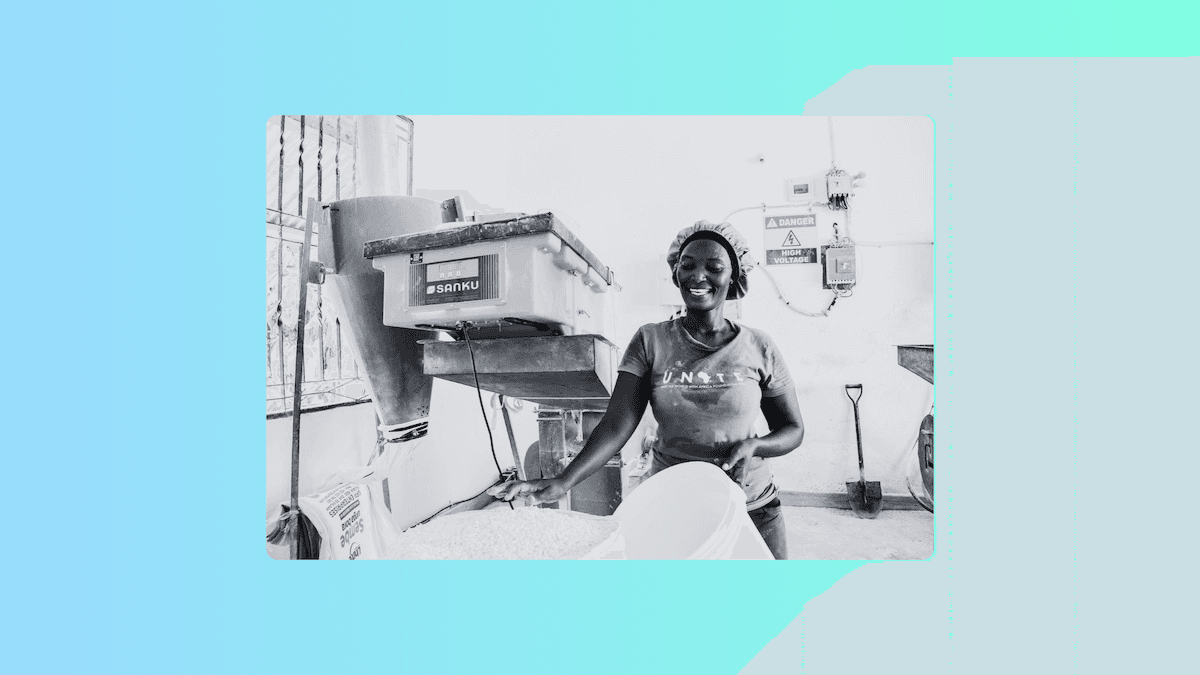
Sanku Dosifier fortifying flour at a small mill in Eastern Africa

Photo credit: Sanku

Key takeaways

  • Sanku found that the Dosifier alone could not deliver fortification at scale, so it built premix supply, field support, quality assurance, remote monitoring, and government partnerships around it.
  • In Tanzania, Sanku sells flour bags to millers and uses the margin to subsidize nutrient premix, so small mills can fortify without raising the price of flour.
  • According to Sanku, its Tanzania premix factory cut premix costs by around half compared with imports and reduced lead times from about four months to about two weeks.
  • Sanku reports that commercial revenue now covers about a third of operating costs, while philanthropy funds new factories, country launches, and research.
  • Brooks-Church names stronger evidence on nutritional and health outcomes as one of the things Sanku still needs to build as it scales.

Fortifying flour with vitamins and minerals asks nothing of the families who eat it. They keep buying the same flour from the same mill. The hard part sits upstream. In much of Eastern Africa, a large share of flour comes from small and medium mills that serve rural and lower income communities, and a fortification law alone does not give those mills the equipment, premix, training, or margin to comply.

Sanku was built to close that gap. Founded by Felix Brooks-Church, its CEO and cofounder, the nonprofit invented the Dosifier, a device that adds nutrient premix to flour automatically as it is milled, on mills of almost any size. It now operates in Tanzania, Kenya, Ethiopia, and Uganda.

The machine turned out to be the easy part. To make fortification work, Sanku had to build premix manufacturing, field teams, quality assurance, remote monitoring, government relationships, and a commercial model that lets millers fortify without raising the price of flour. According to the company, reach grew roughly tenfold in three years while the net philanthropic cost per person fell from about $0.55 to $0.10, and earned revenue from flour bags and premix now covers about a third of operating costs.

In this interview, Brooks-Church explains how the flour bag model came from millers themselves, why a 2021 unrestricted gift from MacKenzie Scott changed what Sanku could build, and what remains unproven on the road to one billion people, including stronger evidence on health outcomes.

Sanku at a glance

  • CEO and cofounder: Felix Brooks-Church

  • Structure: Nonprofit operating through Project Healthy Children, a US 501(c)(3) with subsidiaries in Eastern Africa

  • Markets: Tanzania, Kenya, Ethiopia, and Uganda, with offices in Dar es Salaam, Nairobi, Addis Ababa, and Kampala

  • Technology: The Dosifier, an Internet of Things (IoT) enabled device that fortifies flour during milling and reports production data over a cellular connection

  • Manufacturing: A nutrient premix factory in Tanzania, opened in 2024 and described by the company as Eastern Africa's first, plus a second factory in Addis Ababa, Ethiopia

  • Company-reported reach: 86 million people through 1,974 partner mills and 1,809 Dosifiers, per Sanku's website

  • Funding mix: Earned revenue covers about one third of operating costs, according to the company; philanthropy funds growth, including an $8 million unrestricted gift from MacKenzie Scott in 2021

  • Goal: One billion people across ten countries within ten years, with a next milestone of 100 million people by 2028

The interview

Enjoying this? Get the next one.

We send one email each Monday with what just published on Causeartist.

Free. Unsubscribe anytime.

The Dosifier alone could not solve malnutrition at scale. What did you have to build around it to create a working social enterprise?

Felix: The Dosifier was the technological breakthrough, but we quickly learned that a machine on its own does not create a functioning fortification system. We had to build everything around it: a reliable supply of nutrient premix, field teams to train and support millers, quality assurance and monitoring systems, relationships with governments and regulators, and a commercial model that made fortification affordable for millers.

Local manufacturing became an important part of that system. In 2024, we opened Eastern Africa's first nutrient premix factory in Tanzania. That brought production closer to the millers who need it, reduced the cost of premix by around half compared with direct imports, and cut lead times from around four months to about two weeks.

It also gives millers a more reliable source of high-quality premix and created a new commercial revenue stream for Sanku. We are now building a second premix factory in Ethiopia.

Just as importantly, we had to build the right team and build the model with the people who actually use it. Sanku's operations are overwhelmingly staffed by people from the countries where we work. More than 500 millers participated in the development of the Dosifier, and miller feedback also helped shape both our flour bag business model and our move into local premix manufacturing.

Sanku today is much more than a Dosifier. It is a fortification system built with strong local leadership and expertise, combining technology, manufacturing, supply chains, field operations, government partnerships, quality assurance, and commercial revenue.

How does the model create value for mill owners while keeping fortified flour affordable for consumers?

Felix: One of the great advantages of food fortification is that it requires essentially no behavior change from the people we are trying to reach. Families do not have to remember to take a supplement or buy a new food. We add essential vitamins and minerals to flour they are already buying and eating. A central principle of our model is that families should not have to pay more for it.

For millers, the economics differ considerably depending on the size of the business. Even where governments mandate fortification, a law on its own does not remove the practical and financial barriers to complying.

This is particularly important for small and medium mills, which in many markets supply a large share of the flour consumed by rural and lower-income communities. Equipment, premix, training, and quality control all cost money, while the health benefit does not necessarily create an immediate commercial return for the miller. Without a workable business model and practical support, many of these mills would struggle to fortify consistently.

Sanku removes those barriers by providing the Dosifier, reliable nutrient premix, training, remote monitoring, and ongoing technical support. In Tanzania, our flour bag model came directly from listening to millers. They told us, in effect: if you can lower what we spend on flour bags, we can afford the cost of fortification.

Millers already need bags to package and sell their flour, so Sanku manufactures and sells those bags, and the margin helps subsidize the nutrient premix. That allows the miller to fortify without passing an additional cost on to the family buying the flour.

For larger industrial mills, the economics are different. They may already have fortification equipment and can buy premix from other suppliers or import it themselves. Sanku's value proposition is a locally produced, high-quality product at a competitive price, with much shorter lead times and a more dependable regional supply.

Imported premix can be expensive, slow to arrive, and variable in quality. Counterfeit and substandard products are also an issue in parts of the regional market.

Across both models, the objective is to make fortification commercially workable for the miller while keeping fortified flour affordable for the family.

Sanku grew its reach tenfold in three years while cutting philanthropic cost per person from roughly $0.55 to $0.10. What made both possible?

Felix: The simplest way to think about it is scale plus a growing commercial revenue base.

As we reach more people, the infrastructure behind the model, including technology, country teams, monitoring systems, and manufacturing capacity, can support a much larger population. That creates economies of scale.

At the same time, Sanku increasingly earns revenue from the system itself. In Tanzania, flour bag sales generate revenue while helping subsidize fortification for smaller mills. Our nutrient premix factory creates another revenue stream by supplying premix commercially to mills. Together, these commercial revenues now cover around a third of Sanku's operating costs.

Local premix manufacturing has also been important for efficiency and resilience. Imported premix can be expensive, slow, and inconsistent in quality. Producing it locally reduces cost and lead times, strengthens quality control, and makes the supply chain much more reliable. Sanku's experience in Tanzania has shown the value of that during periods when imported premix has faced regional supply disruptions.

Technology also allows us to manage a large network relatively efficiently. The Dosifier is IoT-enabled: every machine can transmit production data through a cellular connection. Our teams can monitor how much flour mills are fortifying, see whether machines are operating correctly, and identify where maintenance, restocking, or other field support is needed.

The fall from roughly $0.55 to $0.10 does not mean Sanku is doing less. We are growing rapidly. It means the net philanthropic cost of reaching each person is falling, because the same underlying system is reaching many more people while earned revenue pays for a growing share of the operating cost.

What role does each form of capital play, and how did MacKenzie Scott's $8 million unrestricted gift change what Sanku could build?

Felix: The different forms of capital do different jobs.

Commercial revenue increasingly pays for the recurring operation of the system. Revenue from flour bags and nutrient premix already covers a meaningful share of operating costs, and our longer-term ambition is for the core commercial model to become financially self-sustaining.

Philanthropy is currently the growth capital. It allows us to build the things the market is unlikely to finance on its own: Dosifier technology, new factories and country launches, research and development, quality and monitoring systems, government partnerships, and the early investment required to bring new mills and markets into the network.

We have also been fortunate that much of Sanku's philanthropic support has been unrestricted. That matters because rapid scaling does not always fit neatly within individual project grants. Unrestricted funding lets us invest in the capabilities and infrastructure the organization needs next.

MacKenzie Scott's $8 million unrestricted gift in 2021 was transformational. It was more than three times Sanku's annual spending at the time and gave us the ability to think very differently about scale.

We used that funding to build Eastern Africa's first nutrient premix factory in Tanzania, expand from Tanzania into Kenya and Ethiopia, and grow the leadership and operational capacity required to support that expansion. Bringing premix production into the region reduced costs and lead times, improved supply reliability and quality, and helped build local jobs and expertise.

That gift changed Sanku's trajectory because it allowed us to invest ahead of growth rather than simply fund the next year of an existing program.

What must Sanku prove, build, or change to reach one billion people across ten countries without compromising affordability, quality, or local ownership?

Felix: There are several things we need to get right to make that ambition achievable.

First, we need to keep deepening an evidence base that is already informing our decisions. We have extensive operational data from the milling network, external analysis of Sanku's cost-effectiveness, and growing evidence around fortification coverage and quality. As we move into new countries and reach much larger populations, we want to strengthen that further, particularly around nutritional and health outcomes, the counterfactual impact of our work, and which parts of the model deliver the greatest value in different settings.

Second, we need to keep extending the infrastructure we have already built into new markets: reliable local or regional premix production, resilient supply chains, laboratories and quality assurance, IoT-enabled monitoring, strong field operations, and government systems capable of supporting fortification at much greater scale.

Third, the economics have to become increasingly self-sustaining. We still need philanthropy today, particularly to fund expansion and build new infrastructure. Our long-term ambition is for the core model to become self-sustaining through earned revenue, progressively reducing our dependence on philanthropy. In the meantime, philanthropic funding remains essential for expansion, innovation, research, and the infrastructure needed to reach the next stage of scale.

Fourth, scaling to ten countries will depend heavily on people. We need to keep recruiting, developing, and retaining outstanding local staff and leaders who understand the milling industry, government, supply chains, and communities in each market. Sanku today is already overwhelmingly built and run from Eastern Africa. Maintaining that depth of local leadership and expertise as we expand will be critical.

And we need to keep listening. Some of the most important parts of Sanku's model, from the Dosifier to the flour bag model and local premix manufacturing, developed through feedback from the millers and communities expected to use them. As we enter new countries, the exact model will need to adapt to local milling structures, regulation, food habits, and commercial realities.

Reaching one billion people will depend on putting all of those pieces together: strong evidence, local manufacturing and supply chains, reliable technology and quality systems, increasingly sustainable economics, government partnership, and exceptional teams capable of running the model at scale.

Learn more

Sanku's model, country operations, and current reach are covered at sanku.com. The organization's own account of its growth, unit economics, and funding needs is published on the EA Forum.

Sources

  1. Sanku, Sanku (2026)
  2. Sanku: from 7 million to ~70 million people in three years, EA Forum (2026)

FAQ

What is Sanku's Dosifier?

The Dosifier is a device Sanku invented that automatically adds nutrient premix to flour as it is milled, including at small village mills. Each unit is IoT-enabled and sends production data over a cellular connection so Sanku can monitor fortification remotely.

How does Sanku keep fortified flour affordable?

In Tanzania, Sanku manufactures and sells the flour bags millers already need, and the margin helps subsidize nutrient premix. According to the company, this lets millers fortify without passing extra cost on to families.

Where does Sanku operate?

Sanku operates in Tanzania, Kenya, Ethiopia, and Uganda. It runs a nutrient premix factory in Tanzania and has built a second factory in Addis Ababa, Ethiopia.

How is Sanku funded?

Sanku combines earned revenue from flour bags and premix, which the company says covers about a third of operating costs, with philanthropy that funds growth. MacKenzie Scott gave Sanku an $8 million unrestricted gift in 2021.

Support
 

Share:

Related Articles

View all articles

Get the Monday roundup

New companies, funders, stories, podcasts, and case studies. One email a week.

Join 25,000+ Causeartists

Free. Unsubscribe anytime.