

Wildfires have shifted from seasonal threats to year round, climate driven disasters. The catastrophic scale of recent fire seasons makes one thing clear.
Traditional methods that rely on human lookouts, historical data, and reactive ground crews cannot keep up with the speed and intensity of modern blazes.
The window between ignition and catastrophe has shrunk from hours to only minutes.
This existential challenge has galvanized a wave of innovation. A new technological front line is emerging, marked by the convergence of Artificial Intelligence (AI), data fusion, and autonomous systems.
These startups are transforming the fire cycle by shifting the focus from simply fighting large fires to proactive risk mitigation and achieving Ultra-Early Detection (UED), allowing first responders to stop a potential megafire before it consumes its first acre.
The "Tech Divide": Moving from Reactive to Predictive
The limitations of the old model are stark. Traditional detection often relies on satellites that pass over a region only a few times a day, missing ignitions, or smoke visibility, which is hampered by clouds or darkness.
The modern solution uses technology to address the two critical phases:
- Prevention/Risk Mitigation (P): Using AI and sensors to predict when and where a fire is likely to start (e.g., utility infrastructure failure, dry fuel loads) and address those risks before ignition.
- Ultra-Early Detection/Response (R): Identifying a fire within minutes of ignition, often during the invisible smoldering phase and providing rapid, actionable intelligence for suppression.
The companies below represent this critical technological spectrum.
Dryad Networks
- Category: (P) Prevention/Ultra-Early Detection
- Core Innovation: IoT Gas Sensing. Dryad deploys solar-powered sensors mounted on trees that form a large-scale IoT mesh network using LoRaWAN technology. These sensors analyze ambient air for trace gases (like CO and H2) released during the smoldering phase, long before smoke or flames are visible.
- Impact on the Fire Cycle: Achieves Ultra-Early Detection (UED). By detecting fires at the chemical signature stage, the alert window is often reduced from hours (via traditional methods) to minutes, maximizing the chance for ground crews to contain the fire when it is still small.
- Key Data Point: Designed to detect fires in forests without cellular coverage and can track fires from under one meter in size.
Gridware
- Category: (P) Prevention/Infrastructure Monitoring
- Core Innovation: Remote Telemetry and Edge AI sensors attached directly to power poles and distribution grids. The hardware monitors for anomalies (e.g., subtle vibrations, electrical activity, hardware degradation) that signal a fault or a likely ignition event.
- Impact on the Fire Cycle: Addresses a leading cause of catastrophic fires: utility infrastructure failure. Gridware provides predictive asset health profiles, allowing utilities to perform preventative maintenance or de-energize lines before a fault can drop a live wire and ignite dry fuels.
- Key Data Point: Helps utilities demonstrate proactive risk reduction to regulators by identifying potential fire risks before they manifest.
Overstory
- Category: (P) Prevention/Vegetation Intelligence
- Core Innovation: Uses high-resolution satellite imagery and machine learning (ML) to analyze and classify vegetation health and proximity to power lines. It maps fuel loads and predicts which trees pose the highest risk of falling onto infrastructure.
- Impact on the Fire Cycle: Optimizes vegetation management. Instead of relying on expensive, time-consuming field surveys, utilities can precisely target high-risk vegetation, reducing maintenance costs while lowering the chance of a "wire-down" ignition event.
- Key Data Point: Offers sub-meter resolution analysis of vegetation clearance and health across thousands of miles of utility corridors.
BurnBot
- Category: (P) Prevention/Fuel Reduction Robotics
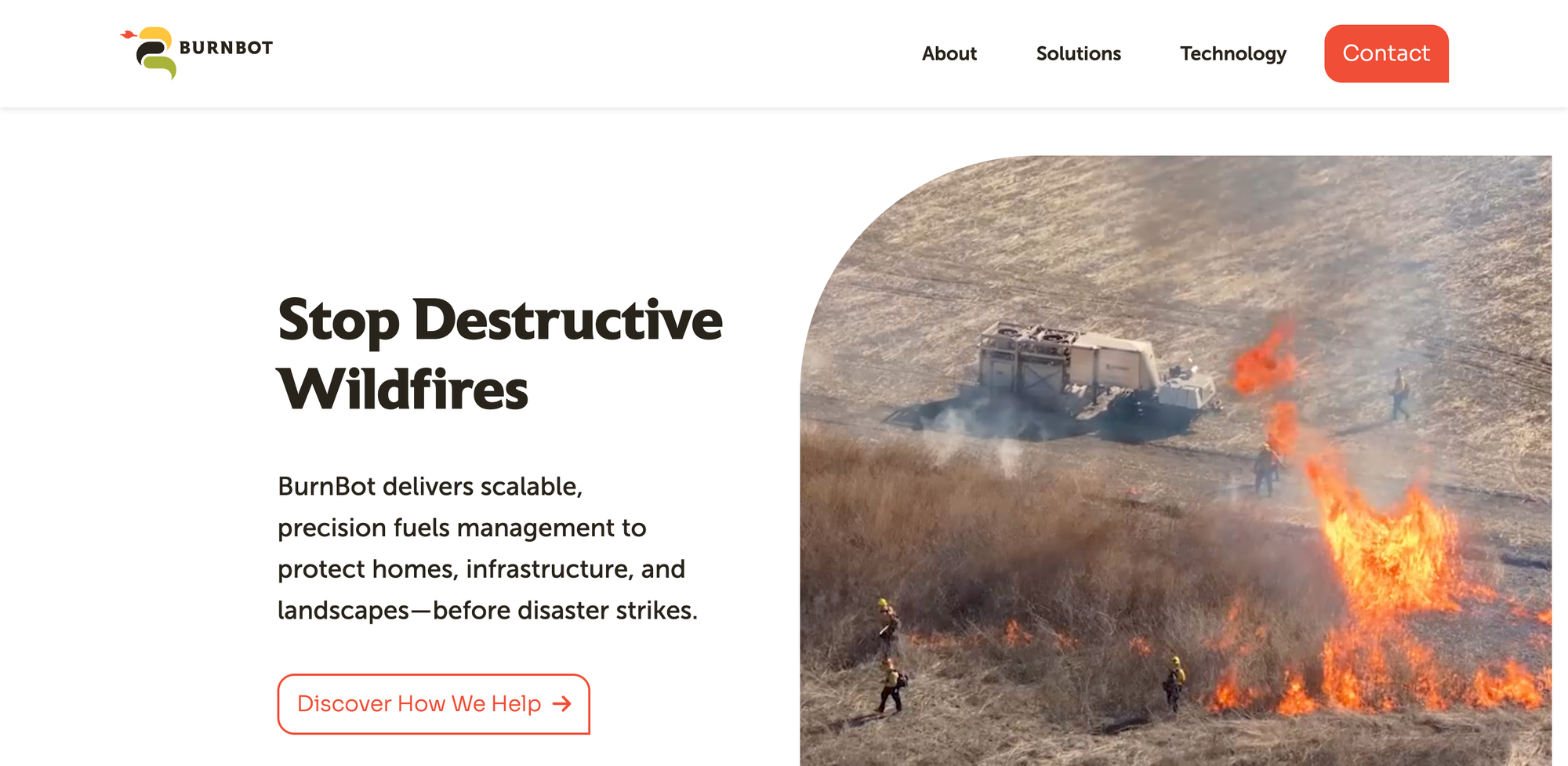
- Core Innovation: Develops advanced, remote-controlled robotic systems (LeanRX) designed to safely execute prescribed burns and mechanical fuel reduction in hard-to-reach, rugged terrain.
- Impact on the Fire Cycle: Accelerates hazardous fuel reduction, which is the single most effective prevention strategy. By automating the controlled application of fire or mechanical removal, they reduce risk to human crews and increase the scale and frequency of critical preventative land management.
- Key Data Point: Their systems can operate in extreme terrain, increasing the efficiency of fuel treatment by up to 10x in complex landscapes.
Firemaps
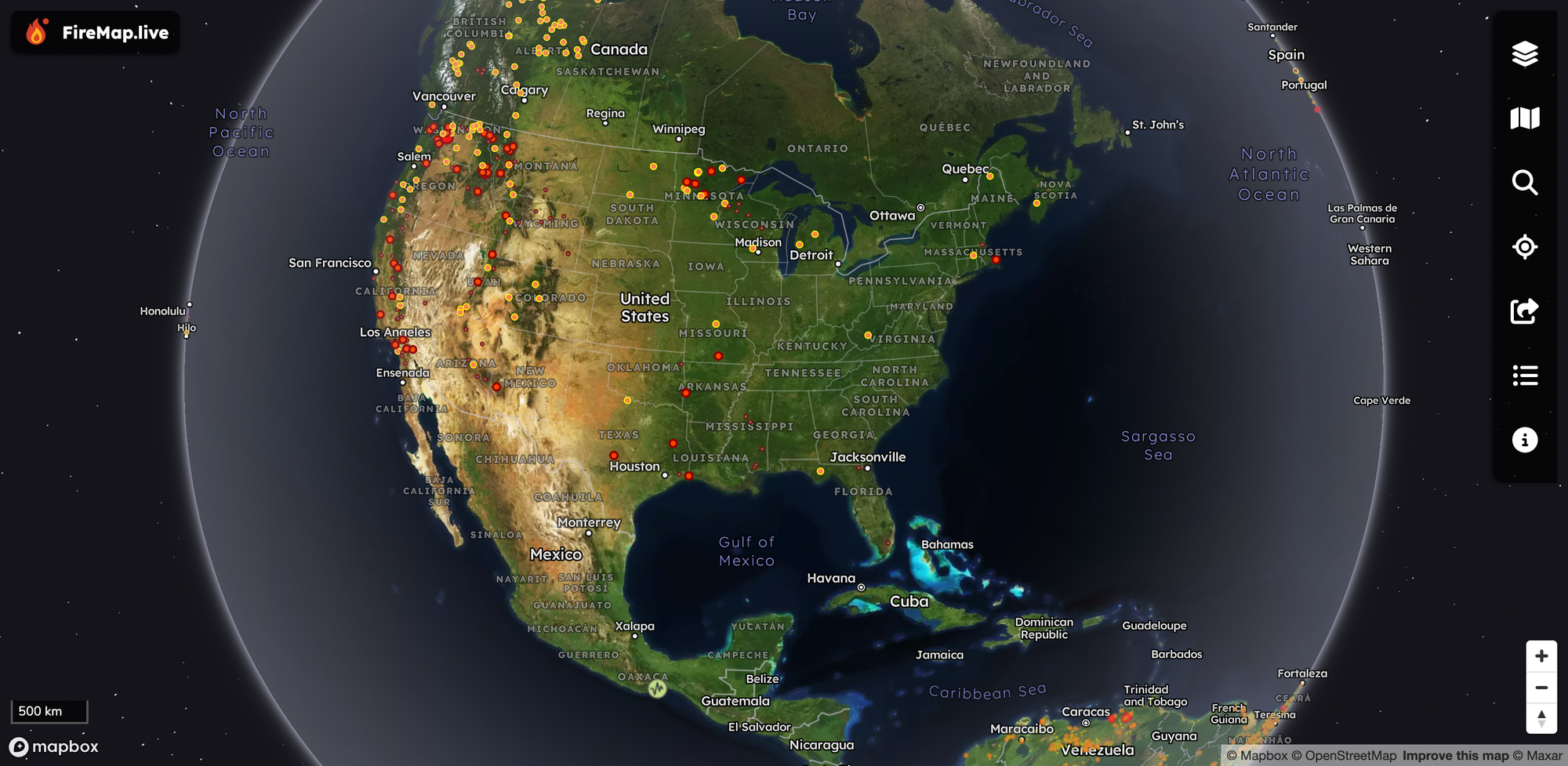
- Category: (P) Prevention/Residential Risk Mitigation
- Core Innovation: Uses drone 3D photogrammetry and satellite imagery paired with AI to create detailed, actionable risk reports for homeowners and insurance companies, focusing on Defensible Space and Home Hardening.
- Impact on the Fire Cycle: Empowers individuals to create resilience. It identifies specific structural vulnerabilities (e.g., vents, roof materials) and vegetation risks within the Home Ignition Zone, reducing the likelihood of structure loss, even when a fire hits the wildland-urban interface (WUI).
- Key Data Point: Provides a clear, quantified risk score and mitigation plan based on proximity to fuel sources and home structure.
Pano AI
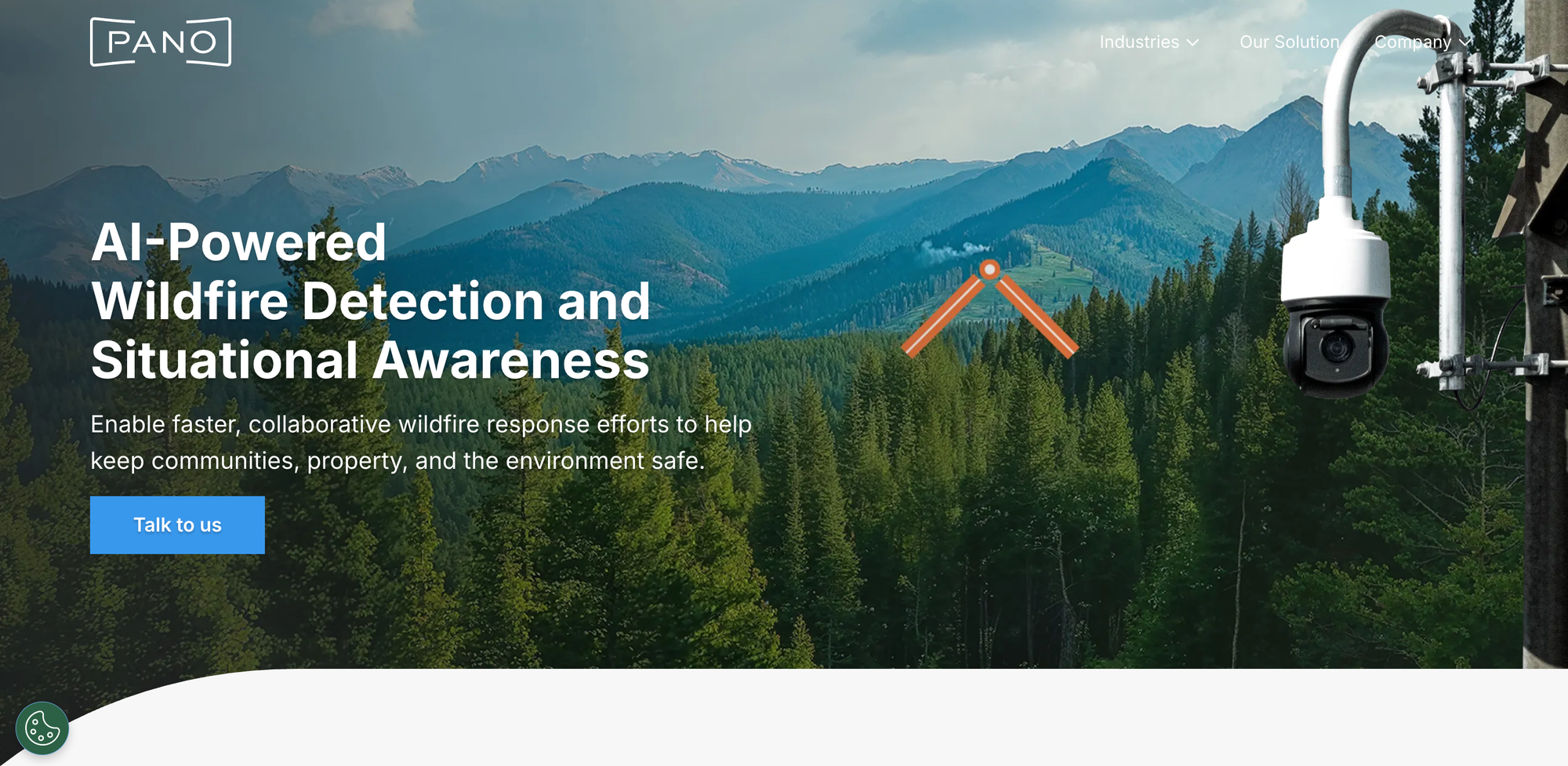
- Category: (R) Detection/Tactical Intelligence
- Core Innovation: Networks of high-definition, 360-degree rotating cameras mounted on strategic towers. The system continuously sweeps the horizon and uses AI/Machine Learning to distinguish wildfire smoke from fog, dust, and clouds.
- Impact on the Fire Cycle: Achieves rapid Detection, Confirmation, and Triangulation. Once confirmed (often by human analysts integrated into the AI loop), the system provides GPS coordinates, live video, and real-time situational awareness to first responders within minutes.
- Key Data Point: Has successfully detected hundreds of wildfires, often achieving an average detection time of 3–15 minutes from ignition.
OroraTech
- Category: (R) Detection/Global Monitoring
- Core Innovation: A constellation of proprietary thermal-infrared nanosatellites and AI processing. The nanosatellites orbit in low Earth orbit, identifying heat signatures (hotspots) as small as four square meters, even through smoke or at night.
- Impact on the Fire Cycle: Provides global, near-real-time detection and tracking. Its on-orbit AI processing significantly reduces the time from data capture to alert, enabling fire managers across multiple continents to track threats and forecast fire spread using digital intelligence.
- Key Data Point: Monitors over 160 million hectares of forest globally, setting a standard for satellite-powered wildfire intelligence.
FireSwarm Solutions
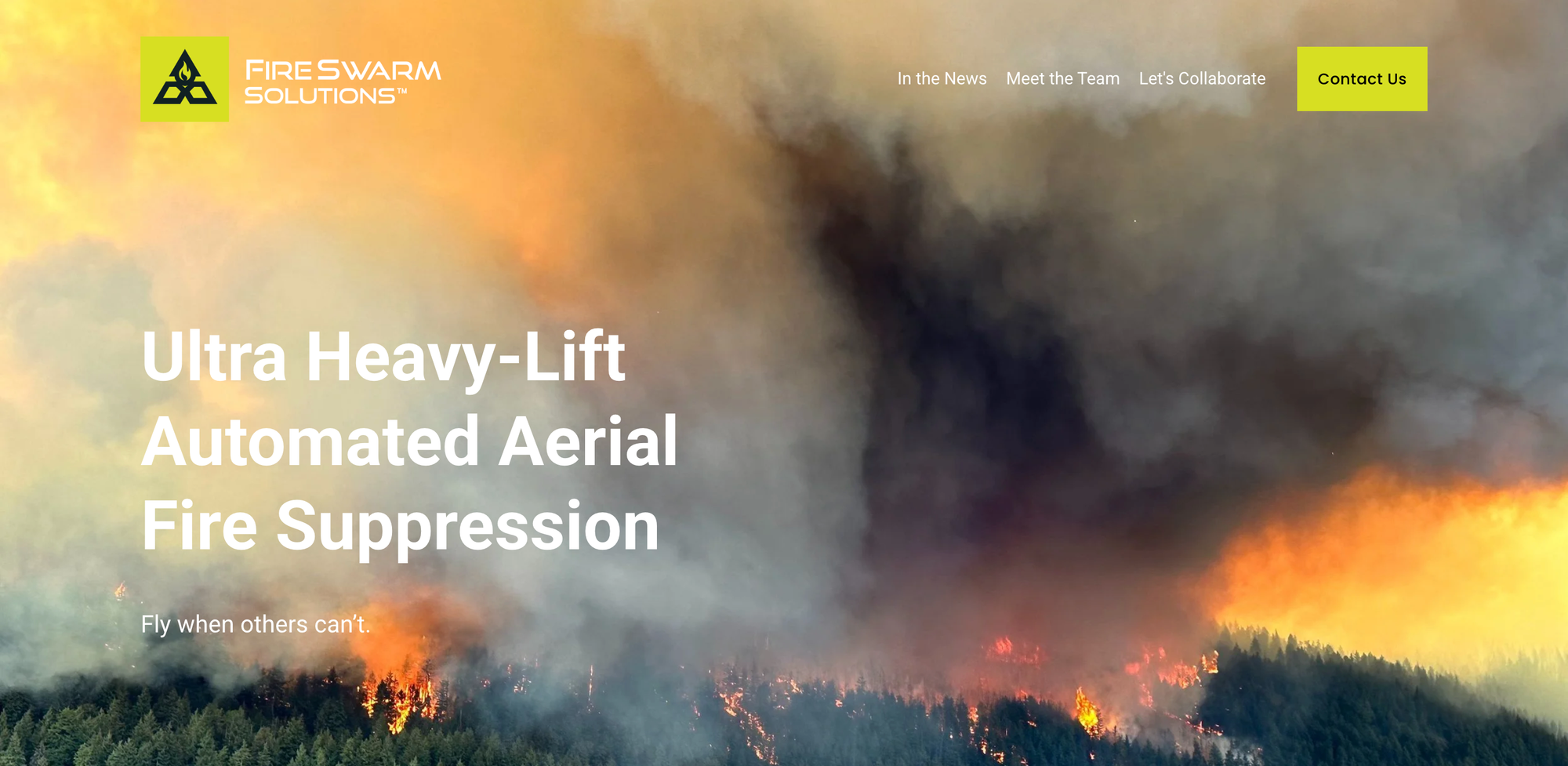
- Category: (R) Response/Autonomous Suppression
- Core Innovation: Develops coordinated, ultra heavy-lift drone swarms for autonomous suppression and rapid situational awareness. These drones are capable of carrying significant payloads (e.g., water or retardant).
- Impact on the Fire Cycle: The technology is designed to achieve rapid, low-altitude, high-precision fire combat in the critical early stages of a fire, especially in remote or wildland-urban interface areas. By deploying swarms autonomously, they drastically reduce the time needed to action a small fire.
- Key Data Point: Aims to achieve a 20–50% reduction in the time required to action early-stage wildfires, improving containment success rates.
Robotto

- Category: (R) Response/Real-Time Mapping
- Core Innovation: AI-powered drone software that processes data locally (edge computing) to provide first responders with real-time wildfire mapping, hot spot detection, and predictive analytics. The software can operate even in dense smoke or GPS-denied environments.
- Impact on the Fire Cycle: Enhances firefighter safety and effectiveness by improving Situational Awareness. It gives incident commanders a continuously updated, accurate view of the fire's perimeter, speed, and direction, enabling smarter tactical decision-making on the fly.
- Key Data Point: Provides accurate thermal mapping that can identify and verify lingering hotspots missed by visible light cameras.
Umgrauemeio
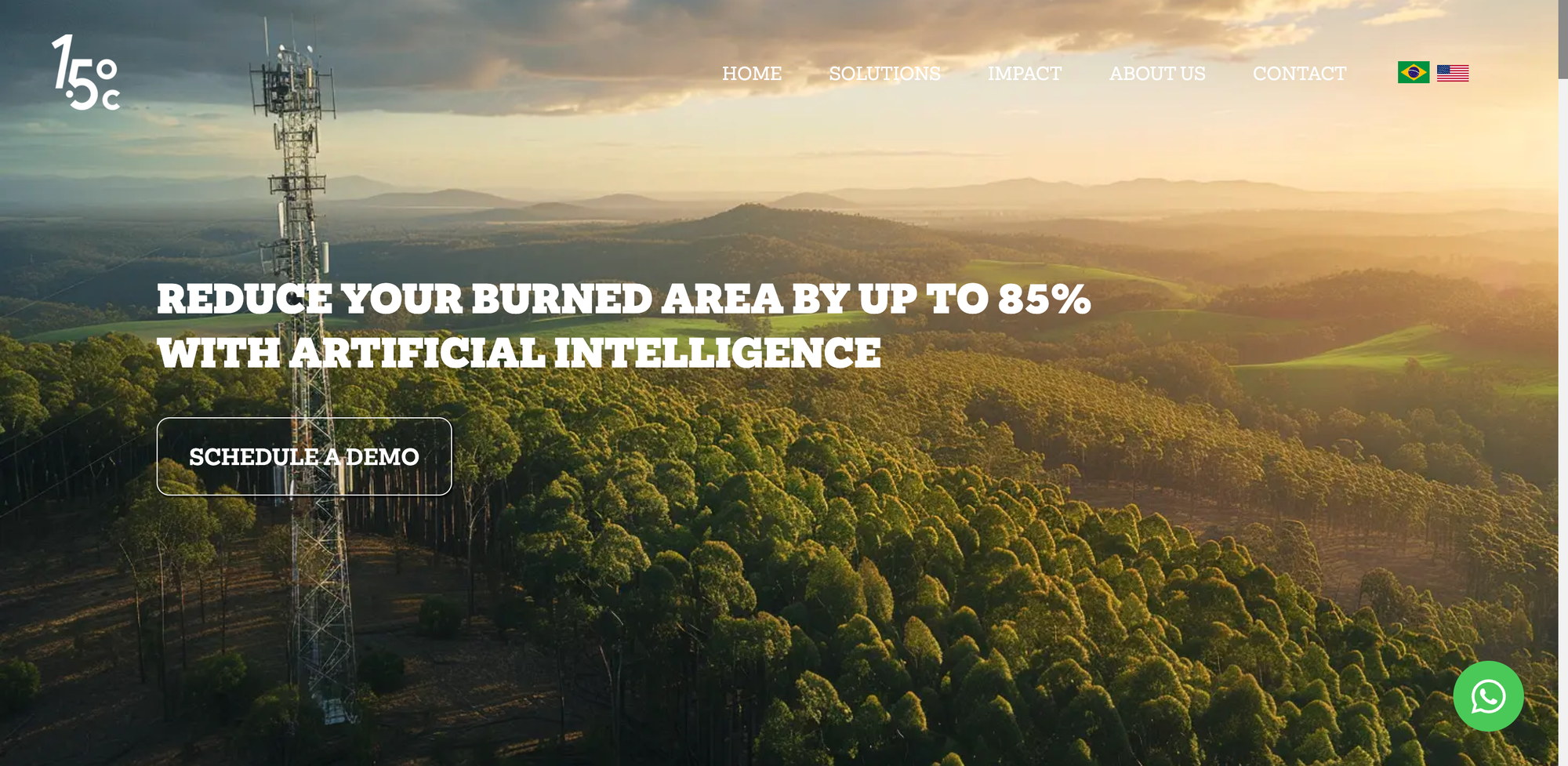
- Category: (R) Detection/Integrated Management
- Core Innovation: Pantera, an integrated software platform for full forest fire management. It provides detection, communication, mobilization, and fighting support through specialized devices and a unified dashboard.
- Impact on the Fire Cycle: Focuses on operational efficiency by centralizing all fire management data, assets, and communications. This integrated approach ensures seamless coordination between detection systems, human teams, and assets, improving the overall speed and success rate of suppression efforts, particularly in large-scale forest operations.
- Key Data Point: Integrates multiple data feeds to provide a single operating picture for all elements of a fire response team.
Key Technology Trends Analysis
The future of wildfire management is defined by integration and autonomy:
- Ultra-Early Detection (UED): The race is on to detect the chemical signature (Dryad) or the first pixel of heat (OroraTech). This focus is replacing reliance on visible smoke, which is often too late.
- The AI/Data Fusion Revolution: Companies like Pano AI and Robotto are fusing diverse data streams (camera, satellite, weather, terrain, historical fire data) and processing them with AI to move from simple detection to reliable predictive modeling and triage, drastically reducing false positives.
- Autonomous Systems and Robotics: The deployment of drones for suppression (FireSwarm) and robotics for fuel reduction (BurnBot) addresses the twin needs for speed and firefighter safety, providing scalable capacity that human crews cannot match.
- Infrastructure Resilience: The crucial emergence of startups like Gridware highlights that fire prevention is now inseparable from utility infrastructure management, making this a critical area for investment and regulation.
Wrapping Up
The battle against catastrophic wildfires is fundamentally a technological challenge requiring a technological solution.
The innovators on this list are providing the tools necessary to compress the time-to-detection and enhance the precision of the response, fundamentally changing the risk profile for communities, utilities, and insurers.
By investing in these data-driven, autonomous, and proactive technologies, the world can transition from merely mourning the inevitable losses to building a future defined by wildfire resilience and coexistence.