

The push to decarbonize the world’s energy systems now overlaps with a long standing problem: what to do with the massive amount of agricultural waste produced every year.
Billions of tons of crop residues and animal waste are generated across the globe. Much of it is left to rot or is burned, which adds to air pollution and releases methane.
The result is a two sided problem.
We face avoidable environmental damage on one side, and a large source of unused energy on the other.
A growing group of startups is working to change this. They are building practical technologies that convert agricultural waste into clean energy that farmers and rural communities can actually use.
These companies are cutting waste, lowering emissions, and supporting local economies. They are also helping build a circular bioeconomy that treats waste as a resource rather than a burden.
The Challenge: Turning a widespread resource into reliable energy
Agricultural waste is everywhere, but that does not make it easy to work with. It varies widely in quality, it is often wet, and it is scattered across many small farms.
These factors make collection and conversion costly and complex.
For decades, the most common options have been burning the waste, letting it break down in fields, or using it for low value purposes.
The real challenge is to convert this scattered biomass into dependable energy, whether biogas, biofuels, biochar, or syngas, and to do it in a way that supports food production rather than competes with it.
Biogas & Biorefinery Innovators: Converting Organic Waste to Renewable Fuels
These companies utilize advanced anaerobic digestion, gasification, or pyrolysis to convert diverse organic waste streams into clean-burning gases or liquids.
Brightmark Energy
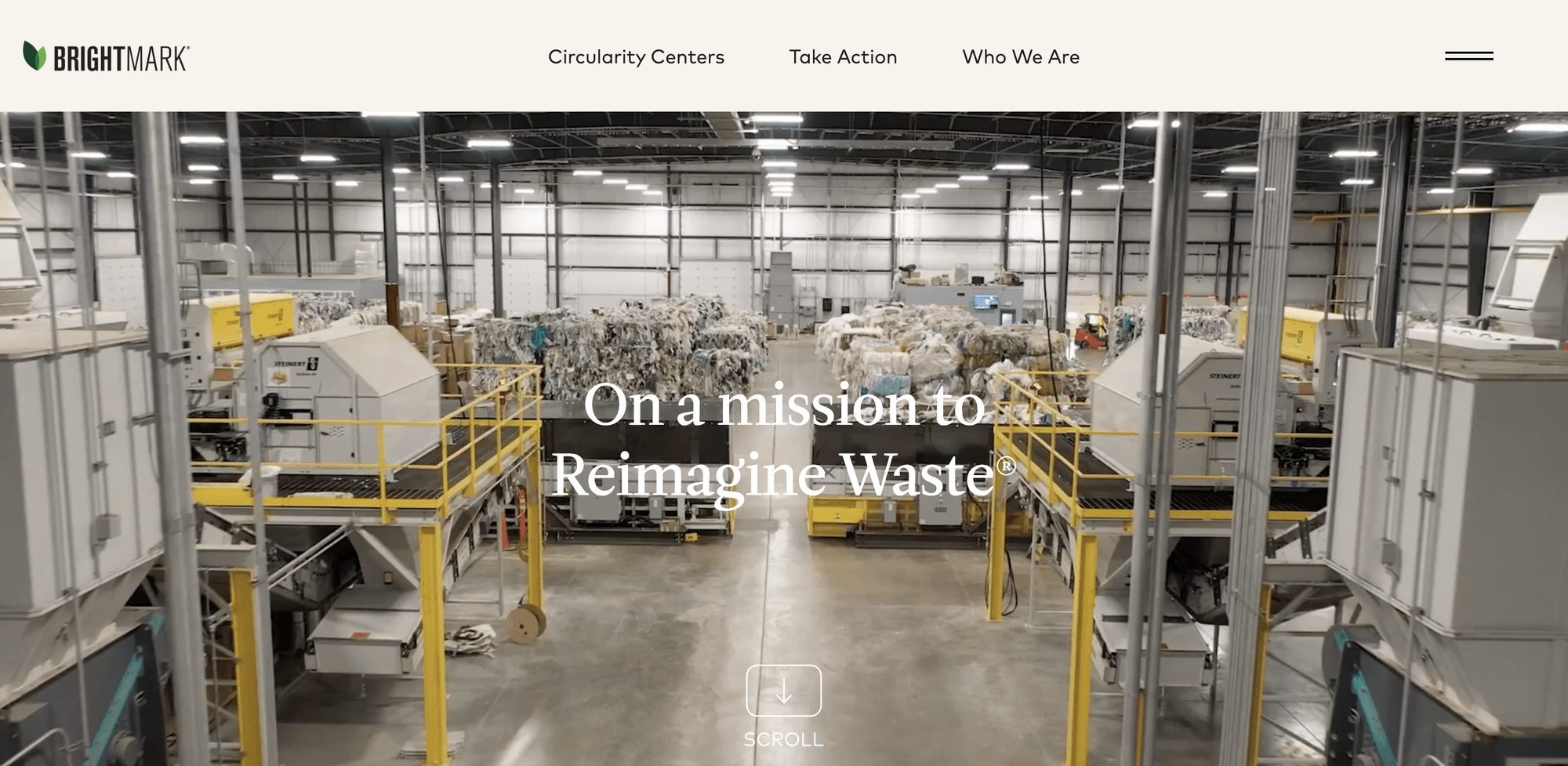
- Core Innovation: Specializes in anaerobic digestion to convert dairy manure and other organic waste into renewable natural gas (RNG). Their technology captures methane emissions and uses the resulting digestate as nutrient-rich fertilizer.
- Impact on the Grid/Supply Chain: Brightmark creates pipeline-quality RNG, a direct substitute for fossil natural gas, that can be injected into existing infrastructure for heating, power generation, or transportation fuel. This significantly reduces agricultural methane emissions.
- Key Data Point: Operates a growing portfolio of anaerobic digester projects, including large-scale facilities processing manure from tens of thousands of dairy cows.
LanzaTech (though focused on industrial emissions, their core tech applies)
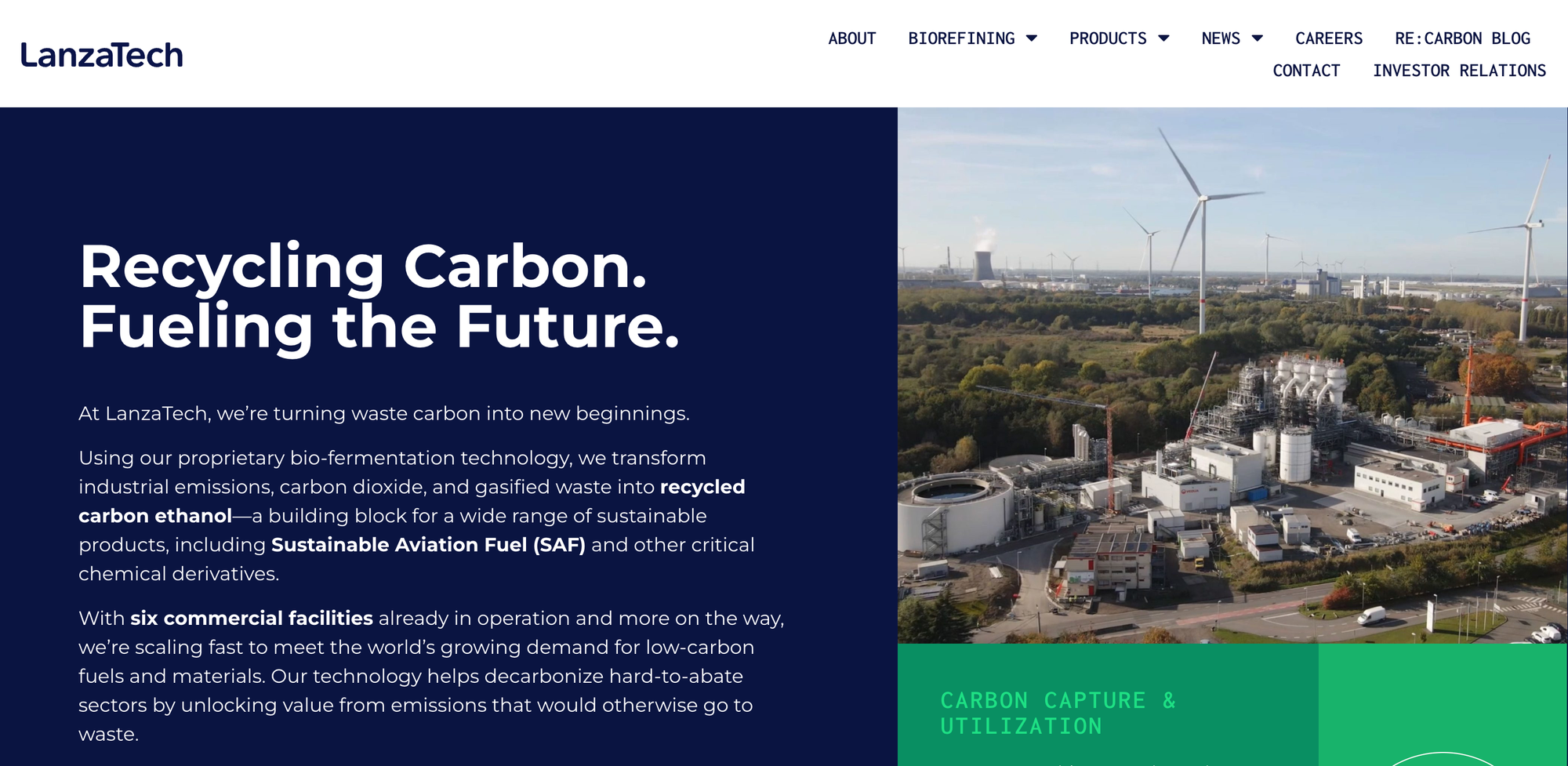
- Core Innovation: While known for industrial emissions, LanzaTech's core gas fermentation technology can convert various syngas sources—including those derived from agricultural residues via gasification—into sustainable fuels and chemicals.
- Impact on the Grid/Supply Chain: By turning waste gases into ethanol and other products, they offer a pathway to high-value outputs from low-value agricultural biomass, creating sustainable aviation fuel (SAF) and biochemicals that displace fossil equivalents.
- Key Data Point: Their technology has already produced millions of gallons of sustainable ethanol from waste industrial gases.
CHAR Technologies
- Core Innovation: Uses proprietary high-temperature pyrolysis to convert various biomass and agricultural waste into high-value biochar and renewable natural gas (RNG).
- Impact on the Grid/Supply Chain: The biochar serves as a carbon sink and soil amendment, while the RNG provides a clean energy source. This dual-product approach maximizes the value derived from waste and promotes carbon negativity.
- Key Data Point: Their process can achieve significant carbon sequestration through the stable biochar produced.
Anaergia
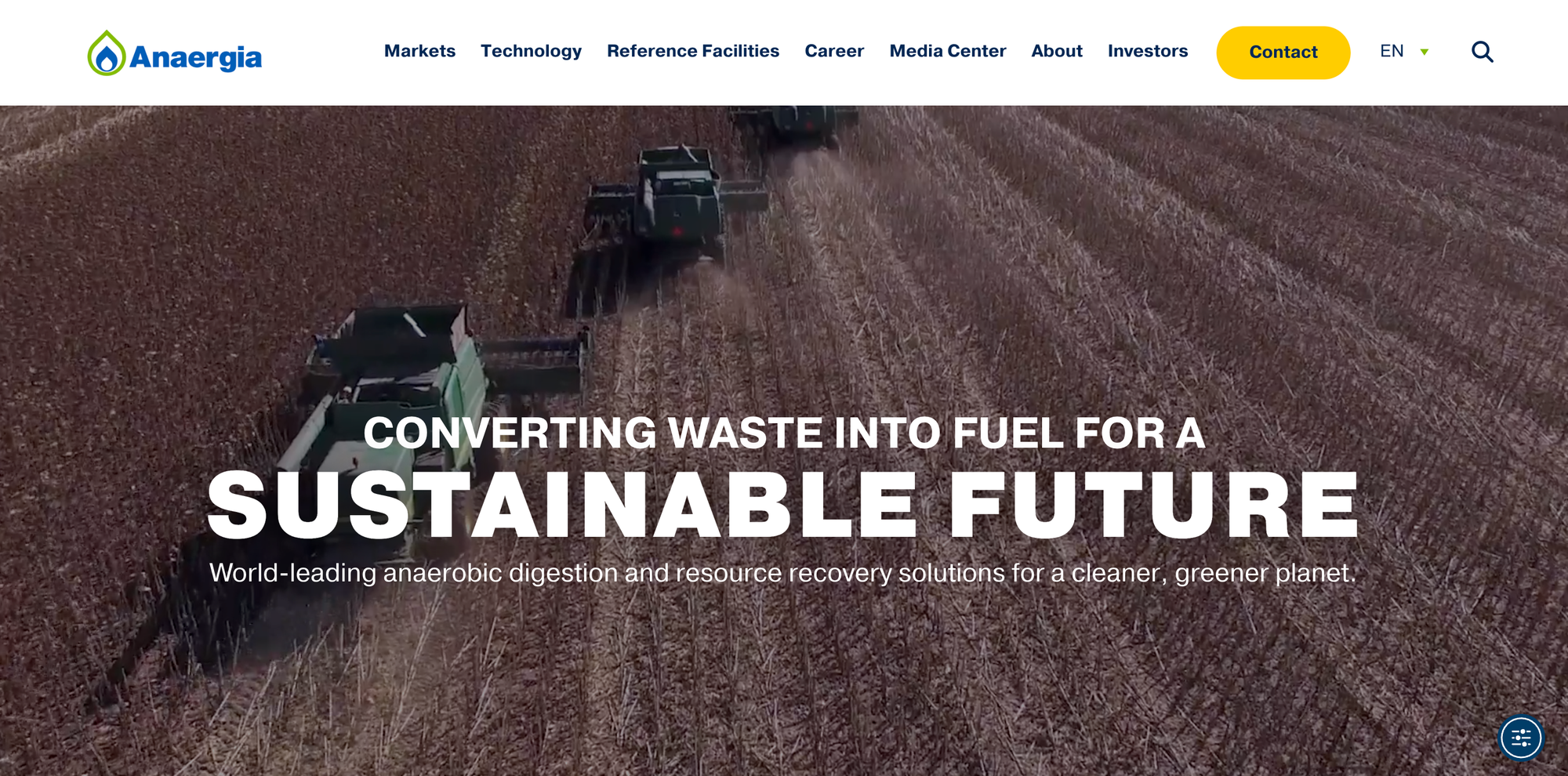
- Core Innovation: Provides integrated solutions for diverting and treating a wide range of organic waste streams, including agricultural residues and food waste, using advanced anaerobic digestion to produce renewable natural gas (RNG).
- Impact on the Grid/Supply Chain: Anaergia's large-scale facilities help municipalities and industries manage organic waste while simultaneously generating dispatchable, baseload clean energy, contributing to energy independence and reduced landfill reliance.
- Key Data Point: Has developed and operates some of the largest organic waste-to-RNG facilities globally.
Vanguard Renewables
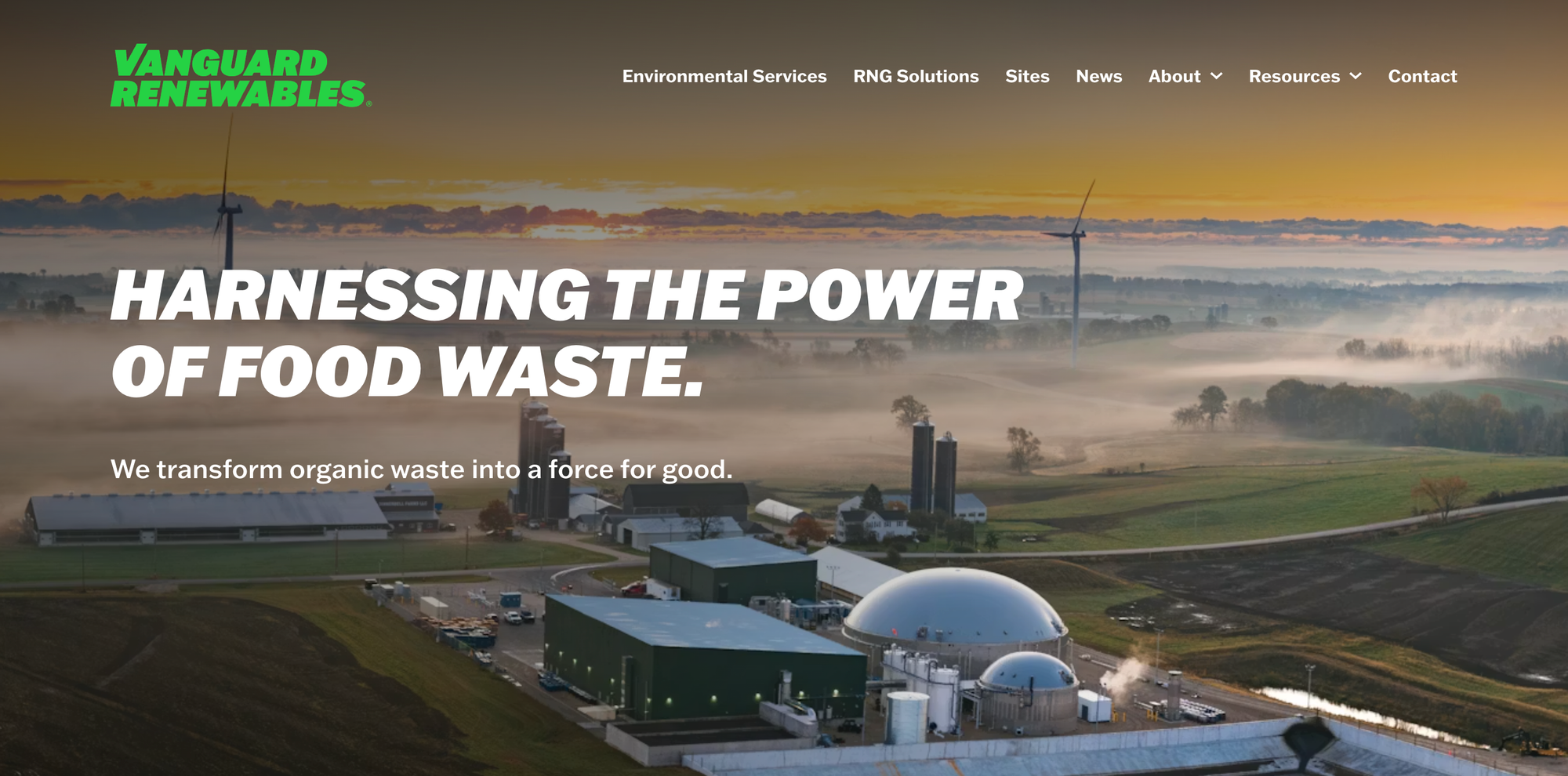
- Core Innovation: Focuses on farm-derived anaerobic digestion to convert dairy manure and food waste into renewable natural gas. They partner directly with farmers, providing stable income and improved waste management.
- Impact on the Grid/Supply Chain: Their "Farm Powered" model generates RNG that is then sold to utilities or transportation companies, reducing farm emissions and supplying consistent, distributed clean energy to the grid or vehicle fleets.
- Key Data Point: Currently operates facilities that convert hundreds of thousands of tons of organic waste annually.
Husk Power Systems
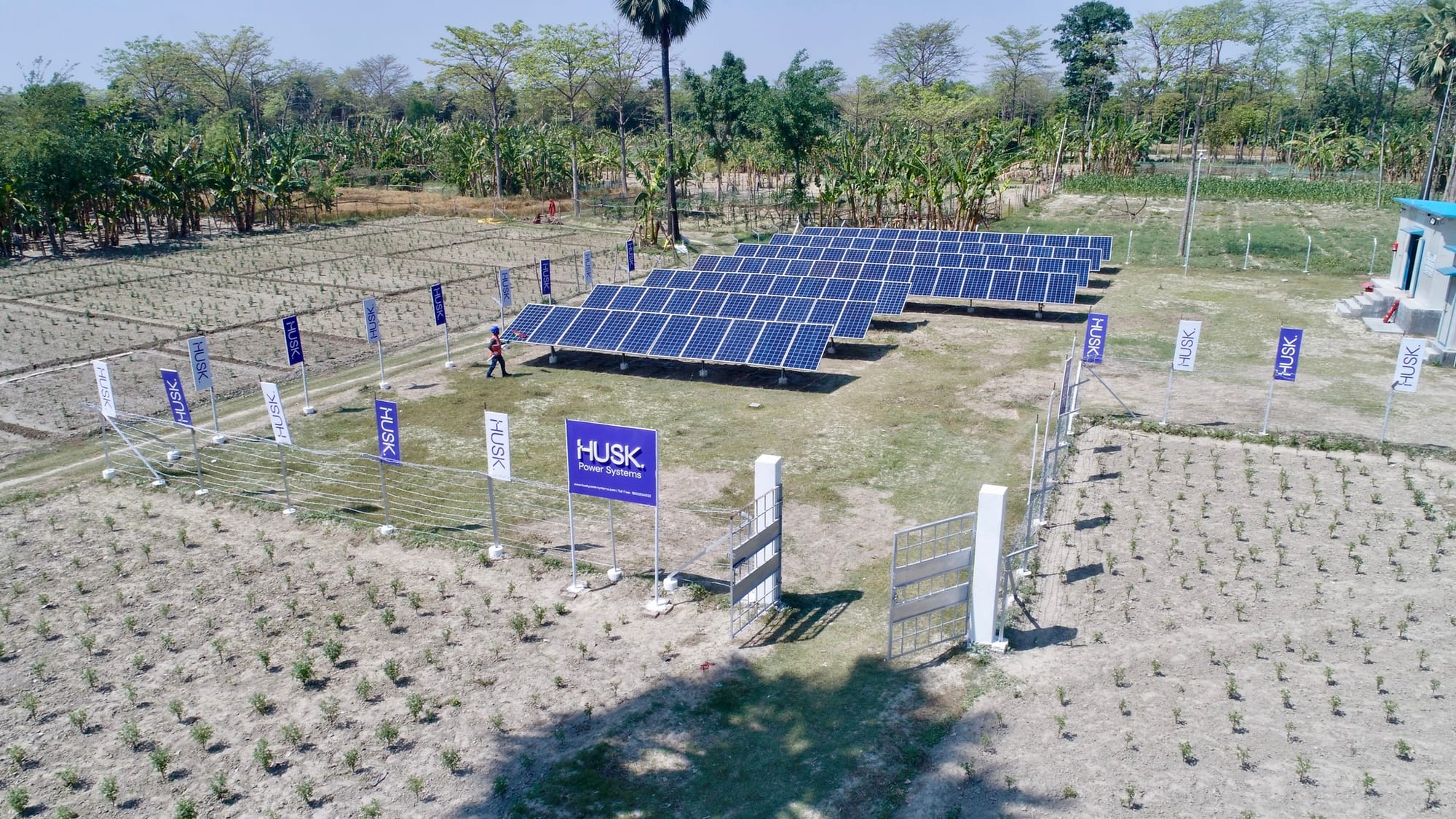
- Core Innovation: Builds and operates small scale power plants that run on rice husk waste, a byproduct often burned across Asia. Husk pairs biomass gasification with solar hybrid systems for reliable, off grid rural electrification.
- Impact on the Grid or Supply Chain: Provides dependable electricity for villages and small businesses while eliminating open field burning of husks. It offers a model for rural microgrids that can be financed and scaled.
- Key Data Point: Husk Power has deployed more than 150 hybrid mini grids serving tens of thousands of customers.
Biofuel & Bio-Oil Producers: Liquid Fuels from Agricultural Byproducts
These startups focus on converting biomass into liquid fuels that can directly replace fossil fuels in transportation or industrial applications.
MASH Makes
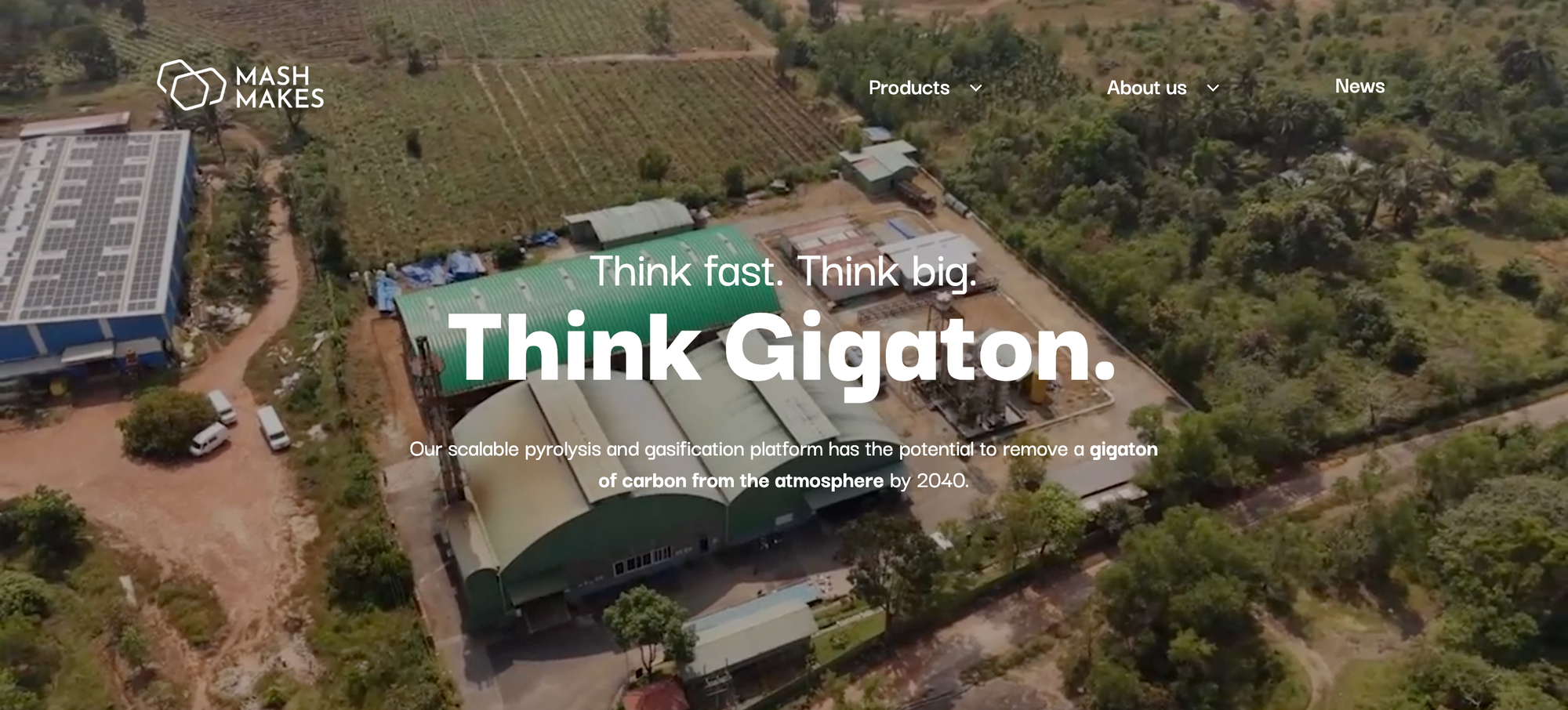
- Core Innovation: A Danish Indian startup converting crop residues into bio oil, biochar, and renewable gas using modular pyrolysis units. The units are designed to operate close to farms and avoid long distance biomass transport.
- Impact on the Grid or Supply Chain: Their bio oil can be refined into low carbon fuels, while the biochar offers long term carbon storage. Their distributed model fits regions with small farms and inconsistent residue streams.
- Key Data Point: The company targets carbon negative fuel production by coupling bio oil output with certified biochar sequestration.
Vertimass
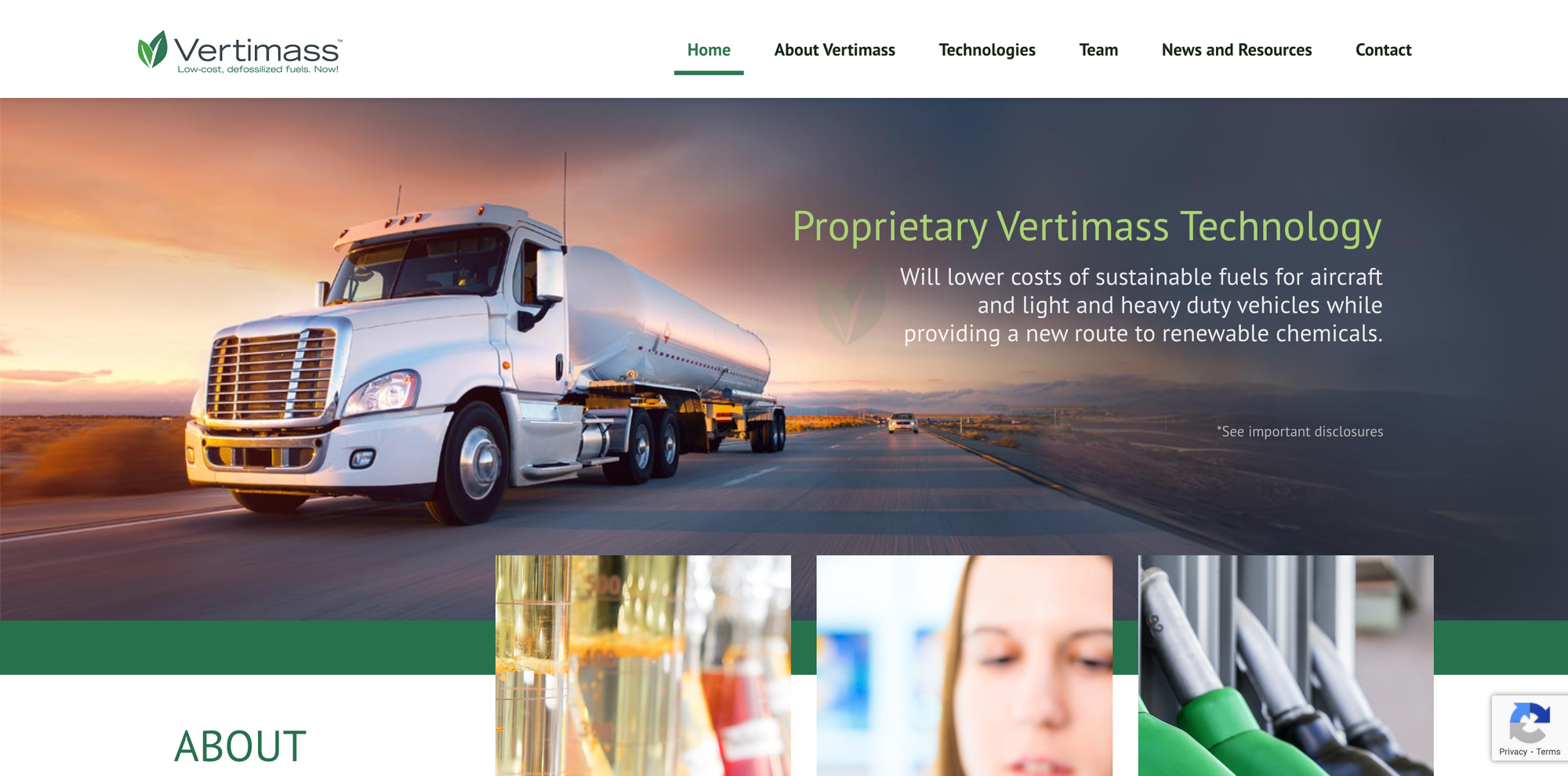
- Core Innovation: Develops a novel catalytic technology (Co-Catalytic Pyrolysis or CCP) that converts ethanol directly into gasoline, diesel, and jet fuel range hydrocarbons. While starting with fermentation ethanol, it can process any bioethanol source, including that derived from agricultural waste.
- Impact on the Grid/Supply Chain: Offers a cost-effective pathway to produce drop-in renewable liquid fuels from biomass-derived ethanol, significantly reducing the carbon footprint of the transportation sector.
- Key Data Point: Their process reportedly achieves high carbon yields from ethanol to hydrocarbon fuels.
Key Technology Trends Analysis
The innovation driven by these startups highlights several critical trends in the waste-to-energy sector:
- Distributed Energy Generation: Many of these solutions, particularly anaerobic digestion, lend themselves to decentralized power generation, enabling rural communities and farms to become energy producers, enhancing grid resilience.
- High-Value Product Diversification: The shift from simply burning waste to producing renewable natural gas (RNG), sustainable aviation fuel (SAF), biochar, and bio-oils demonstrates a clear move towards higher-value outputs that maximize economic and environmental benefits.
- Methane Abatement as a Priority: A strong emphasis on capturing and utilizing methane from agricultural decomposition (especially manure) addresses a critical, potent greenhouse gas, offering immediate climate benefits.
- Circular Bioeconomy Integration: These companies exemplify the principles of the circular bioeconomy by treating waste as a resource, reducing reliance on virgin materials, and creating closed-loop systems for nutrients and carbon.
Wrapping Up
The transformation of agricultural waste into clean energy represents a significant frontier in the fight against climate change and the pursuit of energy independence.
The pioneering work of these 8 startups is demonstrating that what was once considered a problem can be a powerful solution, providing renewable fuels, abating emissions, enriching soil, and creating sustainable economic opportunities.
As these technologies scale, they will play an indispensable role in weaving together our food systems and energy infrastructure into a truly sustainable and resilient future.