
Twelve and the Race to Make Fuel From Air
Episode 247Twelve is building an industrial platform that transforms carbon dioxide, water, and electricity into sustainable aviation fuel and chemical feedstocks. Here is how the company is moving its technology from the laboratory into commercial production.
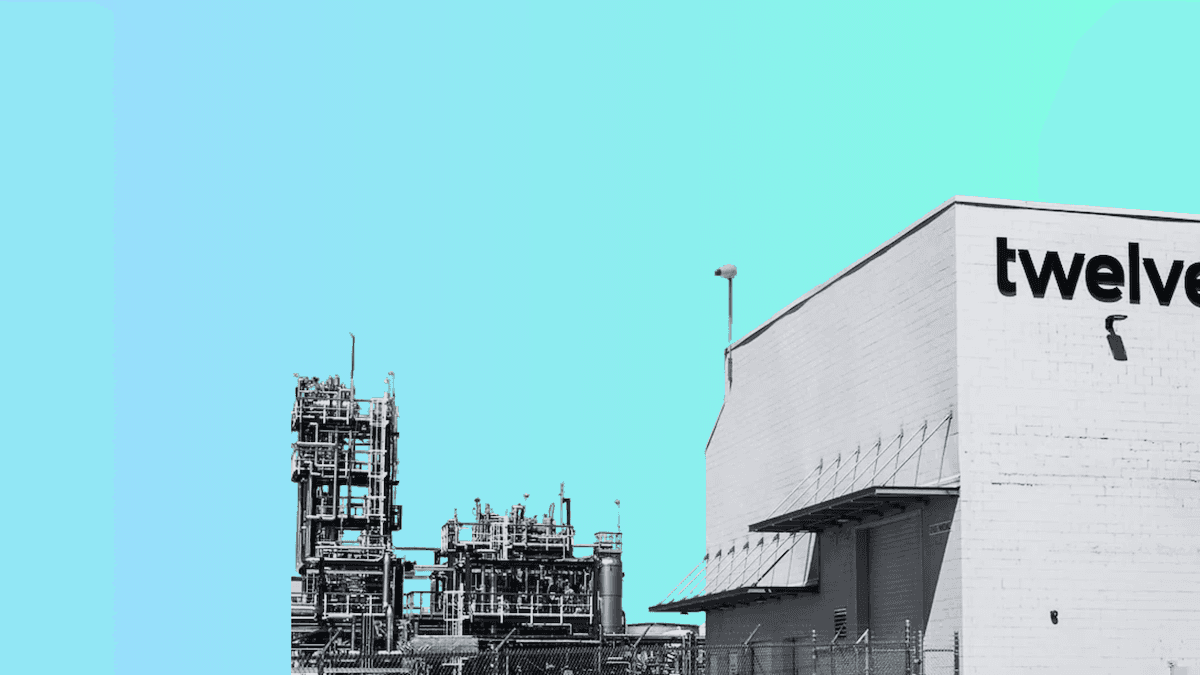
Photo credit: Twelve.co
What if the fuels, chemicals, and materials powering the global economy could be made without extracting more petroleum from the ground?
That is the ambitious idea behind Twelve, a next-generation industrial company using carbon dioxide, water, and electricity to produce products traditionally made from fossil fuels.
In this episode of the Disruptors for Good podcast, we explore how Twelve is moving carbon transformation technology out of the laboratory and into commercial production. We also examine the company’s sustainable aviation fuel, its first operating AirPlant, and the enormous challenge of scaling a new industrial system.
Rethinking Where Industrial Carbon Comes From
Petroleum is more than a transportation fuel. It is also a foundational ingredient in plastics, chemicals, textiles, packaging, and many of the products used every day.
Twelve wants to replace some of that fossil feedstock with recycled carbon dioxide.
The company was founded in 2015 by Dr. Kendra Kuhl, Dr. Etosha Cave, and Nicholas Flanders. Its technology grew out of research at Stanford University and early development through Lawrence Berkeley National Laboratory’s Cyclotron Road program.
At the center of Twelve’s platform is an electrochemical process that works somewhat like industrial photosynthesis.
The company combines captured carbon dioxide with water and renewable electricity. A proprietary component called the Leaf helps convert those inputs into syngas, a mixture of carbon monoxide and hydrogen. That syngas can then be processed into fuels and chemical feedstocks.
Twelve calls its integrated production platform AirPlant.
Making Sustainable Aviation Fuel From Carbon Dioxide
One of the first major products coming from the AirPlant platform is E-Jet, Twelve’s synthetic sustainable aviation fuel.
Aviation is one of the most difficult industries to decarbonize. Long-distance aircraft require fuels with very high energy density, while airports and airlines depend on extensive existing storage, transportation, and fueling infrastructure.
Instead of requiring an entirely new aviation system, Twelve is developing a drop-in fuel designed to work with existing aircraft and infrastructure.
The company reports that E-Jet can deliver up to 90 percent lower lifecycle emissions than conventional jet fuel, depending on the electricity and carbon inputs used during production.
E-Jet still releases carbon dioxide when it is burned. Its potential environmental advantage comes from using captured carbon instead of extracting additional fossil carbon from the ground. That means the source and carbon intensity of the electricity used to produce the fuel are critical to its overall impact.
AirPlant One Moves the Technology Into Commercial Production
Twelve reached a major milestone in June 2026 when it opened AirPlant One in Moses Lake, Washington.
The company describes the facility as the first commercial-scale plant in the United States producing power-to-liquid E-Jet fuel. The plant is powered by hydropower and produces both E-Jet and E-Naphtha.
E-Naphtha is a chemical feedstock that can be used to make products such as packaging, solvents, synthetic fibers, and other materials traditionally derived from petroleum.
AirPlant One is designed to produce up to 100 barrels per day. Although that is still small compared with the global aviation fuel market, the facility represents an important step beyond laboratory research and pilot production.
Twelve is now operating a physical facility that produces certified fuel and chemical feedstocks from carbon dioxide, water, and electricity.
Building a Distributed Industrial Platform
AirPlant One is not intended to be a standalone project.
Twelve wants to create a repeatable manufacturing platform that can be deployed in regions with access to affordable low-carbon electricity, carbon dioxide, water, infrastructure, and customers.
The company says future AirPlants are being designed toward approximately 3,000 barrels of daily production. It is also exploring synthetic diesel and other hydrocarbon products.
If the model can be replicated economically, AirPlants could support a more distributed system for producing fuels and chemicals. Production facilities could potentially be placed closer to low-cost energy sources and end markets instead of remaining dependent on petroleum deposits and centralized refineries.
The opportunity extends beyond lowering emissions. Distributed production could also strengthen domestic manufacturing, diversify fuel supplies, and reduce exposure to global petroleum markets.
Financing First-of-a-Kind Climate Infrastructure
Enjoying this? Get the next one.
We send one email each Monday with what just published on Causeartist.
Free. Unsubscribe anytime.
Scaling a company like Twelve requires far more than scientific innovation.
First-of-a-kind industrial projects need customers willing to make early purchasing commitments, investors prepared to accept technology and construction risks, and lenders willing to finance facilities as they become operating assets.
In 2024, Twelve announced a $645 million financing package that included corporate funding, project equity led by TPG Rise Climate, and credit facilities. The company now reports that it has raised more than $900 million from investors and financing partners.
Twelve has also developed commercial relationships with Alaska Airlines, Microsoft, International Airlines Group, Shopify, and other companies.
Early commitments from Alaska Airlines and Microsoft helped create the demand signal needed to finance and construct AirPlant One. This demonstrates an important lesson for climate technology: large customers can play a critical role in moving a promising technology from demonstration to commercial deployment.
The Difficult Road From One Plant to Industrial Scale
AirPlant One is an important milestone, but it does not eliminate the risks ahead.
Power-to-liquid fuels remain expensive and require large amounts of electricity. Their climate benefits depend heavily on that electricity coming from genuinely low-carbon sources.
Twelve must also prove that its technology can move from a facility producing up to 100 barrels per day to much larger plants while maintaining reliability, product quality, and acceptable costs.
Building those facilities will require significant capital, long-term fuel-purchasing agreements, supportive policies, dependable carbon and electricity supplies, and an industrial supply chain capable of replicating the company’s platform.
The next test is no longer whether Twelve can produce jet fuel from carbon dioxide. AirPlant One shows that it can.
The next test is whether the company can repeat the process at progressively larger scales and bring production costs down enough to compete in enormous global markets.
Why Twelve Matters
Twelve represents a compelling model for climate innovation because it is attempting to redesign the molecular foundation of products society already depends on.
The company is not only developing a carbon-capture system. It is building a platform intended to turn captured carbon into useful, commercially valuable products.
If Twelve succeeds, renewable electricity could become a major manufacturing input, while carbon dioxide could become an industrial resource rather than simply a waste product.
The opening of AirPlant One marks a meaningful transition. Twelve is no longer working only with a laboratory concept or small pilot. It has entered the much more difficult stage of operating, financing, and scaling physical infrastructure.
The company’s biggest challenge now is scale.
If it can meet that challenge, the phrase “made from air” could eventually describe far more of the material world around us.
In This Episode
We explore:
How Twelve converts carbon dioxide, water, and electricity into fuels and chemicals
The science behind its carbon-transformation platform
Why aviation is one of the company’s first major markets
How E-Jet differs from conventional jet fuel
What the opening of AirPlant One represents
Why early customers are essential to financing climate infrastructure
The role of corporate, project, and debt capital
The economic and operational challenges facing power-to-liquid fuels
What Twelve must prove as it moves toward larger facilities
Learn More
About Disruptors for Good
Disruptors for Good explores the founders, startups, and organizations using business and innovation to address the world’s most pressing social and environmental challenges.
Hosted by Causeartist founder Grant Trahant, the podcast goes behind the products and headlines to examine how mission-driven organizations are built, funded, and scaled.