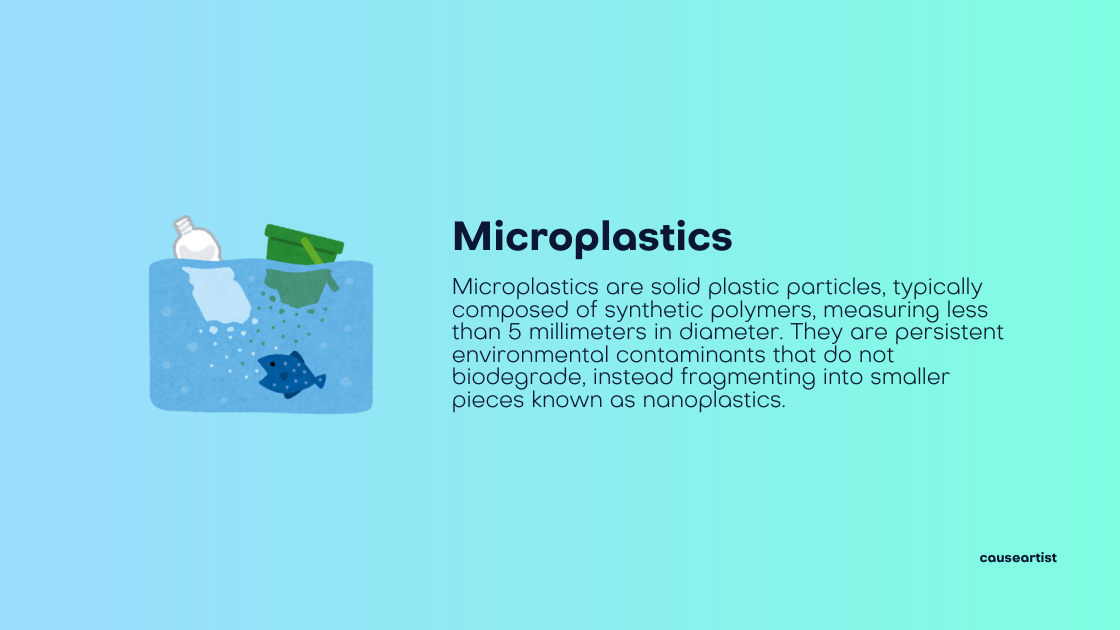
Microplastics are solid plastic particles, typically composed of synthetic polymers, measuring less than 5 millimeters in diameter. They are persistent environmental contaminants that do not biodegrade, instead fragmenting into smaller pieces known as nanoplastics.
Origin and Classification
Microplastics are categorized into two primary groups based on their source of origin:
- Primary Microplastics: Purposefully manufactured at a microscopic size. Common examples include microbeads used in personal care products (exfoliants), industrial abrasives (sandblasting), and plastic pellets (nurdles) used as raw material for plastic manufacturing.
- Secondary Microplastics: Formed from the breakdown of larger plastic items, such as water bottles, fishing nets, and plastic bags, through photodegradation (exposure to UV light), mechanical weathering, and oxidation.
Common Sources and Pathways
While microplastics are found globally, certain industrial and domestic activities contribute disproportionately to their prevalence:
| Source | Description |
| Synthetic Textiles | Shedding of polyester, nylon, and acrylic fibers during laundry cycles. |
| Tire Wear | Abrasion of tires against road surfaces creates "road dust" rich in synthetic rubber. |
| Urban Runoff | Rainwater carrying litter and industrial debris into drainage systems. |
| Wastewater | Inefficient filtration in treatment plants allows fibers and beads to enter aquatic ecosystems. |
Impact on Health and Environment
The concern regarding microplastics stems from their persistence and bioaccumulation.
- Ecological Impact: Marine and terrestrial organisms often mistake microplastics for food. This leads to physical blockages, reduced nutritional intake, and potential starvation.
- Chemical Toxicity: Microplastics act as "magnets" for Persistent Organic Pollutants (POPs) and heavy metals in the water. When ingested, these toxins can leach into the organism’s tissues.
- Human Exposure: Humans ingest microplastics through the food chain (particularly seafood and salt), drinking water, and inhalation of airborne fibers. Research is ongoing regarding the long-term inflammatory and endocrine-disrupting effects on human physiology.
Examples of Microplastics in Everyday Life
1. Synthetic Clothing (The Laundry Cycle)
Most modern wardrobes are dominated by synthetic fabrics like polyester, nylon, and acrylic.
- The Reality: Every time you run a load of laundry, mechanical friction and water cause these garments to shed tiny plastic threads called microfibers.
- The Impact: A single wash load of 6kg can release over 700,000 microfibers into the wastewater system. Because they are so thin, they often bypass municipal filtration and enter the ocean.
2. Car Tires (Road Wear)
We often think of tires as "rubber," but modern tires are a complex mix of synthetic polymers and chemical additives.
- The Reality: As you drive, the friction between the tire and the road surface grinds down the tread, releasing "tire and road wear particles" (TRWP).
- The Impact: This "tire dust" is one of the largest sources of microplastics globally. It washes into storm drains during rain or becomes airborne, where it can be inhaled.
3. Plastic Tea Bags (The Morning Brew)
While many tea bags are paper, many "premium" pyramid-shaped tea bags are made of nylon or polyethylene terephthalate (PET).
- The Reality: When steeped in near-boiling water (around 95°C), these plastic mesh bags can break down significantly.
- The Impact: A single plastic tea bag can release approximately 11.6 billion microplastics and 3.1 billion nanoplastics into one cup of tea—thousands of times more than what is found in other foods.
4. Bottled Water (Packaging Leaching)
Even if the water inside is purified, the act of drinking from a single-use plastic bottle introduces microplastics.
- The Reality: Microplastics enter the water through the manufacturing process, the degradation of the bottle itself, and the friction of the cap being screwed on and off.
- The Information: Studies have shown that bottled water contains significantly higher concentrations of microplastics—averaging 325 particles per liter—compared to typical tap water.
5. Cosmetics and Personal Care (The "Glow" Factor)
Beyond the "microbeads" that have been banned in many rinse-off scrubs, microplastics are still used as stabilizers and texture enhancers in "leave-on" products.
- The Reality: Ingredients like Acrylates Copolymer or Nylon-12 are frequently found in liquid foundations, mascaras, sunscreens, and even anti-aging creams to create a smooth feel or a "blurring" effect.
- The Impact: These plastics are applied directly to the skin and eventually washed down the drain, contributing to the persistent "plastic soup" in our waterways.
Verification and Data Gaps
While the presence of microplastics is well-documented, the following areas require further validation for high-authority reporting:
- Toxicological Thresholds: Definitive data on the specific concentration of microplastics required to trigger chronic disease in humans is currently limited.
- Standardized Measurement: There is a lack of global consensus on the methodology for counting "nanoplastics," making cross-study comparisons difficult.
Relevance for Impact Leaders
For companies and social entrepreneurs, microplastics represent a critical pivot point in Extended Producer Responsibility (EPR). Addressing the microplastic crisis requires moving beyond traditional recycling toward "circularity by design," which includes:
- Developing bio-based, truly biodegradable alternatives to synthetic polymers.
- Integrating industrial-grade filtration in manufacturing and textile production.
- Redesigning supply chains to eliminate "nurdle" loss during transport.
FAQs
How do microplastics enter the human body?
Microplastics enter via three primary pathways: ingestion of contaminated food (notably seafood, honey, and salt), consumption of bottled and tap water, and inhalation of atmospheric microfibers.
Can microplastics be filtered out of water?
Standard municipal wastewater treatment plants can remove up to 90% of microplastics, but the remaining 10% represents billions of particles released daily. Home filtration (RO or carbon blocks) can further reduce exposure.
What is the difference between microplastics and nanoplastics?
While microplastics are under 5mm, nanoplastics are smaller than 1 micrometer. Nanoplastics are considered more hazardous as their size allows them to cross biological barriers, including the blood-brain barrier.