Native students have faced one of the most persistent and underfunded education gaps in the United States. For generations, talent and ambition have outpaced opportunity, and the systems meant to create access have rarely been built with Native communities at the center.
Native Forward has changed that.
Since 1971, the organization has become the largest direct scholarship provider to Native students in the country.
Under the leadership of CEO Angelique Albert, Native Forward recently passed an extraordinary milestone, more than $400 million dollars in scholarships awarded.
Their scholars represent over 500 Tribal Nations and attend institutions in every state. They graduate at rates far above national averages for Native students. They go on to serve as scientists, educators, judges, Tribal leaders, and entrepreneurs.
This progress comes from a clear vision, a student centered model, and a refusal to separate academic success from cultural identity.
In this conversation, Angelique Albert lays out how Native Forward scaled its work, how it stewarded a historic investment from MacKenzie Scott, and the bold vision required to meet the unmet need of every Native student who wants to pursue higher education.
Q&A with Angelique Albert, CEO of Native Forward
Since you took the helm in 2017, Native Forward has crossed $400 million dollars in scholarships. What were the three pivotal changes that unlocked that scale, and how did you sequence them?
Angelique: First, by pairing financial assistance with cultural support, mentorship, community connection, and holistic student services, we have seen measurable success. Sixty nine percent of our undergraduate scholars graduate, compared to a forty one percent national average for Native students, and ninety five percent of our graduate students complete their programs.
Second, unrestricted investments like our recent $50M gift from MacKenzie Scott allowed us to scale to meet rising demand as applications increased by thirty two percent for the 2025 to 2026 academic year.
This investment positioned Native Forward to sustain growth while maintaining the personalized, student centered approach that defines us.
Finally, we expanded partnerships with universities, Native led organizations, and philanthropic organizations and individuals who share our commitment to increasing access to higher education for Native students.
These efforts have allowed Native Forward to scale our impact and support the next generation of Native scholars whose leadership strengthens communities everywhere.
You recently announced a transformational investment from MacKenzie Scott. How will those dollars be governed and deployed over the next three years, and what outcomes will signal success to you and your board?
Angelique: The investment from MacKenzie Scott will allow Native Forward to meet more of that urgent demand while continuing to strengthen the systems that help Native scholars thrive. Over the next three years, our board, leadership, scholars, alumni, and communities will guide these resources, ensuring every decision reflects our shared values and collective vision for the future.
Success is defined not only by the number of scholarships awarded but by the lasting outcomes they create. We will look for higher graduation and completion rates, expanded culturally congruent student support, and strong partnerships that sustain opportunity for the next generation.
We will track growth in application reach and alumni engagement to ensure that every dollar strengthens Native Forward’s ability to set up future leaders for success.
Ultimately, this investment positions Native Forward to continue leading as both a trusted steward of philanthropic resources and a national influence shaping the future of higher education for Native students.
For our board, success means fulfilling our vision. We are able to create opportunities, empower, and provide support to every Native student wanting to pursue higher education.
Native Forward serves scholars from more than 500 Tribes across all 50 states. How do you design equitable selection and support so rural, urban, two year, four year, and graduate students all feel seen and resourced?
Angelique: Native Forward scholarships reflect the full diversity of Native student ambitions including rural and urban schools as well as two year, four year, undergraduate, and graduate programs.
Our model is grounded in cultural congruence.
Each scholar’s background, Tribal identity, and educational path are honored and supported.
We begin by meeting students where they are.
Our scholarships are flexible and span a wide range of disciplines and institutions.
Alongside financial support, we provide mentoring, webinars, and culturally congruent programming that nurture belonging and strengthen academic and personal success.
Our selection process is transparent and fair.
We evaluate applicants on academic achievement, leadership, community impact, and commitment to strengthening Native communities. This ensures that first generation scholars and those pursuing diverse career paths have the resources they need to thrive.
Whether a student is earning an associate degree close to home or completing a doctoral program across the country, Native Forward provides the financial, academic, and cultural support needed to help them succeed and strengthen sovereignty for Native communities nationwide.
You often speak about holistic support. What non financial services most move the needle on persistence and completion, and how do you measure their impact alongside GPA and graduation rates?
Angelique: Holistic support means caring for the whole student, financially, academically, and personally. Our scholars consistently tell us that while funding removes barriers, it is the guidance, mentorship, and sense of community that carry them through graduation.
The services that make the biggest difference include mentoring, peer and alumni connection, and programs that help students prepare for careers while staying grounded in their identity.
We provide personalized mentoring and outreach, support with financial aid, wellness resources, and guidance for balancing family responsibilities. Webinars, workshops, and tailored leadership resources help strengthen academic skills and confidence.
We measure impact through GPA and graduation rates, sixty nine percent for undergraduates and ninety five percent for graduate students. We also track persistence, retention, and alumni outcomes. Direct student feedback and program engagement data show how these efforts correlate with continued enrollment and post graduation success.
Alumni are a superpower. How are you engaging graduates as mentors, internship pipelines, and donors, and what stories best capture the long term community impact of your model?
Angelique: Our alumni are one of Native Forward’s greatest strengths. With more than twenty two thousand graduates across all fifty states and over five hundred Tribal Nations, the network represents a powerful source of leadership and community impact. We see alumni as partners who help guide and uplift the next generation.
We engage alumni as mentors through formal and informal programs linking students with graduates in their chosen fields.
Many now serve as professionals, educators, healthcare providers, and public servants who provide internships, career opportunities, and professional guidance. This creates a continuous cycle of support where graduates give back in ways that strengthen Native representation across every sector.
Alumni also give back as donors and advocates, helping expand access for future students. Their contributions, whether financial or through mentorship, reflect a shared commitment to advancing self determination and education within Tribal communities.
The most powerful stories come from alumni who are now driving systemic change. Judges, scientists, entrepreneurs, and Tribal leaders across the country show how education, when supported intentionally, becomes a catalyst for generational empowerment.
Partnerships with Tribes, universities, and employers are central to your mission. What makes a great partner for Native Forward, and how do you ensure shared accountability for student outcomes?
Angelique: Great partnerships begin with shared purpose. The best partners, whether Tribal Nations, universities, or employers, believe that investing in Native students strengthens communities and builds a more equitable future.
A great partner approaches collaboration with respect and a genuine commitment to removing barriers to higher education.
We look for universities willing to create supportive environments through Native student centers, mentorship programs, and inclusive curricula. With employers, we co develop internship pipelines and leadership opportunities in workplaces that value Native perspectives. With Tribal Nations, we align on shared goals and expand opportunity through education.
Every partnership includes clear goals and measurable outcomes tied to student success. We track enrollment, persistence, and completion while gathering scholar feedback about campus and workplace experiences. Regular communication keeps partners engaged and accountable.
In the end, a great partner walks alongside us, sharing responsibility for student success and celebrating achievements as a collective effort.
Looking ahead, what is your vision for meeting the unmet needs of every Native student, and what bold bet are you prepared to make to get there?
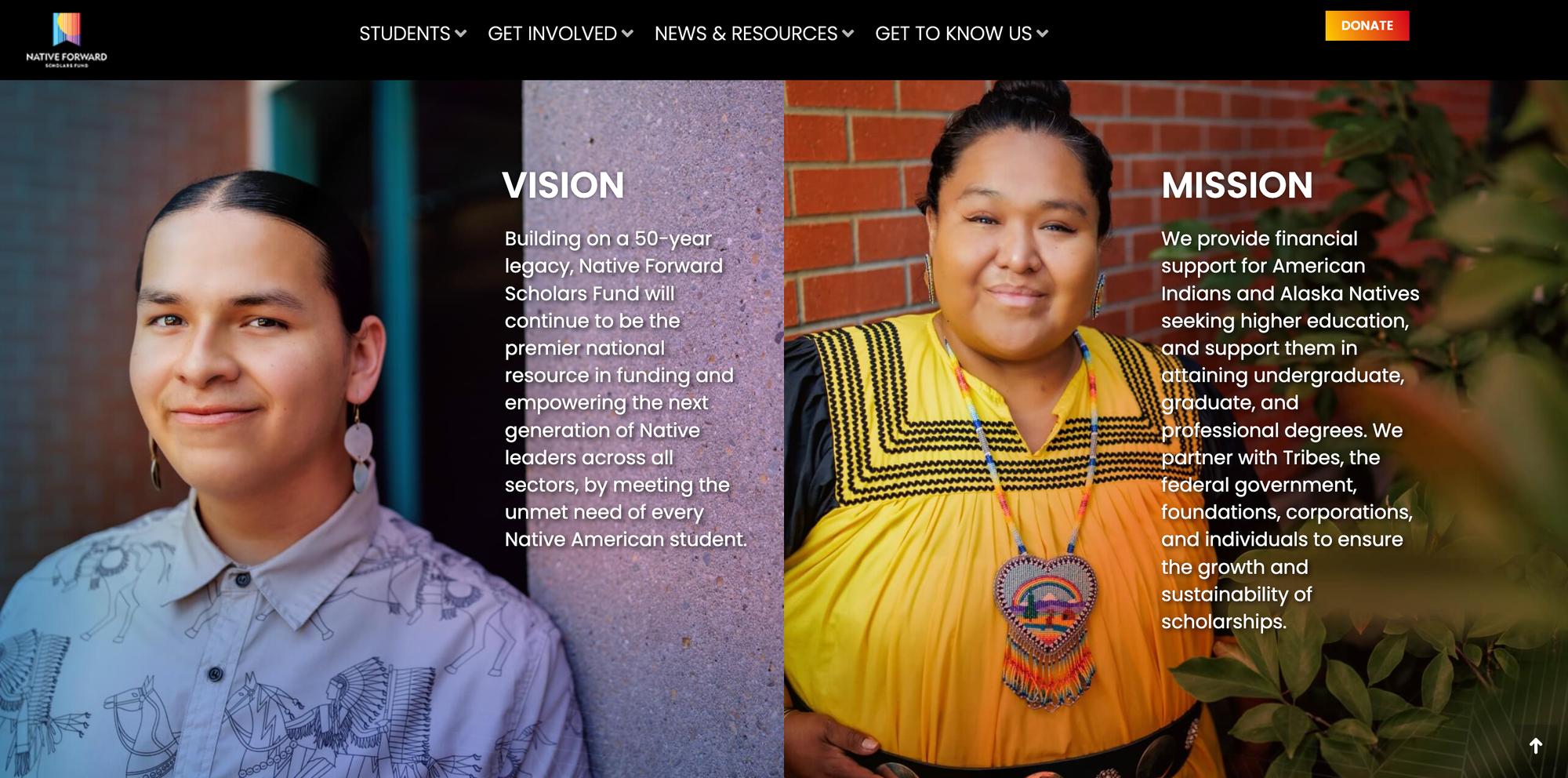
Angelique: Native Forward is committed to funding and empowering Native leaders across all sectors. We aim to meet the unmet need of every Native student. Our scholars and alumni motivate us every day. We are committed to closing the financial gap so that every scholar, regardless of background or field of study, has the resources and culturally congruent support needed to succeed.
We support Native undergraduate, graduate, and professional students as they pursue their educational goals. Our work will continue until we can create opportunities, empower, and provide financial support to every Native student wanting to pursue higher education.
Today, we award between thirteen and fifteen million dollars in scholarships each year and reach only about twenty two percent of qualified applicants. With applications increasing by thirty two percent for the upcoming academic year, the message is clear. The desire for education in Native communities is stronger than ever.
We remain committed to creating programs and scholarships that meet that demand. The bold bet is simple and ambitious. Build a future where no Native student is turned away because of financial barriers and where culturally congruent support is a standard, not an exception.