Electrochemical copper recovery for difficult ores and mining waste.
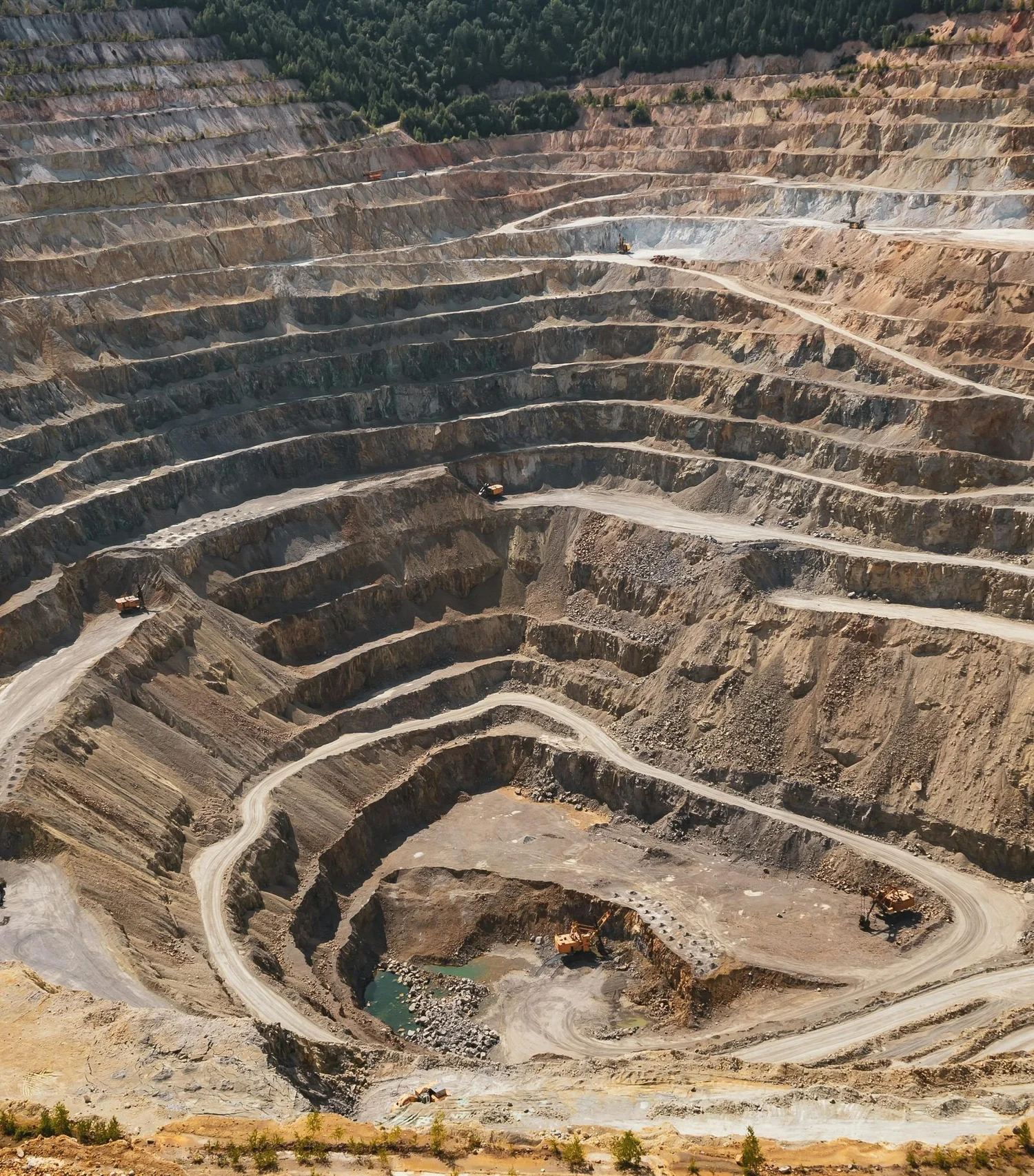
Photo credit: Still Bright / stillbright.co
Still Bright is a New Jersey critical-minerals company commercializing RACER, or Rapid and Complete Electrochemical Reduction, an electrified hydrometallurgical process for producing copper from sulfide-bearing materials. Founded in 2022 by Randy Allen, Jon Vardner, Columbia professor Scott Banta, and Alan West, the company grew from Columbia University research. Vardner received a 2022 Activate Fellowship to help move the technology from the laboratory into a company.
RACER uses a vanadium-based reducing solution to convert chalcopyrite at ambient temperature and pressure. The extraction reagent is intended to circulate through a closed-loop electrochemical regeneration system, while copper is isolated for downstream refining. Still Bright is targeting conventional and complex concentrates, lower-grade ores, and copper-rich waste streams that are difficult or uneconomic to process through established routes. It also expects valuable co-products to remain recoverable.
Still Bright raised an $18.7 million seed round in July 2025 to move from small pilot output toward demonstration scale. In June 2026 it announced a 15,000-square-foot headquarters and pilot-manufacturing lease at NEST in Kenilworth, New Jersey. In August 2026 the U.S. Department of Energy selected the company for a mines-and-metals pilot program, and Still Bright and Capstone described plans for a 500-ton-per-year RACER facility at the Pinto Valley mine in Arizona. That facility and a future 10,000-ton commercial module remain planned rather than operating production.
Still Bright aims to replace or shorten pollution-intensive copper-concentrate processing with a modular, electrified process located at or near mines. Higher recovery could reduce copper losses during flotation and cleaning, while compatibility with difficult concentrates and tailings could derive more metal from already disturbed material. Ambient operation, reagent recycling, and renewable electricity could reduce local air pollution, water consumption, transport, and permitting complexity compared with some smelting routes.
The limitations are substantial. The strongest public recovery evidence comes from controlled laboratory experiments, not sustained commercial operations. Water and capital savings are company projections dependent on feedstock and avoided infrastructure; no public full-system life-cycle assessment verifies net emissions or water impacts. The process uses acidic vanadium chemistry, and laboratory work released hydrogen sulfide, so containment, reagent losses, energy demand, waste handling, economics, and reliability still require pilot-scale validation.
Peer-reviewed 2022 Columbia laboratory experiments reported 95%–99% copper yield and complete chalcopyrite conversion within 60 minutes at room temperature and ambient pressure under specified test conditions. Those experiments used 39 grams per liter of copper concentrate and required a fume hood because hydrogen sulfide was released. Current company claims of 90%–99% recovery “in minutes” are broader than the published laboratory conditions.
Company projections include more than 95% water savings when RACER allows flotation to be avoided and 70%–90% lower equipment cost than pyrometallurgical systems. These are not fleet-wide measured results. TechCrunch reported existing pilot capacity of roughly two tons per year in July 2025; a planned 500-ton-per-year demonstration at Pinto Valley and an eventual 10,000-ton commercial module had not entered production by September 2026.
Still Bright’s $18.7 million seed round and 15,000-square-foot New Jersey facility mark scale-up progress. A separate Department of Energy project lists $1.468 million in federal funding plus $669,000 in cost share. The August 2026 DOE selection was one of nine projects sharing up to $162 million, but Still Bright’s individual negotiated amount was not disclosed.
Near-complete laboratory recovery
Published experiments recovered 95%–99% of copper from tested concentrate under specified laboratory conditions.
Processes difficult feedstocks
RACER is being developed for complex concentrates, sulfide ores, and copper-rich waste that conventional flowsheets may reject or penalize.
Electrified, modular refining
Ambient-temperature chemistry and electrochemical reagent regeneration could support smaller systems located nearer to mines.
Potentially lower waste and water use
Higher upstream recovery, co-product capture, and avoiding some flotation steps could reduce losses, although commercial validation remains pending.
Locations