Recovering industrial solvents with chemical-resistant nanofiltration membranes.
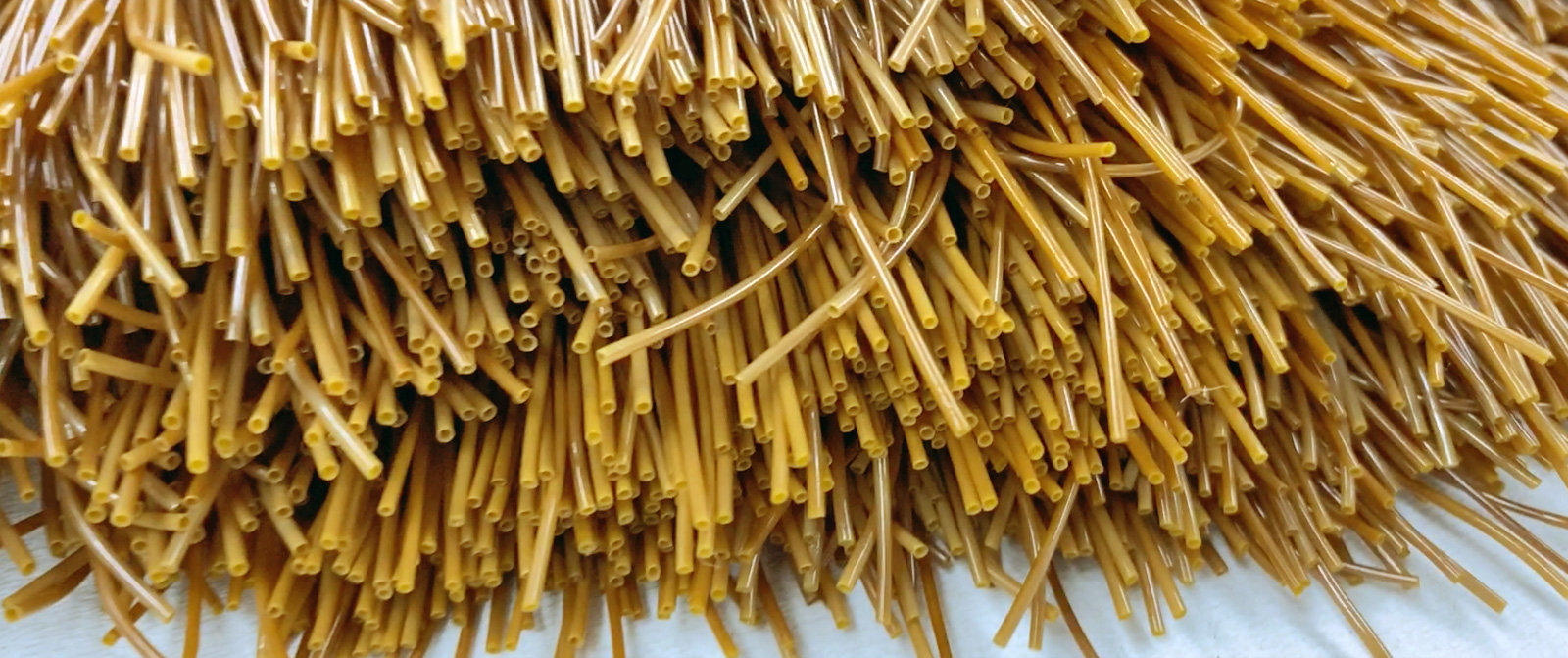
Photo credit: SepPure, via SOSV
SepPure is a Singapore industrial-technology company founded in 2018 by chemical engineer Mohammad Hossein Farahani. It develops organic-solvent nanofiltration membranes and modular separation systems for chemical, pharmaceutical, edible-oil, and related manufacturing. Its GreenMem hollow-fiber membranes separate molecules in organic solvents under pressure, while RE(SOLV) systems package membrane modules and process equipment for solvent recovery.
The technology is intended to replace or complement thermal separation steps such as distillation and evaporation. Because pressure-driven membranes do not require a full solvent phase change, a suitable process can use less energy while recovering solvent for reuse. Fit depends on solvent compatibility, target molecule size, concentration, purity requirements, fouling, pretreatment, throughput, and integration with downstream polishing.
SepPure markets membranes and systems and reports deployed customer installations and product sales. That commercial activity is distinct from the much larger savings figures in company calculators and market-wide scenarios. A membrane or system sold does not prove the modeled energy, emissions, water, or solvent savings until baseline conditions and sustained operating data are measured at the customer site.
Industrial solvent recovery is commonly heat-intensive. SepPure’s impact model is to use molecular-size separation at relatively low temperature, reducing steam or electricity demand and allowing recovered solvent to return to production. Hybrid membrane-distillation configurations may remove the bulk of a separation load while retaining thermal polishing where required.
Environmental performance is process-specific. Savings depend on the displaced unit operation, energy source, recovery rate, membrane lifetime, cleaning, yield loss, pressure demand, and treatment of concentrate. SepPure has not published enough third-party, site-by-site life-cycle data to treat every modeled result as achieved impact, and membrane manufacture and replacement also carry impacts.
SepPure’s website publishes a cumulative impact counter for deployed systems and presents case studies with modeled energy, cost, and emissions reductions. These are company-calculated values based on system assumptions and customer inputs; the underlying metering boundaries and independent assurance are not consistently public. They should be labeled modeled or company-reported rather than audited savings.
The company has reported commercial membrane and system sales, including applications in solvent recovery and edible-oil processing. Sales and deployment counts demonstrate market uptake but do not by themselves establish annual solvent recovered. SepPure’s broader claims about avoiding millions of tonnes of volatile organic compounds or billions of tonnes of carbon dioxide describe potential market impact, not measured company impact to date.
SepPure announced a $12 million Series A in 2022. Financing supports scale-up but is not an impact metric. No comprehensive independently verified total for cumulative customer energy use, emissions avoided, membrane disposal, or solvent losses was identified by September 17, 2026.
Avoids full solvent phase change
Pressure-driven nanofiltration can recover suitable solvents without boiling and condensing the entire stream, reducing thermal demand.
Chemical-resistant hollow fibers
GreenMem modules are engineered for organic-solvent environments and provide high membrane area in a compact module format.
Modular process integration
RE(SOLV) systems can be configured as stand-alone recovery equipment or as a load-reducing step ahead of existing distillation.
Supports solvent reuse
Recovering solvent at the manufacturing site can lower fresh-solvent purchases and waste treatment when purity and process conditions are suitable.
Locations