Equipping autonomous aircraft to detect, target, and suppress wildfires sooner.
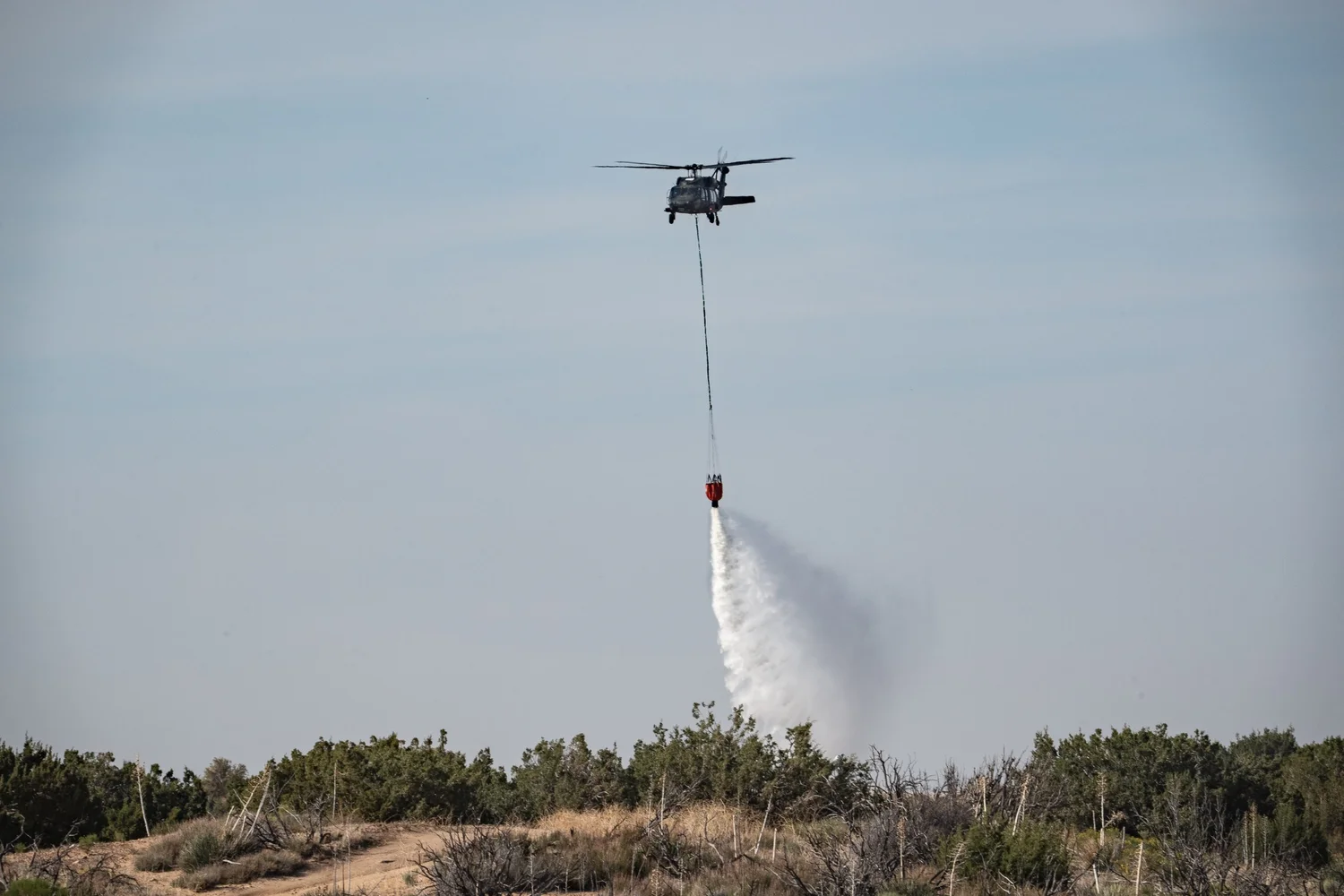
Photo credit: Rain / rain.aero
Rain is a wildfire-technology company founded in 2019 by Maxwell Brodie and Alex Stollar. It develops a Wildfire Mission Autonomy System that combines fire perception, behavior estimation, suppression planning, aircraft command, and coordination with incident aviation. Rather than manufacturing one proprietary airframe, Rain adapts military and civil aircraft so agencies and operators can use crewed, optionally piloted, or uncrewed platforms for wildfire missions.
The company has integrated its software with Sikorsky's MATRIX autonomy suite on an optionally piloted Black Hawk helicopter. Demonstrations have shown an uncrewed aircraft taking off, locating and sizing a test fire, planning a response, and dropping water. Later California exercises added live-fire suppression and communications with a human-piloted helicopter in the same Fire Traffic Area under an Orange County Fire Authority air tactical supervisor. Rain also announced a partnership to add its perception system to Brothers Air Support's private firefighting Black Hawk.
These exercises are meaningful demonstrations in representative conditions, not evidence that autonomous aircraft routinely dispatch to uncontrolled wildfires. Aerial firefighting remains governed by agency authorization, temporary flight restrictions, incident command, certification and airworthiness requirements, communications reliability, weather, terrain, and safe separation from crewed aircraft. Rain's own model keeps ground crews responsible for complete extinguishment.
Rain aims to shorten the interval between detection and initial attack by prepositioning aircraft and automating mission planning. Reaching an ignition before rapid growth could keep some fires smaller, reducing danger to firefighters and communities as well as smoke, ecosystem loss, suppression cost, and fire-related greenhouse-gas emissions. Uncrewed operation may also enable missions at times or in conditions when pilot exposure would be unacceptable.
The climate and safety benefits are conditional. Not every ignition is safe or suitable for aerial attack, water drops do not guarantee containment, and beneficial or prescribed fire has different management goals. Aircraft production, fuel, water sourcing, false detections, communications failures, and interaction with crowded airspace create costs and risks. Simulations of containment and avoided acres are planning tools, not achieved outcomes from operational wildfire service.
Rain and Sikorsky publicly demonstrated an autonomous Black Hawk taking off, finding a small test fire, and dropping water to suppress it in 2024. In a later two-week California demonstration, the partners conducted multiple live-fire exercises and reported communications interoperability with a human-piloted helicopter under an Orange County Fire Authority supervisor. These were supervised demonstrations, not routine incident deployments.
Rain's site describes a modeled workflow in which early-camera detection triggers prepositioned aircraft and software estimates the resources needed before a fire reaches an inflection point. Modeled containment, faster arrival, avoided burned area, and avoided emissions are not operational results. No public source documented autonomous suppression of an uncontrolled wildfire or recurring agency service as of September 17, 2026.
Rain announced a $9.7 million seed round in 2023. Its partnership with Brothers Air Support is the first announced integration of Rain's perception system with a private firefighting aircraft; an integration agreement is not an aircraft placed into active service. Demonstrations validate component and coordination milestones, while certification, procurement, and sustained field use remain ahead.
Rapid initial-attack planning
Mission software combines detection, fire behavior, aircraft resources, and arrival times to plan an aerial response while an ignition may still be containable.
Reduced pilot exposure
Integration with optionally piloted and uncrewed aircraft can move people out of hazardous low-altitude missions when agencies authorize autonomous operation.
Mixed-airspace coordination
California demonstrations tested communication between an autonomous Black Hawk and a crewed helicopter under an air tactical supervisor in one Fire Traffic Area.
Airframe-flexible platform
Rain adapts existing civil and military aircraft instead of requiring agencies to adopt one new proprietary vehicle, subject to platform-specific approvals.
Focus areas
Locations