Indoor vertical farming for a more secure food supply.
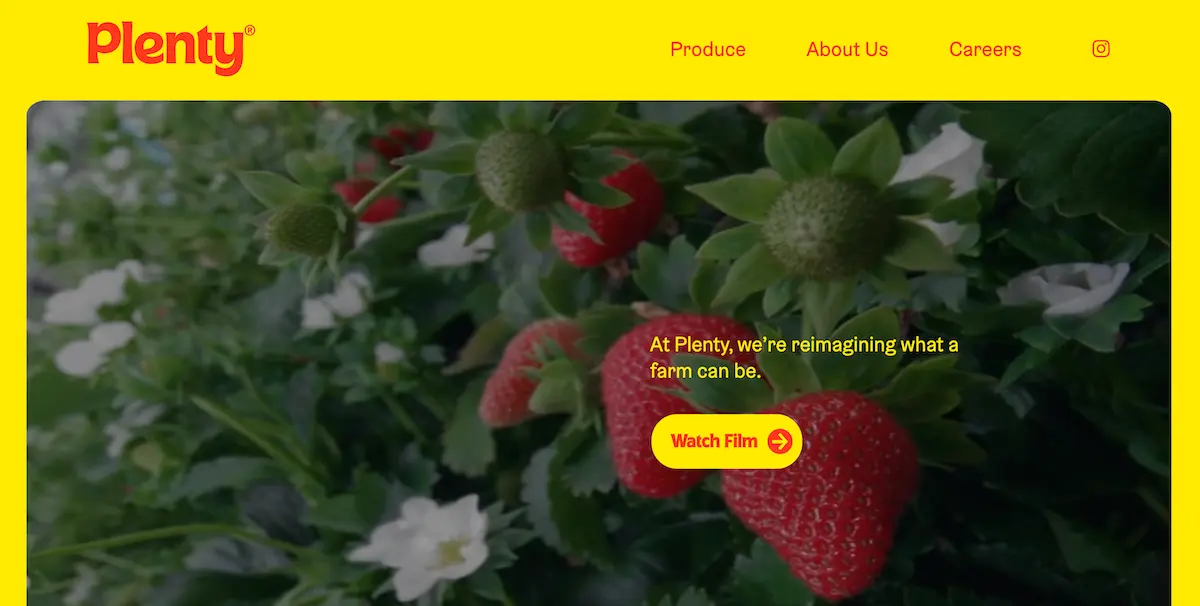
Photo credit: Plenty
Plenty is a vertical farming company that grows fresh produce in controlled indoor environments using dramatically less land and water than conventional agriculture. Founded in 2014 by Matt Barnard and Nate Storey, the company's mission is to build commercial-scale indoor farms, including the world's first indoor vertically farmed strawberry campus in Richmond, Virginia, designed to produce millions of pounds of berries year-round regardless of weather or season.
Plenty's proprietary growing systems monitor and optimize light, humidity, and nutrients to reduce contamination, agricultural runoff, and the long supply chains that define conventional produce distribution. By locating farms near urban centers, the company shortens the distance from harvest to shelf, enables local production in climates where outdoor farming is limited or water-scarce, and offers retailers and consumers a reliable, year-round supply of fresh produce with a fraction of the environmental footprint of field-grown alternatives.
Plenty sells vertically farmed produce through retail and foodservice partners, using proprietary indoor growing systems to reduce land use, water consumption, and agricultural runoff. Farms can be built near urban centers, shortening supply chains and making local production possible in climates where outdoor farming is limited.
Plenty's Virginia strawberry farm is designed to produce over 4 million pounds of strawberries per year using as little as 1% of the land and saving millions of gallons of water compared with conventional outdoor agriculture.
Vertical Indoor Farming
Grows produce in controlled environments using a fraction of the land required by outdoor farms.
Water Efficient
Indoor systems are designed to save millions of gallons of water versus conventional agriculture.
Local Production
Farms can be built near cities, reducing transportation and enabling year-round harvests.
Controlled Environment
Monitors and optimizes light, humidity, and nutrients to reduce contamination and runoff.
Focus areas
Locations