Open AI infrastructure shaped by educators.
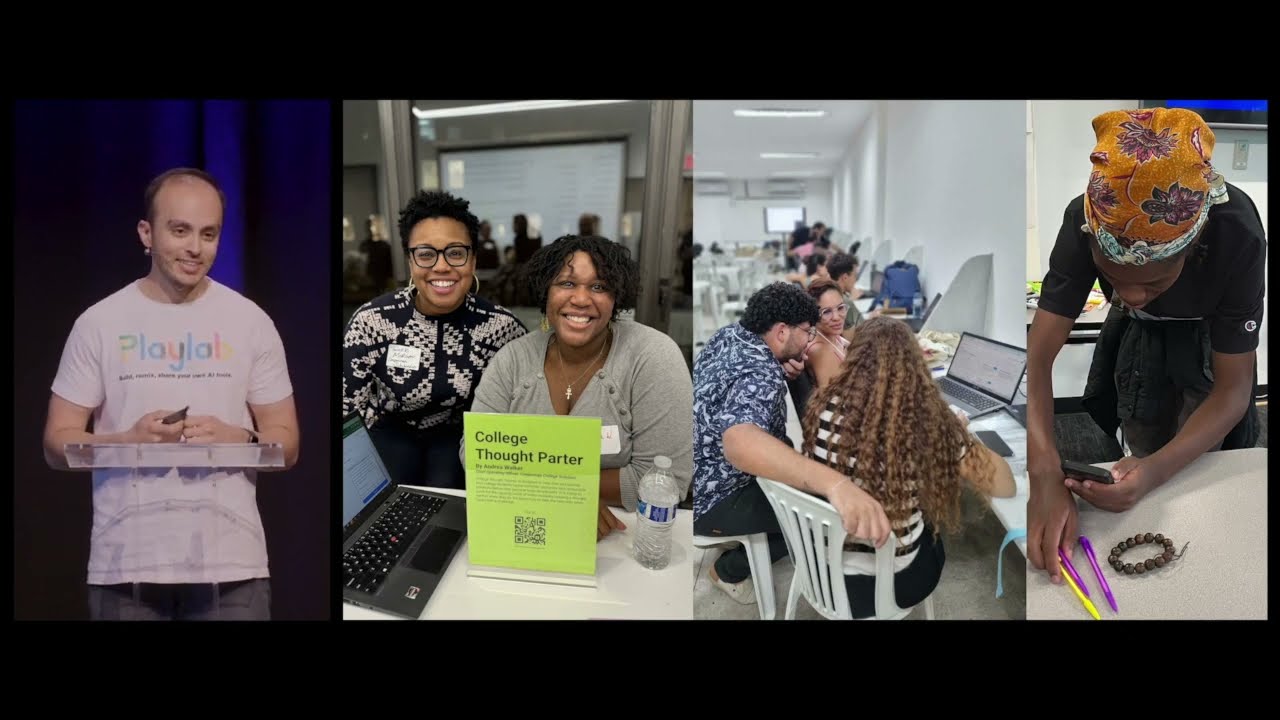
Photo credit: Fast Forward / Playlab
Playlab is a 501(c)(3) nonprofit that enables educators, students, and impact organizations to create, adapt, and share AI-powered educational applications. Its no-code creator supports curriculum-grounded chat and interactive apps, configurable AI models, custom guardrails, and remixing from a shared library.
The organization pairs its software with professional learning, implementation support, and longer-term research into evaluation, safety, bias, and responsible AI. Rather than prescribing one model of AI-enabled education, Playlab gives schools and educators greater control over how AI operates in their specific instructional contexts.
Playlab treats educators as technology creators rather than passive software users. By lowering technical barriers and making applications reusable, its platform can distribute locally developed teaching practices, expand practical AI literacy, and reduce dependence on generic tools whose assumptions may not fit a school or community.
Its nonprofit governance and safety infrastructure may align product decisions with public education, but reach and application counts do not establish improvements in learning. Playlab describes its product as an ongoing experiment, and public organization-wide evidence on student outcomes, comparative effectiveness, bias, and long-term adoption remains limited.
Playlab's June 2026 Learning Hub says tens of thousands of teachers and students are creating tools on the platform; its homepage advertises hundreds of educator-built applications. A California Community Colleges partnership makes Playlab available across all 116 colleges, which represents potential system reach rather than verified active use or learning outcomes.
Educator-built AI tools
Teachers and school teams can turn their own curricula, instructional methods, and local knowledge into task-specific AI applications without building underlying infrastructure.
Model and guardrail control
Creators can select models, define expected behavior, attach reference materials, and configure guardrails around the needs of their learners and institutions.
Shared, remixable practice
A library of educator-built applications lets users study, adapt, localize, and republish existing work instead of beginning every experiment from scratch.
Implementation support
Workshops, professional learning communities, fellowships, learning engineers, and change-management services help organizations move beyond unsupported access to AI software.
Sectors
Focus areas
Locations