Equipping families with essential caregiving skills.
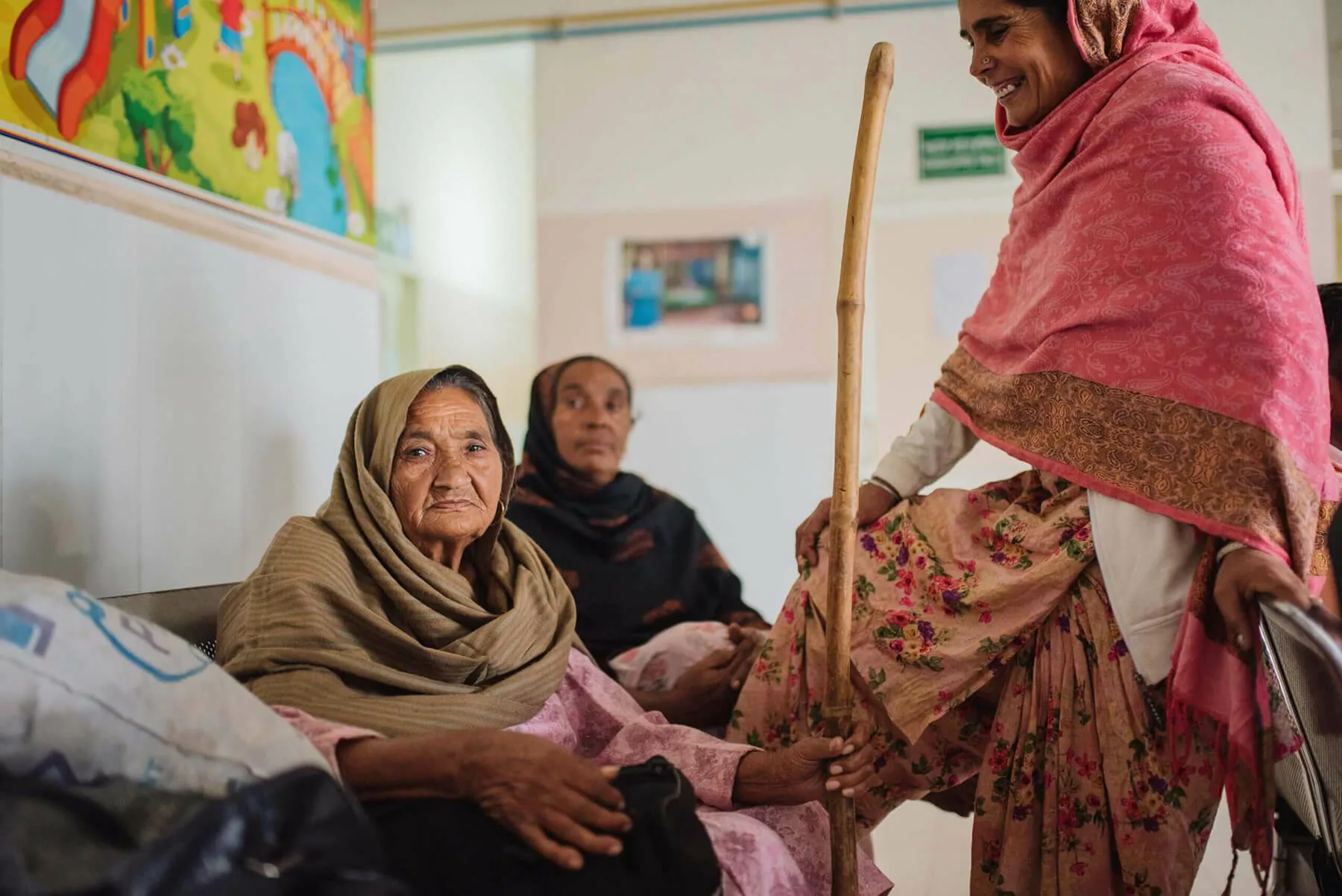
Photo credit: Noora Health / noorahealth.org
Noora Health helps healthcare systems recognize and prepare family members as caregivers. Its Care Companion Program trains patients and loved ones in practical, evidence-based skills before discharge, using locally adapted instruction delivered through health workers in hospitals and other care facilities.
Mobile messaging, reminders, and access to trained support teams extend that guidance after families return home. Noora Health works with public and private health systems across India, Bangladesh, Indonesia, and Nepal, with programs spanning maternal and newborn health, cardiac recovery, surgery, and noncommunicable diseases.
Noora Health embeds caregiver education in existing health systems rather than creating a parallel clinical service. Training family members can improve adherence, recognition of warning signs, home-care practices, and continuity after discharge while allowing health workers to reinforce care beyond a facility visit.
Its evidence base includes large quasi-experimental and randomized studies, but results should not be generalized automatically across every country, facility, or clinical area. Some headline percentages are adjusted odds or risk reductions from specific studies rather than reductions observed among all people reached, and cumulative training counts are not equivalent to unique patients with measured outcomes.
Noora Health's current official materials report more than 65 million caregivers and patients trained across over 16,400 facilities, plus 47,500 health workers trained. Its cited studies include a 71% adjusted reduction in the odds of 30-day complications among 188 cardiac patient-caregiver dyads and an 18% adjusted reduction in neonatal mortality risk in a quasi-experimental study covering 133,733 births at 28 Indian hospitals.
The 2025 annual report separately records 26.5 million caregivers and patients reached during that year.
Practical caregiver training
Teaches families essential skills for recovery, newborn care, hygiene, medication support, and recognizing warning signs.
Support after discharge
Uses mobile messaging and trained support teams to continue guidance after patients leave a healthcare facility.
Health-system integration
Works through government and private facilities so caregiver education becomes part of established care delivery.
Measured clinical learning
Evaluates selected programs through randomized, quasi-experimental, and implementation studies rather than relying only on reach.
Focus areas
Locations