Open data and AI for regenerative materials.
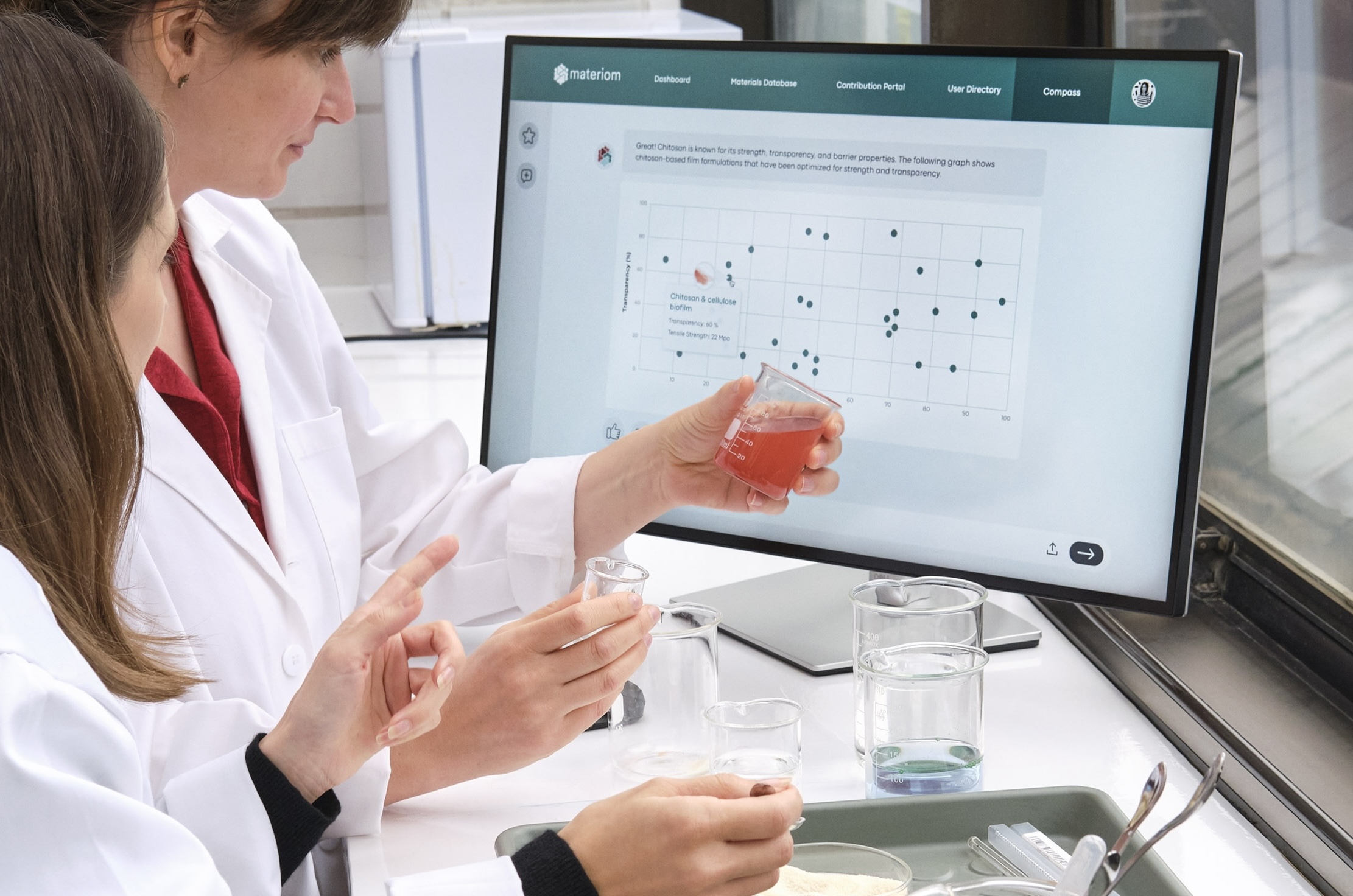
Photo credit: Materiom / materiom.org
Materiom is a nonprofit materials-research organization building open data and AI tools for the development of regenerative, bio-based alternatives to petrochemical plastics. The Materiom Commons brings together recipes, ingredients, processing methods, performance data, scientific literature, and a global directory of materials innovators.
Alongside its digital platform, Materiom works with researchers, startups, manufacturers, brands, and local communities to investigate renewable biomass, improve material formulations, and develop regional value chains. Its AI assistant uses Google's Gemini to help users find candidate biopolymers, ingredients, and additives during early-stage materials discovery.
Materiom targets a structural R&D bottleneck: useful biomaterials knowledge is fragmented across papers, laboratories, and commercial teams. Open data can reduce duplicated discovery work, while AI-assisted search can help innovators identify promising formulations and connect scientific evidence to product requirements more quickly.
Faster discovery does not guarantee that a material will perform at industrial scale or produce a net-positive environmental result. Feedstock sourcing, additives, manufacturing energy, durability, toxicity, composting infrastructure, land use, and end-of-life conditions all affect impact. Materiom reports community reach and intended acceleration, but has not published organization-wide figures for plastics displaced, lifecycle emissions avoided, or commercialization success attributable to its tools.
Materiom reports that its Commons supports more than 20,000 innovators across over 100 countries. Its AI launch announcement says the assistant provides a portal to approximately 30 million open-access scientific documents. These figures describe knowledge access and community reach; Materiom has not publicly quantified resulting material commercialization, plastic displacement, or emissions reductions at an organization-wide level.
Open biomaterials knowledge
Recipes, ingredients, methods, and performance information give researchers and designers a shared foundation for experimentation rather than isolated starting points.
AI-assisted materials discovery
The Materiom AI assistant searches scientific knowledge for candidate biopolymers, additives, and combinations aligned with desired material properties.
Lower R&D barriers
Open access can reduce literature-search time and make foundational materials information available to startups, students, community labs, and researchers with limited resources.
Value-chain collaboration
Materiom connects scientists, material developers, manufacturers, brands, recyclers, composters, and regional biomass stakeholders around commercialization challenges.
Locations