Transforming trash into sustainable fuel for heavy industry.
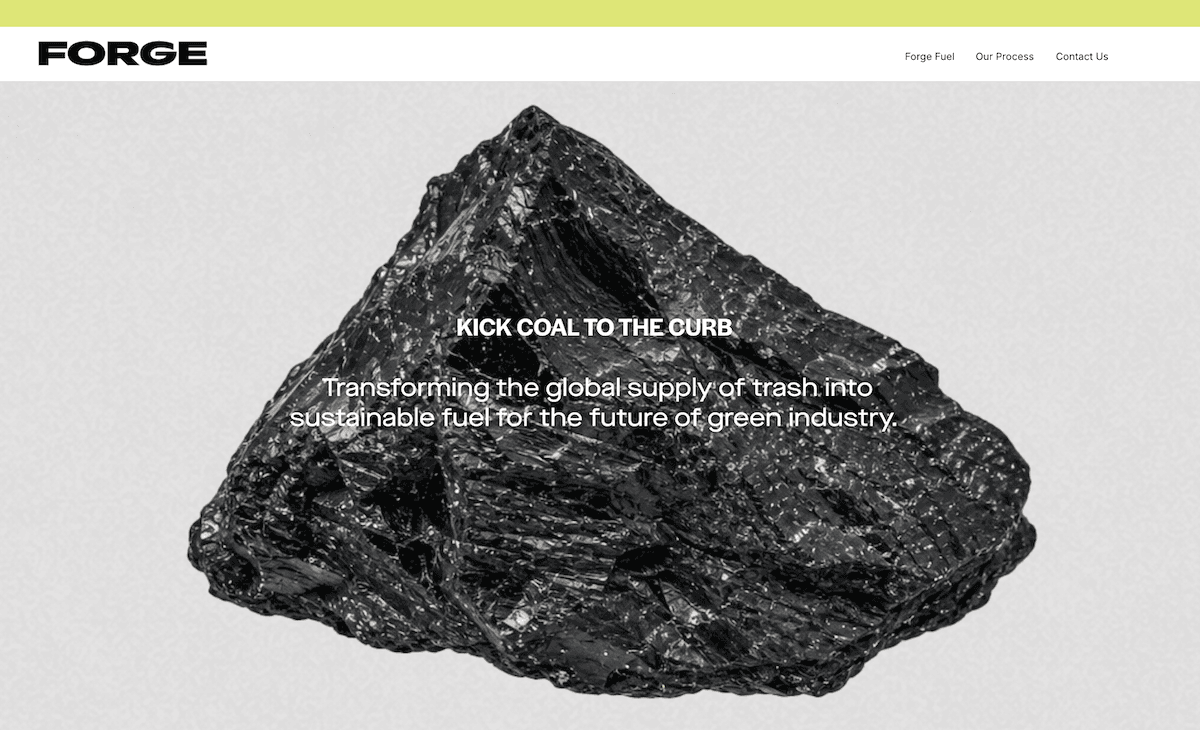
Photo credit: Forge Industries
Forge Industries is a climate-tech company that converts hard-to-recycle waste, including plastics, textiles, food waste, and other landfill-bound materials, into high-performance engineered fuels that directly replace coal in cement, steel, lime, and power generation. Founded by CEO Chelsea Boyle, the company was inspired by firsthand experience with waste's environmental impact in West Africa and built on the insight that the scale of the global waste problem is itself the raw material for disrupting the world's largest carbon footprint.
Each Forge production line can convert 300,000 tons of waste into fuel annually, with fuel that meets stringent industrial caloric and chemical specifications as a drop-in coal replacement, requiring no retrofit to existing factory equipment. Using NIR inspection, AI-driven quality control, and flexible feedstock blending, Forge produces fuels with 60% less CO₂, 90% less NOx/SOx, and superior heat values compared to coal, bridging the gap between overflowing landfills and heavy industry's urgent need to decarbonize.
Forge sells engineered solid fuels to industrial customers in cement, steel, and other energy-intensive sectors, generating revenue from fuel offtake while diverting waste from landfills. The company's first U.S. commercial manufacturing facility near Las Vegas is designed to scale waste-to-fuel production across the Southwestern United States.
Raised $3.85M in 2026 to build its first U.S. facility; completed industrial-scale pilots exceeding 100 tons; each production line targets 300,000 tons of waste converted annually with 1.71M metric tons of direct methane savings per line.
Drop-In Coal Replacement
Engineered fuel meets industrial heat specs without requiring factories to change existing equipment.
Diverse Waste Feedstock
Processes plastics, textiles, food waste, and other hard-to-recycle streams that landfills cannot absorb.
60% Less CO₂
Fuel performance delivers major emissions reductions versus coal across cement and heavy industry applications.
Landfill Diversion at Scale
Each line converts 300,000 tons of waste annually — turning a global waste crisis into industrial energy supply.
Focus areas
Locations