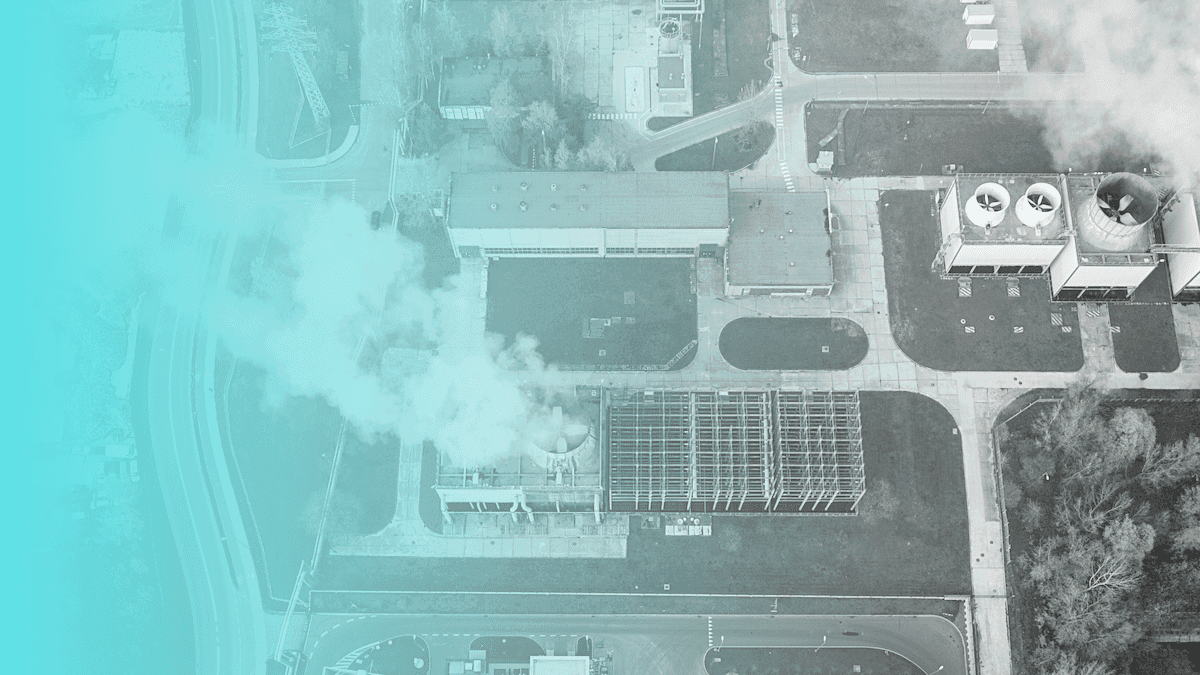
Turning steel waste into low-carbon cement for a decarbonized construction industry.
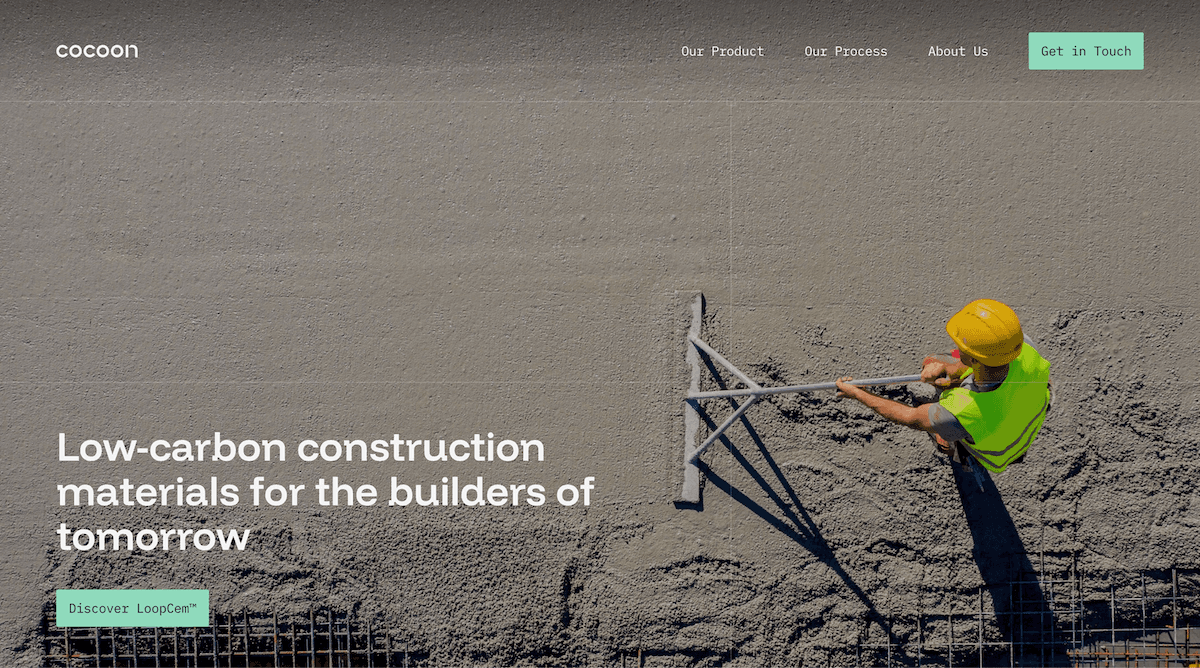
Photo credit: Cocoon Carbon
Cocoon Carbon is a climate tech company building low-carbon construction materials by transforming industrial waste into scalable alternatives to traditional cement inputs. Its core product, LoopCem™, is a supplementary cementitious material (SCM) made from Electric Arc Furnace (EAF) slag, a by-product of electric steelmaking.
Cement and steel together account for roughly 14% of global CO₂ emissions, making them two of the hardest sectors to decarbonize. Cocoon Carbon sits at the intersection of both industries, creating a circular economy solution that reduces emissions without requiring major infrastructure changes.
LoopCem™ is designed to directly replace a portion of Ordinary Portland Cement (OPC), achieving up to 27% reduction in embodied carbon in concrete while maintaining industry-standard strength and durability. The product is engineered to be cost-competitive, which is critical in an industry where price sensitivity often slows climate adoption.
The company’s process integrates directly into existing steel mill operations, rapidly cooling molten slag up to 100 times faster than traditional methods. This produces a consistent, high-reactivity material that can be reliably used at scale by cement and concrete producers.
Cocoon Carbon’s broader mission is to decarbonize heavy industry through circular material innovation, enabling both steel and cement sectors to reduce emissions without compromising performance or cost.
Cocoon Carbon reduces emissions in the built environment by replacing carbon-intensive cement inputs with recycled industrial by-products. Its model focuses on:
- Industrial decarbonization by lowering cement-related emissions
- Waste valorization by converting steel slag into usable materials
- Circular economy integration between steel and construction sectors
- Scalable climate impact through compatibility with existing infrastructure
By embedding into existing supply chains rather than requiring new ones, the company increases the likelihood of rapid adoption across global construction markets.
- Up to 27% reduction in embodied CO₂ in concrete
- Targets more than 10 million tonnes of CO₂ emissions avoided by 2032
- Converts Electric Arc Furnace slag into usable construction materials
- Operates within existing steel mill infrastructure
Lower Carbon Concrete
Reduces embodied carbon in concrete by up to 27% through partial replacement of Ordinary Portland Cement.
Circular Economy Solution
Transforms steelmaking by-products into valuable construction materials instead of waste.
Cost Competitive
Provides carbon reductions without requiring a premium compared to conventional materials.
Seamless Industrial Integration
Integrates directly into existing steel mill slag handling operations without requiring major infrastructure changes.