
Explained: Plant-Based Meat Alternatives
Summary
Plant-based meat alternatives are transforming global food systems. Explore how startups and industry leaders are creating sustainable, ethical protein solutions, the market’s $100B growth potential, and the challenges shaping the future of meatless innovation.
In simplest terms, a plant-based meat alternative aims to replicate or mimic the taste, texture, aroma, and culinary function of animal-derived meat, but made without raising and slaughtering animals.
Because meat is complex (muscle fibers, fat, connective tissue, blood, etc.), creating convincing substitutes requires bridging multiple dimensions: protein structure, fat and flavor systems, moisture, binding, and cooking behavior.
Key technical approaches include:
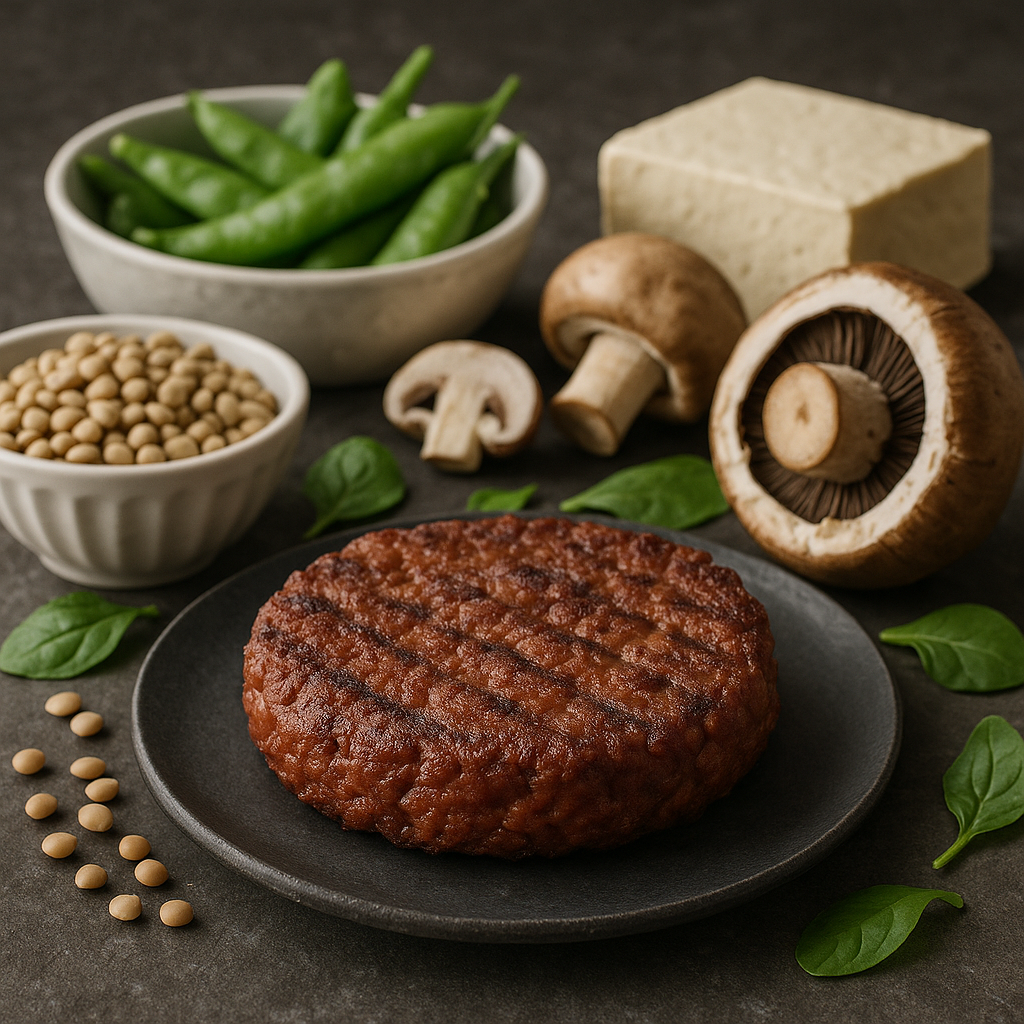
- Protein isolates & concentrates — Extracted from plants (peas, soy, wheat, etc.) and recombined with fats, binders, and flavors.
- Texturization / extrusion / fiber spinning — Processes to align proteins into fibrous structures that approximate muscle (e.g. extrusion, shear cell technology, fiber spinning).
- Mycoprotein / fungal biomass — Using fungi or filamentous microorganisms (such as Fusarium venenatum, or species of mycelium) to generate a meaty texture.
- Precision fermentation / engineered microbes — Engineering microorganisms (yeast, bacteria) to produce specific proteins, fats, or flavor molecules (e.g. heme) which are then incorporated into plant-based matrices.
- Hybrid / “enhanced” ingredients — Mixed systems combining plant proteins with fermentation-derived ingredients or even small amounts of cultured fat to boost realism.
The goal is to deliver sensory acceptability (taste, texture) while retaining or improving the environmental, health, or ethical advantages over conventional meat.
Types & Examples of Plant-Based Meats
Here are common categories and real-world examples to ground the concept:
| Type / Approach | Example Brands / Products | Notes |
|---|---|---|
| Soy / pea protein burgers, “ground” | Beyond Meat’s burger, Impossible Foods “Impossible Burger” | Among the most familiar to consumers |
| Chicken substitutes, strips, nuggets | Oumph!, Gardein, Quorn | Focused on poultry analogues, often in processed form |
| Mycoprotein / fungal | Quorn (fungal origin), Prime Roots (formerly Terramino) | Uses filamentous fungi or fermentation to mimic muscle texture |
| Mushroom / mycelium cuts | Meati (mycelium-based steaks & cutlets) | Mycelium offers fibrous structure, faster growth cycles |
| Fiber-spun structured meat cuts | Tender (formerly Boston Meats) | Uses spinning technology (somewhat like cotton candy style fibers) to produce structured cuts (short rib, pulled pork, etc.) |
| Multi-layer / marbled analogues | UNLIMEAT | Works on low-moisture / high-moisture meat analogues and custom extrusion for layered structure |
| 3D-printed / biomimetic | NovaMeat (3D printed plant-based meat) | Pushing into “whole cut” and fine structure territory |
Legacy / large-scale names
It’s also worth acknowledging the scale players because they anchor the ecosystem:
- Beyond Meat — One of the earliest plant-based meat brands with wide retail and foodservice presence. Read our Beyond Meat Case Study.
- Impossible Foods — Known for engineering a heme-like molecule via fermentation to replicate meat “juiciness”
- Quorn — Early mover in fungal-based protein
- Gardein, MorningStar Farms, Tofurky — more commodity / accessible players in the analog / meat substitute segment
- Nestlé (via acquisitions and alternative protein R&D), JBS (via stakes and acquisitions) — incumbents stepping into the space
Startups & Innovators to Watch
Here are some notable emergent and frontier startups:
- Tender — Using fiber-spinning of plant proteins to produce structured cuts like short ribs, pulled pork, chicken breast, and crab analogues.
- Meati — A mycelium-based company producing steaks and cutlets from fungal biomass.
- UNLIMEAT — Focused on creating low-moisture and high-moisture meat analogues, with custom extrusion to replicate marbling and layered structure.
- NovaMeat — 3D printing plant-based meat substituents (blurring into cultured meat territory)
- Prime Roots — Uses koji fermentation (fungal fermentation) to make deli-style meats and muscle-like alternatives.
- ENOUGH — Mycoprotein / fermentation-based protein platform.
Market Size & Growth Trends
Understanding the market landscape is crucial for entrepreneurs and investors. While projections vary, a few consistent themes emerge: strong compound growth, regional variation, and structural pressures to lower cost.
Global market size & forecasts
- According to IMARC, the global plant-based meat market was valued at USD 16.69 billion in 2024, and is projected to grow at a CAGR of 21.92% to reach USD 100.31 billion by 2033
- Roots Analysis estimates a base of USD 17.1 billion in 2024, rising to ~USD 18.7 billion in 2025, with further growth toward USD 54.8 billion by 2035 (CAGR ~11.35%)
- Other reports place the 2024 market lower (e.g. ~USD 7.17 billion) with a forecast to ~USD 24.8 billion by 2030 (CAGR ~19.4%)
- Another projection suggests the market could grow from USD 9.57 billion in 2024 to USD 21.81 billion by 2030 (CAGR ~14.7%)
Because of methodological differences (definitions, geography, what qualifies as “plant-based meat”), the range is wide — but all forecasts imply strong multi-year growth.
Regional and U.S. outlook
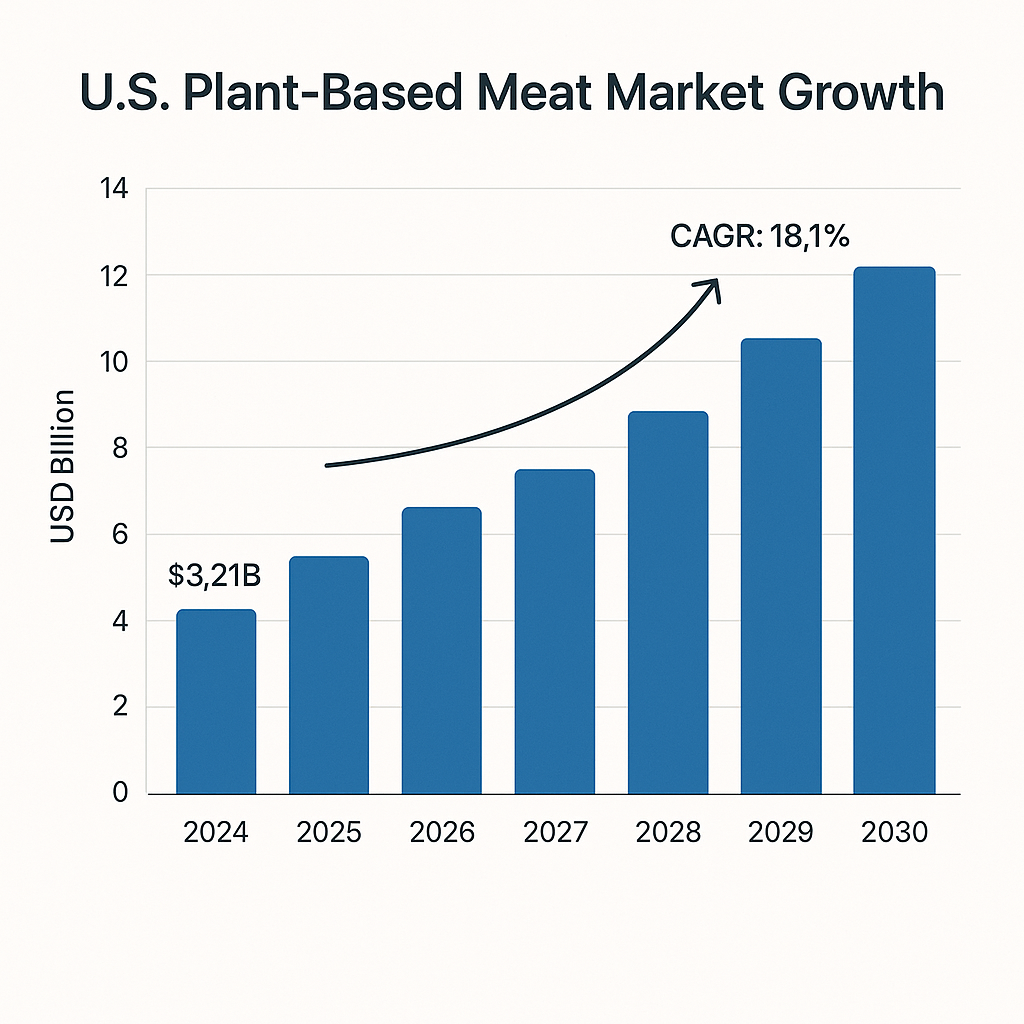
- In the U.S., the plant-based meat market was estimated at USD 3.21 billion in 2024, and expected to grow at a CAGR of ~18.1% through 2030.
- Another U.S. forecast from ResearchAndMarkets estimates growth from USD 2.99 billion in 2024 to USD 15.12 billion by 2033 (CAGR ~19.9%)
- North America currently captures ~36% of the global share per IMARC.
Drivers, tipping points & structural signals
Key forces fueling growth include:
- Rising environmental awareness, climate pressures, and regulatory interest in reducing livestock emissions
- Health, wellness, and dietary shifts (e.g. flexitarian consumers)
- Improvements in sensory properties and innovation in ingredients / processing
- Scale economies, ingredient sourcing, and operational efficiencies
- Entry of incumbent food companies (brands, supply chains, retail)
- Potential policy incentives, labeling rules, subsidies or carbon pricing
- Demand from foodservice / quick service restaurant (QSR) channels as well as grocery
But as with all nascent industries, actual adoption will hinge on cost parity, taste parity, regulatory clarity, and supply chain robustness.
Pros & Cons: Sustainability, Health, Economic, Scalability Tradeoffs
Enjoying this? Get the next one.
We send one email each Monday with what just published on Causeartist.
Free. Unsubscribe anytime.
Related Articles
View all articles
Photo credit: NorthX Climate Tech / northx.ca

Photo credit: Green Accelerator / greenax.org

Photo credit: Soothe Note, modified by Causeartist
Get the Monday roundup
New companies, funders, stories, podcasts, and case studies — one email a week.
Join 25,000+ Causeartists
Free. Unsubscribe anytime.