When a disaster hits, the gap between funding allocated and funding received can cost lives. AidKit is building the infrastructure to close that gap. The company works with governments, nonprofits, and NGOs to stand up eligibility verification, multilingual applications, and payment disbursement in a matter of hours, not weeks.
Brittany Christenson, CEO of AidKit, joined the Disruptors for Good podcast to talk through how the platform works, what they have learned from 240-plus partners, and where the company is headed.
From Organic Farms to Aid Infrastructure
Brittany's path to leading AidKit did not follow a conventional tech route. She studied applied math at Carroll College in Montana, then spent time as operations manager at an organic vegetable farm, where she used technology to scale a community-supported agriculture program from 35 members to a statewide network of 900 families.
From there, she became executive director of ADK Action, a nonprofit focused on food access and community development. During the pandemic, her team launched one of the first SNAP Online programs in the country, sitting alongside Amazon and Walmart as the only vendors authorized to accept SNAP benefits for online grocery delivery at the time.
That experience made one thing clear: many of the problems in the food system were not food problems. They were economic problems. She joined AidKit as its sixth employee. Today the company has 60 people across the country.
What AidKit Actually Does
AidKit describes its mission as delivering aid with dignity.
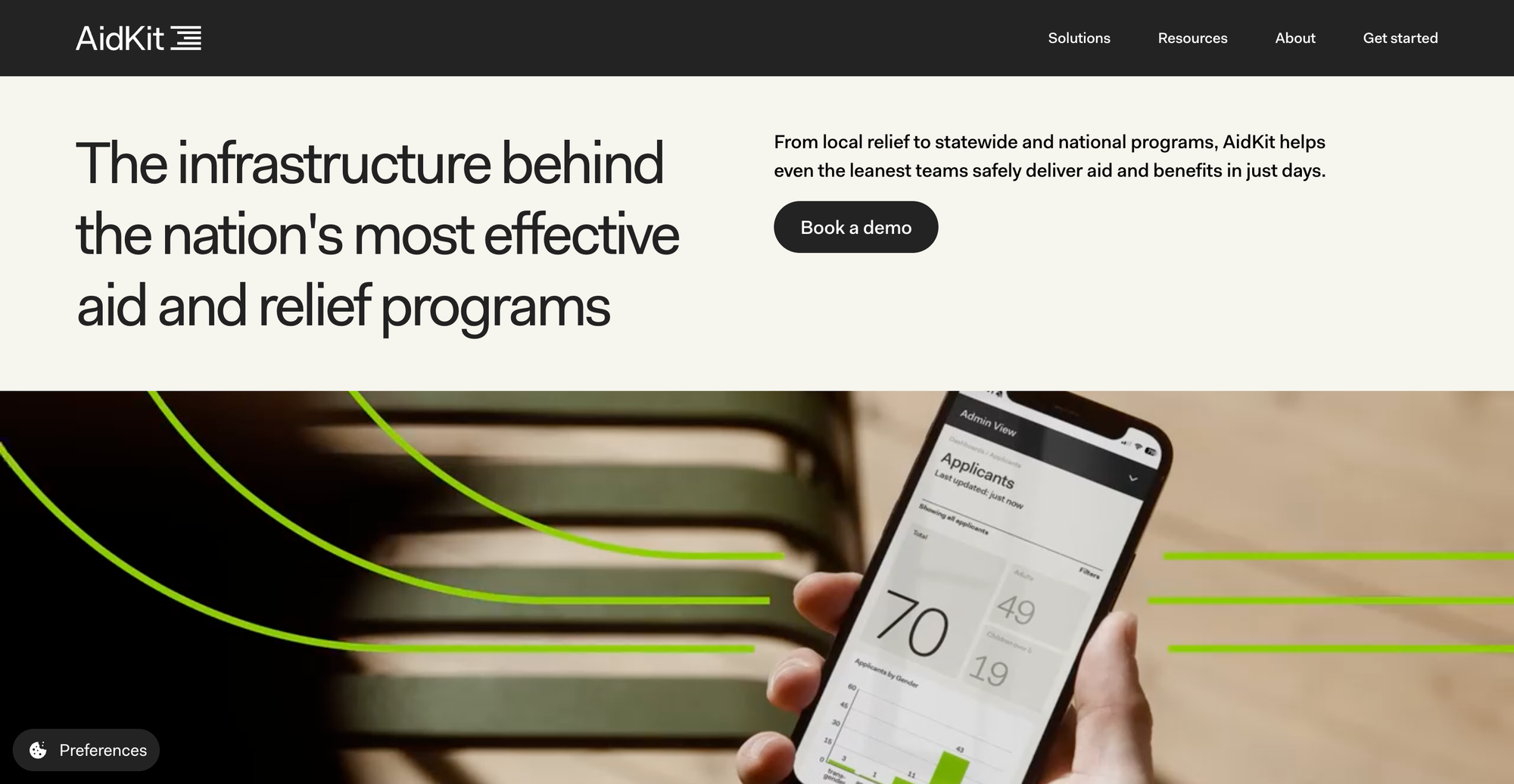
In practice, that means building the technology layer between organizations that distribute funds and the people who need to receive them.
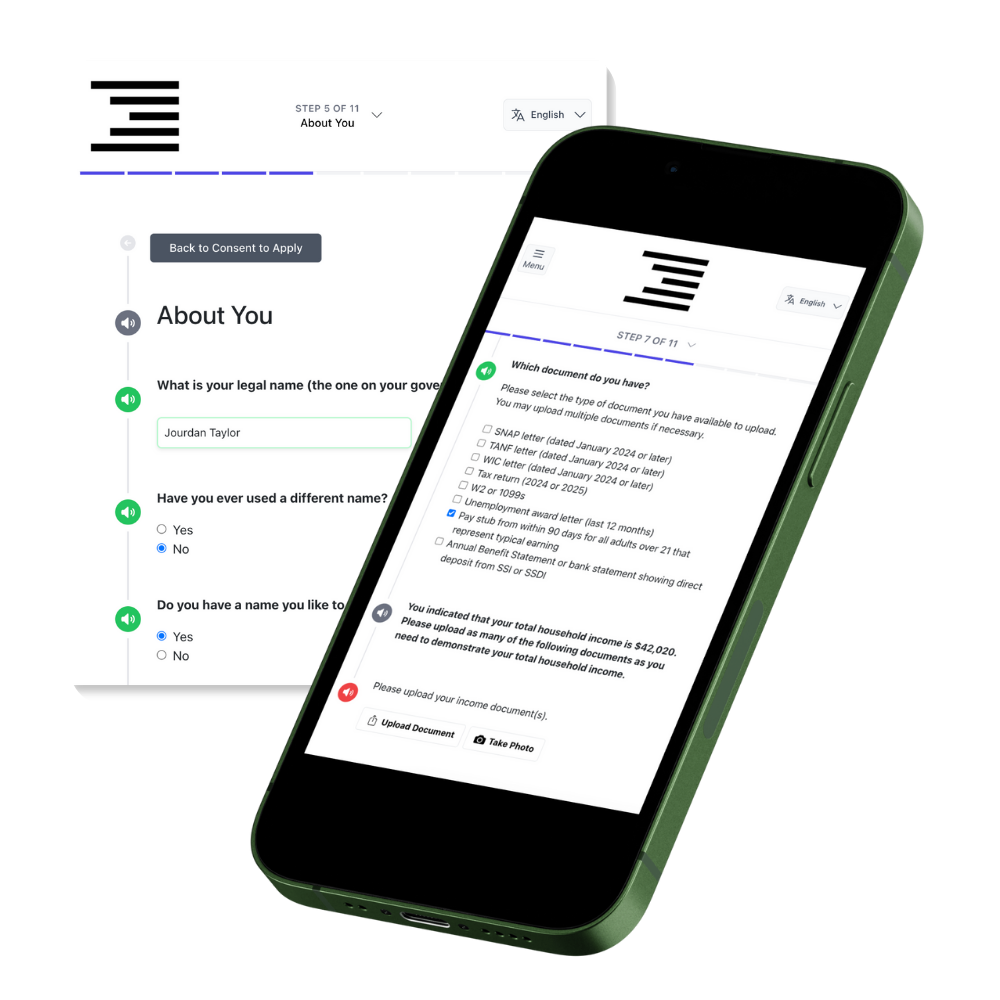
AidKit handles eligibility verification, fraud detection, multilingual application flows, and payment disbursement across multiple rails including real-time payments, ACH, direct deposit, physical checks, debit cards, and virtual cards.
The platform is not a standard SaaS product. Brittany is direct about this distinction.
"We make technology that works for communities. We don't make communities bend to work with our technology."
Rather than rebuilding from scratch for each partner, AidKit uses a modular architecture with a shared functional layer and a customizable definition layer on top. Partners get purpose-built solutions without the cost or timeline of fully custom software.
Current partners include Save the Children, GiveDirectly, and state agencies across 27 states. The platform has served more than 600,000 end users and delivered over $400 million in aid.
Real-World Use Cases
Disaster Relief
When Hurricane Helene, Hurricane Milton, and December flooding in Washington state hit, AidKit powered Save the Children's domestic disaster response.
Application links went live in four to six hours. Qualifying families received funds within a day and a half of applying.
The previous standard involved Google Forms, spreadsheets, manual follow-up over email, and prepaid card issuers working in isolation. None of it was multilingual, accessible, or fraud-resistant at scale.
Maternal and Infant Health
AidKit also works in guaranteed income and maternal health programs.
One prominent example is RX Kids, a program founded by Dr. Mona Hanna and Luke Schaefer at Michigan State University and administered by GiveDirectly.
The program provides $1,500 to pregnant mothers and $500 per month for the first year after birth. Results from the pilot were strong enough that Michigan passed legislation to scale the program statewide.
The Fraud Problem Is Getting Harder
AI has changed the fraud landscape in ways that legacy vendors are not equipped to handle. Brittany was direct about the risk.
Generating convincing fake identity documents is now accessible to almost anyone. Programs running on outdated verification systems are increasingly vulnerable. Large consulting firms operating on billable-hours models have little financial incentive to move fast.
AidKit's response is to use AI offensively, not just defensively. Their system detects duplicate applications, extracts and validates document content, and flags signals consistent with AI-generated materials.
They also enforce a zero data retention policy with AI vendors and do not run applicant data through any external AI model.
On the application side, AidKit built a tool called Luna, an AI co-pilot that guides applicants through forms in real time.
If a response looks inconsistent with what a program requires, Luna flags it immediately so the applicant can correct it before submission. The goal is fewer denials, fewer delays, and better outcomes for people who are actually eligible.
The Business Model
Most vendors in this space charge by the hour. Brittany argues that model creates the wrong incentives: more complexity means more billable hours.
AidKit uses a performance-based fee structure tied to usage. If the platform is not actively delivering aid, the partner is not paying full fees. A base licensing fee covers platform maintenance and compliance updates.
The company was bootstrapped and profitable for its first four years before raising a Series A in 2024.
Several co-founders initially worked without salary to reach profitability. That track record made the raise efficient: strong investor interest, quick process.
What Comes Next
The current environment is pushing AidKit to move faster. USAID has been significantly reduced. FEMA's role is uncertain. The reconciliation bill passed by Congress in 2025 cut benefits access for millions of Americans across Medicaid and SNAP.
Brittany sees this as a forcing function. Organizations that were relying on legacy infrastructure now have reason to upgrade. AidKit's goal is to be the default infrastructure for safe, fast aid delivery nationwide.
The numbers they are targeting: from hundreds of thousands of people served to millions, and from $400 million delivered to crossing $1 billion.
Listen to the full episode of Disruptors for Good with Brittany, CEO of AidKit, on your preferred podcast platform. Learn more about AidKit at aidkit.org.