
Impact Business Case Study: Bombas
A detailed case study of Bombas, exploring how the company grew from a single product startup into a leading apparel brand while donating more than 150 million essential items. Covers strategy, operations, financials, and its mission driven business model.
Photo credit: Bombas
Key takeaways
- Bombas grew from a 2013 sock startup to projected $500M revenue in 2025, leveraging a buy-one-give-one model that has donated over 150 million essential items to people experiencing homelessness.
- The company secured $200,000 from Daymond John on Shark Tank in 2014 for 17.5% equity, becoming one of the show's most successful brands with revenue estimates of $300M in 2023.
- Bombas expanded beyond socks into underwear, T-shirts, and slippers while maintaining premium pricing ($14+ per pair of socks) justified by quality and social mission.
- The company targets socially-conscious consumers willing to pay premium prices, using DTC marketing and mission storytelling to build brand loyalty and differentiate from mass-market competitors.
- Bombas appointed new CEO Jason LaRose in 2025 as founders transition from startup to scale-stage company, with plans to expand wholesale from 7% to 10-20% of revenue.
Bombas is a U.S.–based apparel company founded in 2013 by David Heath and Randy Goldberg. Headquartered in New York City, the company began by selling high-quality socks and has since expanded into underwear, T-shirts, and slippers.
Its signature social mission is a “buy one, give one” model: for each item sold, the firm donates a specially designed item to someone experiencing homelessness.
The name Bombas comes from the Latin word “bombus,” which means “bumblebee.”
The founders chose the name because bees work together in a hive to help one another and improve their community.
Bombas built its mission around that idea: a community where people support one another through small, consistent acts of kindness.
The bee became a symbol of service, teamwork, and giving back, which fits the company’s one purchased, one donated model.
Key highlights of Bombas’s growth:
The company achieved rapid scale in the direct-to-consumer (DTC) apparel market and has been described as one of the most successful brands to emerge from the television show Shark Tank.
Revenue estimates indicate growth from approximately US$171 million in 2021 to US$300 million in 2023 and US$325 million in 2024.
Market position: While still privately held, Bombas commands a strong brand reputation for high-margin premium basics with social purpose and has leveraged its mission to differentiate in a crowded apparel field.
In short, Bombas offers a case of how a focused product category (socks) plus a clear social mission plus DTC marketing discipline can produce meaningful growth.
At the same time the company must navigate the challenges of category expansion, customer acquisition cost, and maintaining mission authenticity.

David Heath and Randy Goldberg - Bombas Founders
Company Background & History
Founding story
David Heath and Randy Goldberg launched Bombas in 2013. They identified two problems: first, that socks were the most requested item at homeless shelters in the U.S.; and second, that many mass-market socks lacked durability, comfort, and thoughtful design.
Their original vision was to create the “best socks in the history of feet” and pair every sale with a donation of an item to someone in need.
Timeline of major milestones
2013: Company founded; initial crowdfunding on Indiegogo.
2014: Appeared on Shark Tank and struck a deal with investor Daymond John for US$200,000 for ≈17.5% equity.
2016-2018: Sources indicate revenue over US$100 million by 2018.
2019: Expanded product line into T-shirts and underwear.
2022: Research case study published (HBS) about pace of growth vs mission.
2025: Reports indicate projected revenue of about US$500 million and more than US$2 billion in lifetime revenue; also shift to retail/wholesale expansion.
Evolution of leadership, ownership structure & business model pivots
The founders remain heavily involved, though in May 2025 a new CEO, Jason LaRose, was appointed while Heath moved into executive chair role, signaling a shift from founder-led startup to scale-stage company.
Ownership remains private; the initial Shark Tank deal with Daymond John provided credibility and capital. The business model has remained DTC-led but is shifting to include wholesale and physical retail (e.g., own stores) as growth avenues.
Causeartist Weekly
Join the Causeartist newsletter and get stories, tools, and interviews that help founders, nonprofits, and investors stay informed and make better decisions.
Subscribe for free
Email sent! Check your inbox to complete your signup.
No spam. Unsubscribe anytime.
Industry & Market Analysis
Industry landscape size, growth rate, major trends
The global apparel basics market in 2025 is estimated to be part of the overall apparel industry, which is valued between $1.8 trillion and $1.9 trillion worldwide, with the United States market making up about $365–$395 billion of that total.
Within this context, DTC apparel brands have grown rapidly over the past decade, driven by e-commerce penetration, social mission branding, and consumer preference for comfort and sustainability.
Target market segments and customer personas
Bombas targets:
Discerning consumers willing to pay a premium (~US$15 per pair of socks or more) for better quality and comfort.
Socially-conscious consumers who value brands that give back.
Active lifestyle consumers (running, training) given the performance sock category and partnerships (e.g., with Strava) for marketing.
Millennials and Gen Z who expect mission alignment and transparency.
Key drivers of demand
Consumer preference shift toward comfort, quality and premium basics versus commodity mass-market.
Growth in e-commerce and DTC channels reducing retail friction.
Rising interest in mission-driven consumer brands (buy-one-give-one or otherwise social purpose).
Competitive Landscape
Top competitors
Smartwool – Known for performance socks and technical apparel; higher price point, focus on outdoor and activewear segments. Build on wool blends and specialty fabrics.
Feetures – Focus on running socks and performance specific features. Competes in the performance niche rather than lifestyle basics. Growjo
MeUndies – While not a socks specialist, this DTC apparel brand (underwear, basics) competes on premium comfort and mission branding; represents adjacent threat.
Allbirds - Allbirds began with footwear but has expanded into socks and apparel using sustainable materials such as merino wool, eucalyptus fiber, and sugarcane-based foam.
Pact - Pact offers organic cotton socks, underwear, and everyday apparel with a heavy emphasis on sustainability, fair-trade manufacturing, and transparent supply chains.
Larger incumbents (e.g., Hanes, Nike) can undercut on scale though less mission-focused; they can use scale to compete on price if the niche grows.
Competitive advantages & disadvantages
Advantages
Strong brand mission that differentiates in a crowded market.
Product design focus + premium quality features.
Early mover in combining a basics category (socks) with mission and DTC growth.
Customer service and brand loyalty built via mission storytelling.
Disadvantages
Premium pricing may limit addressable market relative to mass-market basics.
Business model complexity: the give-back component adds cost and operational burdens; scaling donation logistics is non-trivial.
Category concentration risk: starting with socks but needing to expand into apparel to continue growth creates risk of dilution.
Competitive threat from incumbents with scale and lower cost who may enter mission-driven premium sock market.
SWOT analysis
Strengths
Mission-driven brand that resonates with purpose-seeking consumers.
High product quality and customer experience (e.g., “Happiness Guarantee”).
DTC marketing expertise and early traction in e-commerce.
Weaknesses
Smaller scale relative to large apparel conglomerates.
Heavy reliance on online acquisition which can be costly and volatile with advertising changes.
Need to expand product lines to sustain growth which may challenge brand coherence.
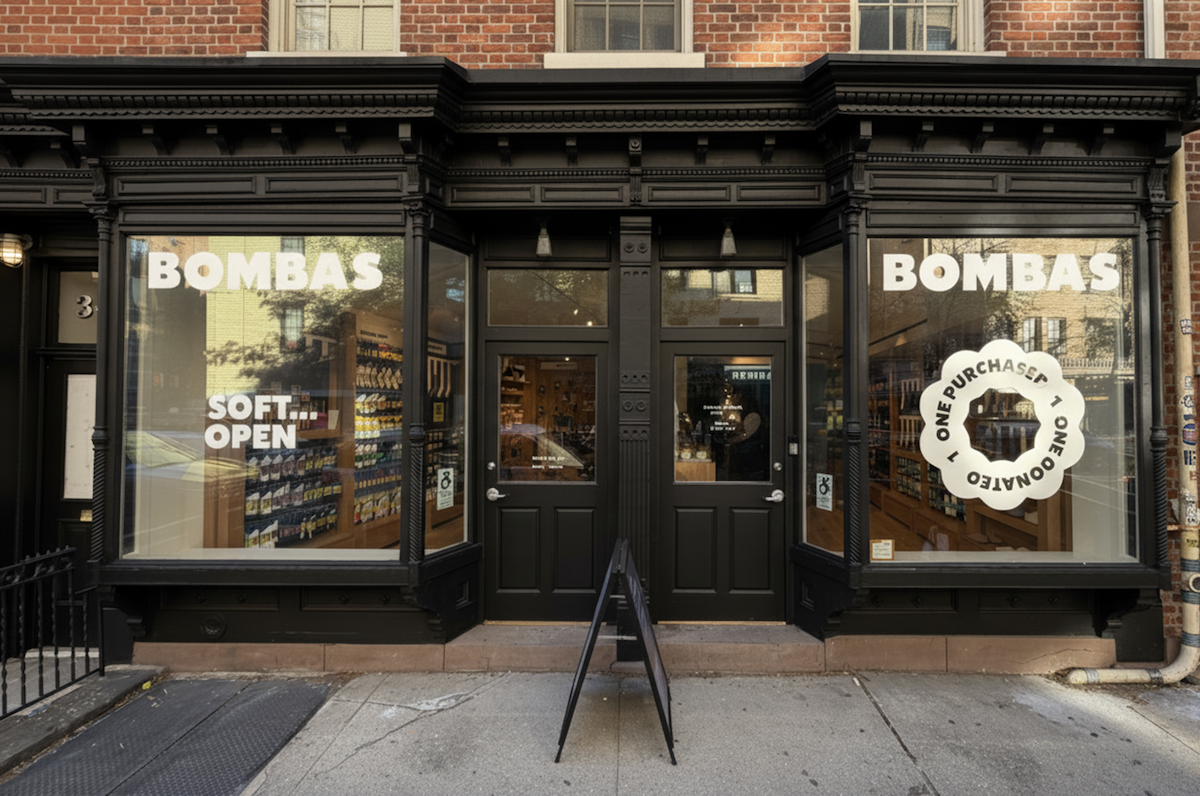
Bombas Store - Austin, TX
Business Model & Revenue Streams
Revenue generation
Bombas generates revenue primarily through the sale of apparel items – initially socks, now expanded into underwear, T-shirts and slippers. It is largely DTC (direct-to-consumer via e-commerce), with growing wholesale and retail distribution.
Revenue by segment
Detailed public segmentation is limited (private company). However:
In 2025 the company is projected to reach about US$500 million in revenue.
Estimates show roughly US$300 million in 2023 and US$325 million in 2024.
Wholesale is still modest: as of 2025, ~7 % of revenue comes from wholesale retail (e.g., Nordstrom, Dick’s Sporting Goods) with ambition to grow to 10-20%.
Geographically the U.S. remains primary; international expansion is less publicly disclosed.
Unit economics
While detailed data is not publicly available, some pointers:
Premium pricing allows higher margins than commodity basics.
The buy-one-give-one model effectively increases cost per sale (both product cost and donation logistics).
Digital acquisition costs are rising in the DTC space; retention and loyalty therefore matter for lifetime value (LTV).
The company emphasizes the “Happiness Guarantee” and customer service which supports retention and word-of-mouth.
Recurring or predictable revenue
Apparel is inherently less recurring than subscription models, but Bombas has tried to build loyalty and repeat purchases via quality, mission alignment and brand trust.
The addition of basic apparel lines means customers may purchase regularly. Strategic expansion into wholesale also adds more predictable channel diversification.
Product or Service Offerings
Core products and value propositions
Socks: Bombas’ original product. Positioned as premium comfort socks with design features such as honeycomb arch support, seamless toe, reinforced heel and toe, moisture-wick cotton blends.
Underwear & T-shirts: Expanded product lines to “basics done better” following the same mission and premium positioning.
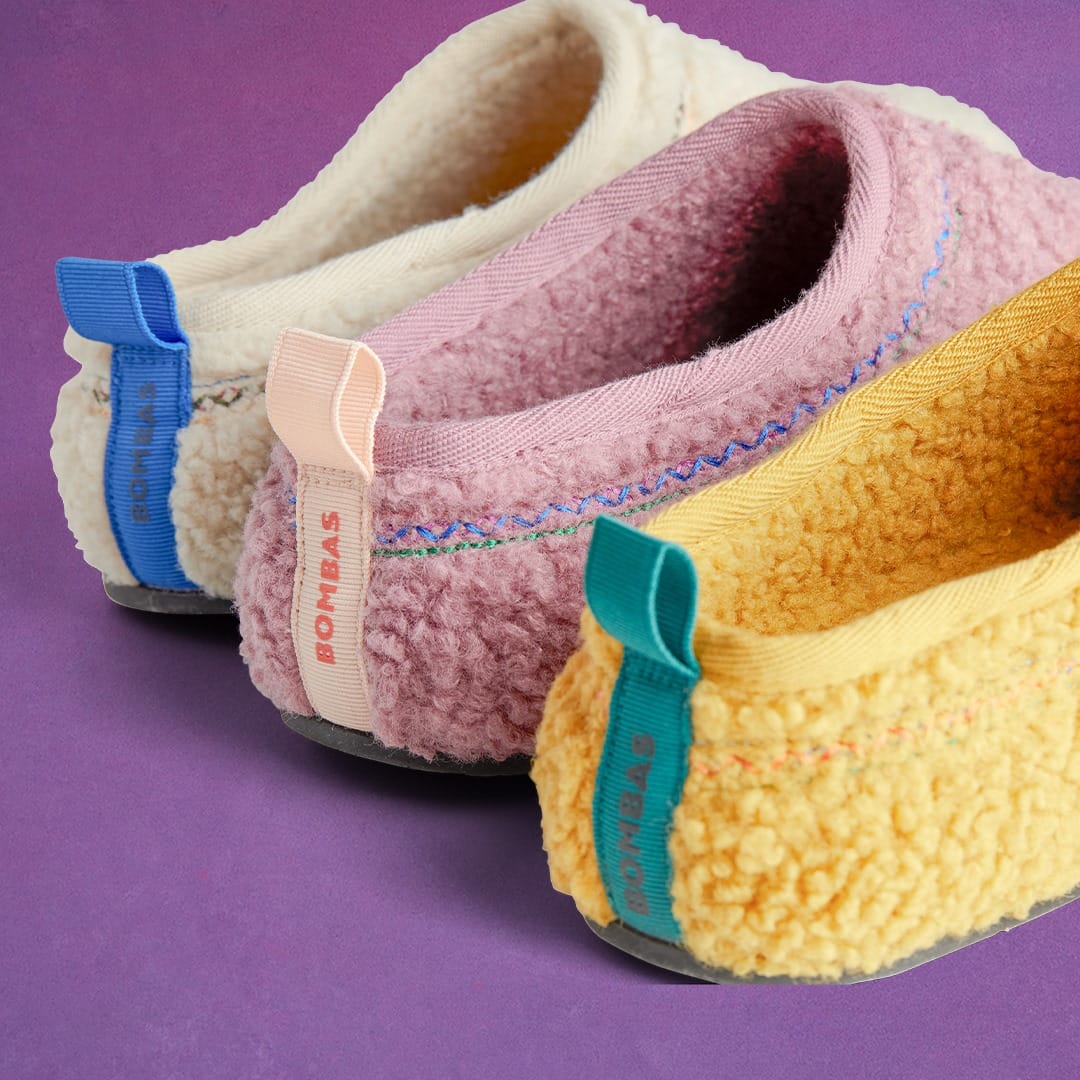
Slippers: Recently identified as fastest-growing category as of 2025.
Pricing by Product Category
Enjoying this? Get the next one.
We send one email each Monday with what just published on Causeartist.
Free. Unsubscribe anytime.
The pricing reflects U.S.-site list prices and shows how Bombas positions itself as a premium basics and comfort brand with mission-driven value.
Product Category | Typical Price Range & Notes |
|---|---|
Socks | Single pairs generally priced around $14. |
Underwear | Available as single units and in multi packs. |
T Shirts | Pima cotton crew neck shirts generally priced around $48 per shirt. |
Slippers and Shoes | Slippers typically range from the mid $60s to around $100 depending on style and materials. |
Summary of Pricing Strategy
Bombas consistently prices its basic apparel and socks at a premium relative to commodity brands. For example, $14 for a pair of socks is well above typical mass market sock pricing.
Bundled pack offerings (4-packs, 6-packs) allow the brand to provide value to multi-unit purchasers while still sustaining margin.
Expansion into higher-ticket categories like slippers and merino blend t-shirts allows Bombas to capture higher average order value and elevate the brand beyond simply “socks.”
The “buy one, donate one” mission underpins the pricing strategy: customers are paying for product quality and impact, which justifies the premium.
The brand appears to avoid heavy discounting as a default — maintain brand integrity and margin. When bundles or packs are offered, they are marketed as “pack savings” rather than clearance.
Implications for Business Model
Higher unit price supports stronger gross margins which are necessary given the built-in cost of the donation component for every item sold.
Premium positioning aligns with targeting consumers willing to pay more for comfort, quality, and purpose — which fits Bombas’ brand persona.
As Bombas expands categories, maintaining coherent pricing (so new categories feel “premium but reasonable” relative to their origin socks) is critical to preserving brand perception and margin structure.
The packaging of packs and bundles likely plays an important role in maximizing lifetime value: encouraging customers to buy greater volume upfront, increasing loyalty and repeat purchases.
Go-to-Market & Marketing Strategy
Notable marketing campaigns / partnerships
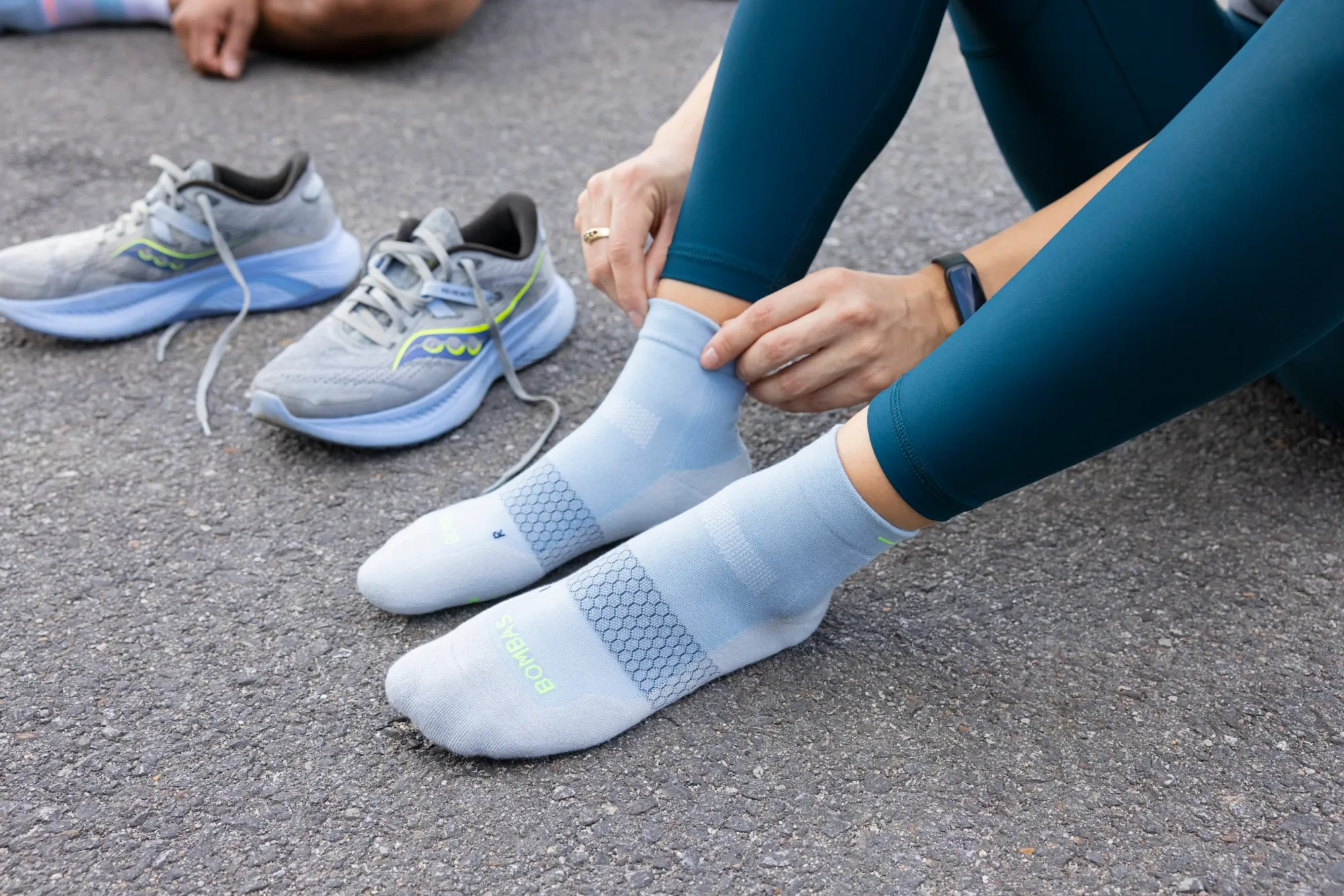
The Strava “Bombas Spring Movement Challenge” where participants logged 200 minutes of activity and received a discount — resulted in over 116,000 participants and 97 % of completing participants who purchased did so from the promoted collection.
Podcast advertising: As noted by GQ, Bombas became ubiquitous in podcast ad-reads among Millennials.
Customer retention, upsell/cross-sell strategies, community initiatives
Bombas emphasises “Happiness Guarantee” (easy returns/replacements) which supports customer satisfaction and repeat purchases.
Cross-selling into adjacent apparel categories (underwear, T-shirts, slippers) to increase basket size and lifetime value.
Mission communication: Every purchase tied to a donation creates emotional engagement and likely drives retention via brand loyalty.
Community/impact reports: Communicating the donation impact helps build brand advocacy.
Social Impact and Giving Model
Bombas built its business around a simple idea: essential clothing should be accessible to everyone, including individuals experiencing homelessness. The company’s impact approach is tightly integrated into its operations.
For every item purchased, Bombas donates a specially designed item through its national and international network of nonprofit partners. This buy one, donate one model sits at the heart of the brand and guides its product design, production planning, and community partnerships.
Essential Clothing Designed for Real Needs
Bombas donates items that directly address the most requested essentials in homeless shelters.
Socks, T shirts, and underwear consistently rank as the top three items requested in shelters, and Bombas produces donation specific versions of these products with features that improve practicality and long term wear. These design updates include:
Antimicrobial treatments to extend usable time between washes.
Flexible, versatile sizing to serve a wider range of body types.
Darker colors that show less visible wear.
This approach reflects Bombas’ belief that donated goods should match or exceed the quality of standard retail items and should be engineered specifically for the living conditions of individuals experiencing homelessness.
One Purchased, One Donated
Bombas works with more than 4,000 Giving Partners across the United States and globally. These organizations include:
Overnight shelters
Transitional housing programs
Street outreach teams
Rehabilitation centers
Title I schools
Medical service providers
Every purchase triggers a donation commitment. Bombas adds the item to its donation pipeline, orders materials, schedules factory capacity, and begins production.
The company allows a 12 month distribution window to ensure Giving Partners receive exactly what they need in terms of sizes, quantities, and product types.
Scale of Impact
Bombas has donated more than 150 million clothing items since its founding. Each donation represents an essential item placed into the hands of someone who needs it, made possible entirely by customer purchases.
This scale makes Bombas one of the largest private donors of essential clothing items to homeless shelters and related service organizations.
How the Donation Process Works
Bombas’ giving model relies on a structured, repeatable system:
Customer Purchase Initiates Production
Every purchased item is matched with a planned donation item, and Bombas begins production planning. This includes fabric orders, factory time, and preparation of specialized donation focused designs.Coordination with Giving Partners
Bombas maintains active communication with its 4,000+ Giving Partners. The company monitors up to a year in advance which organizations need which items and in what quantity. This ensures donations are relevant and timely rather than surplus driven.Distribution and Local Impact
Once production is complete, donation items are shipped directly to partners who then distribute them to the individuals and families they serve. This decentralized model strengthens local organizations while ensuring that donated products reach communities where demand is highest.
Community-Centered Giving Network
Bombas’ partner organizations serve a wide range of populations experiencing poverty, instability, or displacement. The company’s giving ecosystem touches numerous community touchpoints, from emergency overnight shelters to school systems serving low income families. This breadth ensures impact is both deep and geographically widespread.
Commitment to Transparency and Accountability
Bombas regularly publishes updates about its giving efforts, including the total volume of items donated and stories from Giving Partners.
As a Certified B Corporation, the company is held to standards around social and environmental transparency, which reinforces trust with consumers, employees, and community partners.
Operations & Organizational Structure
Operational footprint
Headquarters in New York City.
Employees: Sources estimate ~245 employees (though one estimate may be outdated).
Manufacturing: Apparel basics; supply chain and logistics complexity from high volume e-commerce plus donation fulfilment. For example, migration to Shopify Plus required custom 3PL integrations.
Operations challenges & responses
E-commerce scale demands: Bombas had to migrate from Magento to Shopify Plus and build custom apps for inventory, bundling, 3PL integration to support SKU complexity and bundles.
Supply chain and logistics: With “buy-one, donate-one” model, the company must manage both retail fulfillment and donation logistics (shelter partnerships, product design for donation recipients). This adds cost and complexity.
Acquisition cost pressures: Digital ad cost inflation means acquisition economics require increasingly strong retention and brand loyalty. The company’s strategic shift to retail and wholesale helps diversify channels.
Challenges & Crisis Management
Significant challenges / setbacks
Growth versus mission tension: As noted in a 2022 HBS case, Bombas had to balance fast growth with maintaining the integrity of its social mission (“How Bombas Reach New Customers While Maintaining Its Social Mission”).
Response: The company slowed growth or disciplined allocation to ensure mission alignment.
Outcome: The brand remains credible, mission-driven, which underpins its differentiation.
Operational scaling: Migrating platforms (Magento to Shopify), custom bundle and 3PL integrations.
Response: Engaged technical integration partner (Sunrise Integration) to build custom solutions.
Outcome: Enabled scalable e-commerce operations, improved fulfilment reliability, which supports future growth.
Channel diversification risk: DTC-only growth faces rising ad costs, so the company must shift toward wholesale and retail without losing brand identity.
Response: Appointment of new CEO experienced in retail, plans to grow wholesale from ~7 % toward 10-20 %.
Outcome: Ongoing; success depends on execution and brand consistency in new channels.
Lessons Learned
Start with a simple product category and build from there. Bombas began with socks – a relatively narrow, under-served category – and built strong differentiation on comfort, design and mission. Other businesses can follow this path: dominate a niche, then expand.
Mission must be operational, not just marketing. Bombas integrated its give-one donation tightly into its business model. This operational mission (not just advertising) helped build credibility and loyalty.
Growth without operational discipline leads to risk. Bombas invested in technology, fulfillment and organisational culture (e.g., performance management) as it scaled. Neglecting operations in favor of top-line growth would hamper sustainability.
Channel diversification is essential for DTC brands at scale. Bombas recognised that DTC alone had limits (customer acquisition cost, digital ad saturation) and is expanding wholesale and retail. Other brands should proactively plan for channel mix.
Maintaining mission authenticity becomes more difficult at scale. As brands grow, the temptation or pressure to compromise mission (for cost savings, margin, scale) grows. Bombas’s case study (HBS) highlights the importance of constant vigilance in this area.
FAQ
What is Bombas' buy-one-give-one business model?
For every item sold, Bombas donates a specially designed item to someone experiencing homelessness through nonprofit partners. The donated items are engineered specifically for homeless individuals with features like antimicrobial treatments, flexible sizing, and darker colors that show less wear. This addresses the fact that socks, underwear, and T-shirts are the most requested items at homeless shelters.
How much revenue does Bombas generate and how fast did they grow?
Bombas is projected to reach approximately $500 million in revenue in 2025, with estimates showing $300 million in 2023 and $325 million in 2024. The company grew from around $171 million in 2021, demonstrating rapid scaling in the DTC apparel market since their 2013 founding.
What makes Bombas different from other sock and apparel brands?
Bombas differentiates through premium quality design features (honeycomb arch support, seamless toe, moisture-wicking materials), social mission integration, and customer service including a 'Happiness Guarantee.' They position as 'basics done better' with premium pricing around $14+ per pair of socks, targeting socially-conscious consumers willing to pay more for quality and impact.
Who are Bombas' main competitors in the premium basics market?
Key competitors include Smartwool (performance socks, higher price point), Feetures (running-focused socks), MeUndies (DTC underwear/basics), Allbirds (sustainable materials), and Pact (organic cotton basics). Larger incumbents like Hanes and Nike can compete on scale and price but typically lack the mission-driven focus that differentiates Bombas.
What challenges does Bombas face as they scale their business?
Main challenges include rising customer acquisition costs in the DTC space, maintaining mission authenticity while scaling, category expansion risks that could dilute brand focus, operational complexity of donation logistics, and competition from larger incumbents. The company must also navigate the shift from founder-led startup to professional management while preserving company culture.
More Case Studies
Browse all
Photo credit: Who Gives A Crap, modified by Causeartist
Photo credit: Oatly, modified by Causeartist


Photo credit: Blueland, modified by Causeartist

Get the Monday roundup
New companies, funders, stories, podcasts, and case studies — one email a week.
Join 25,000+ Causeartists
Free. Unsubscribe anytime.